
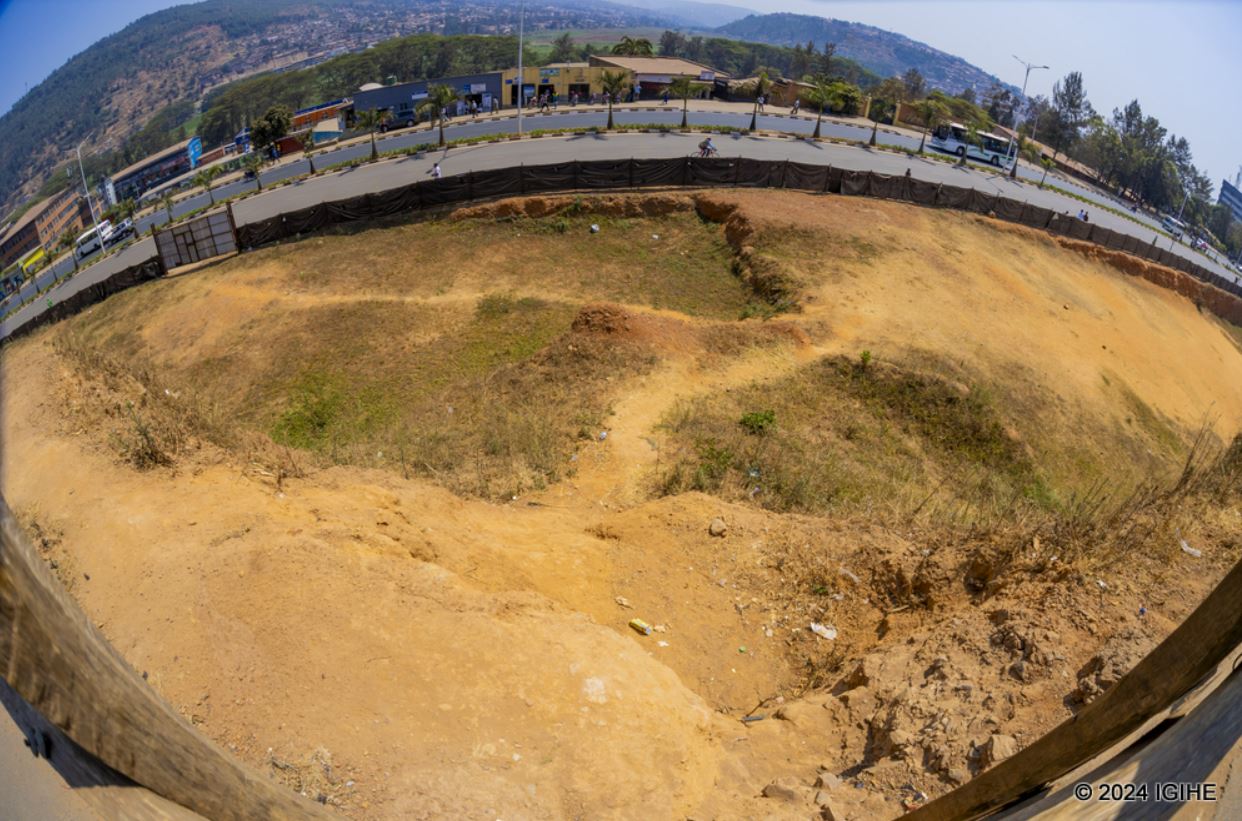
Kigali embarks on urban greening initiative to reclaim overgrown land
By Elias Hakizimana.
In various districts of Kigali, parcels of land acquired for future urban development projects have remained underutilized and become overgrown with vegetation. Initially cleared to accommodate the city’s infrastructure growth, these sites have since turned into unkempt spaces, often used for illegal dumping and waste disposal under the cover of darkness.
Maurice Ngabonziza, a Kigali resident, expressed concerns to RBA, stating that some government-owned land has now become a refuge for illicit activities, particularly drug use, despite its potential for productive utilization.
“I’ve noticed the government not putting the land to the use it originally intended. People are relocated to make way for development, but then the projects are delayed or don’t materialize. A year, two, or five pass, and these plots are overtaken by bushes, turning into hideouts for petty criminals and negatively affecting nearby properties,” Ngabonziza explained.
Antoine Habimana, another resident, believes that once people are relocated, the land should either be developed promptly or repurposed for interim community projects such as urban agriculture, rather than leaving it idle.
Emma Claudine Ntirenganya, spokesperson for the City of Kigali, acknowledged that while certain areas are earmarked for large-scale projects, implementation can be delayed due to various factors, including budget constraints and multi-phase development plans.
“For major projects, development often occurs in stages, beginning with land acquisition and resident compensation, followed by phased construction as funding becomes available,” Ntirenganya explained.
She further highlighted the city’s strategic vision to transform all unused land into green spaces, part of a broader urban beautification and environmental sustainability effort.
“The City of Kigali has launched a greening initiative known as ‘My Tree.’ As part of our future urban planning, we are utilizing available land by planting trees and grass species such as paspalum. This enhances the aesthetics of the city while we await the commencement of larger projects,” she noted.
Ntirenganya also stressed that maintaining cleanliness in Kigali is a shared responsibility between the city administration and its residents, encouraging active participation in regular community service (umuganda) and other cleanliness initiatives.
“Even if you live near unused land, it’s a shared obligation to keep the area clean. Litter and waste not only pose a challenge to the city but also to the surrounding communities. This is why we encourage residents to incorporate these spaces into their regular community service activities,” she added.
In the next five years, the City of Kigali plans to plant three million trees, with a focus on ensuring their long-term growth and maturity rather than simply reaching planting targets.
This initiative aims to bolster Kigali’s green infrastructure, promote environmental health, and improve air quality for the city’s inhabitants.
theinspirerpublications@gmail.com





Leave a Reply