

Kayonza: Soybean farmers see rising incomes as FARM P3 reshapes production and market access
By Elias HAKIZIMANA.
Farmers in Murundi Sector, Kayonza District, say soybean production is beginning to change both their incomes and farming practices as the FARM P3 Project strengthens value chains and reduces post-harvest losses across the area.
At Abakundamurimo Murundi Cooperative, members say the introduction of improved farming methods has delivered visible results, shifting them from low-output, uncoordinated production to more organized and productive farming.
Innocent Mutuyimana, a farmer facilitator, said the change is already evident compared to previous seasons.
“Between 2021 and 2023, we were growing soybeans but in an unorganized way and we were making losses,” he said. “With FARM P3 demonstration plots, we harvested 540 kilograms from just 30 ares. That experience encouraged us to start farming in a more professional way.”

He said training in row planting and good agricultural practices has improved yields and reduced post-harvest losses that previously reached between 20 and 30 percent.
“Now we are focused on increasing production and moving out of poverty,” he said.
The cooperative still faces challenges, especially limited irrigation equipment and lack of adequate drying facilities. Farmers are calling for matching grants to expand infrastructure and further reduce losses after harvest.
Mutuyimana noted that the cooperative currently has Rwf 4,150,000 on its account, which he said reflects improved financial discipline and stronger market engagement. He also pointed to rising productivity, with expectations of 25 to 30 tonnes from 8 hectares, compared to only 4 to 5 tonnes previously.

For Joselyne Bosenibo, another member of the cooperative and a mother of five, soybean farming has already begun to reshape household income and decision-making.
“I used to grow ordinary beans, but after training from the field school, I learned a lot about soybeans,” she said. “Now I farm on five ares and I see potential to expand because soybeans give better returns.”
She said increased income has helped her support her family, including school fees for her children, and invest in small assets such as livestock and transport.
“I bought a goat worth Rwf 50,000, and I also invested Rwf 2.8 million in a motorcycle for my son, who now works as a professional driver and helps transport farm produce,” she said.
“These crops are helping us move forward. We can sell, earn money, and plan better for our families,” she added.

During the field visit, stakeholders noted that FARM P3 is addressing one of agriculture’s long-standing challenges—post-harvest losses—through drying facilities, training, and stronger market coordination.
Martin Parent, Agricultural Counsellor for East Africa and the Indian Ocean Region, said the project is already delivering strong results.
“What we see here is quite impressive. The project is addressing several issues at once, from climate resilience to market access,” he said. “But most importantly, it is increasing farmers’ revenues.”
He emphasized that reducing post-harvest losses improves efficiency across the entire value chain.
“When farmers lose less after harvest, they save labour, water, inputs, and even reduce environmental impact. Ultimately, it increases income,” he said.
He also highlighted private sector involvement, noting that farmers now benefit from structured market access and guaranteed buyers.

Kayonza District Mayor Fred Hategekimana said FARM P3 is contributing to a broader transformation of agriculture in the district by shifting farmers from subsistence to market-oriented production.
He said the project has improved farmers’ skills, strengthened cooperatives, and significantly reduced post-harvest losses that previously affected yields and incomes.
“What we are seeing is not only increased production, but also a clear change in mindset,” he said. “Farmers are more organized, they understand quality requirements, and they are increasingly linked to markets.”

He added that complementary investments under programmes such as KWIP2—including irrigation dams like Gishanda and Kanyeganyege and radical terraces—will further boost productivity once completed.
“These investments will support long-term irrigation and agricultural expansion, while also creating employment during construction,” he said.
The Mayor called for continued collaboration among stakeholders, including government, development partners, the private sector, and farmers, to ensure sustainability of the gains.
“Each actor has a role to play. When we work together closely, we improve efficiency and achieve results,” he said.
He also urged farmers to take ownership of the project outcomes to ensure long-term sustainability beyond the project lifecycle.

 Stakeholders from government, development partners, and private sector observe soybean production activities during a FARM P3 field visit in Kayonza District, focusing on value chain development and post-harvest management.
 Stakeholders from government, development partners, and the private sector pose for a group photo before proceeding to the field visit.
  Stakeholders from government, development partners, and the private sector engage in discussions in a meeting room in Kayonza District before proceeding to the field visit.
 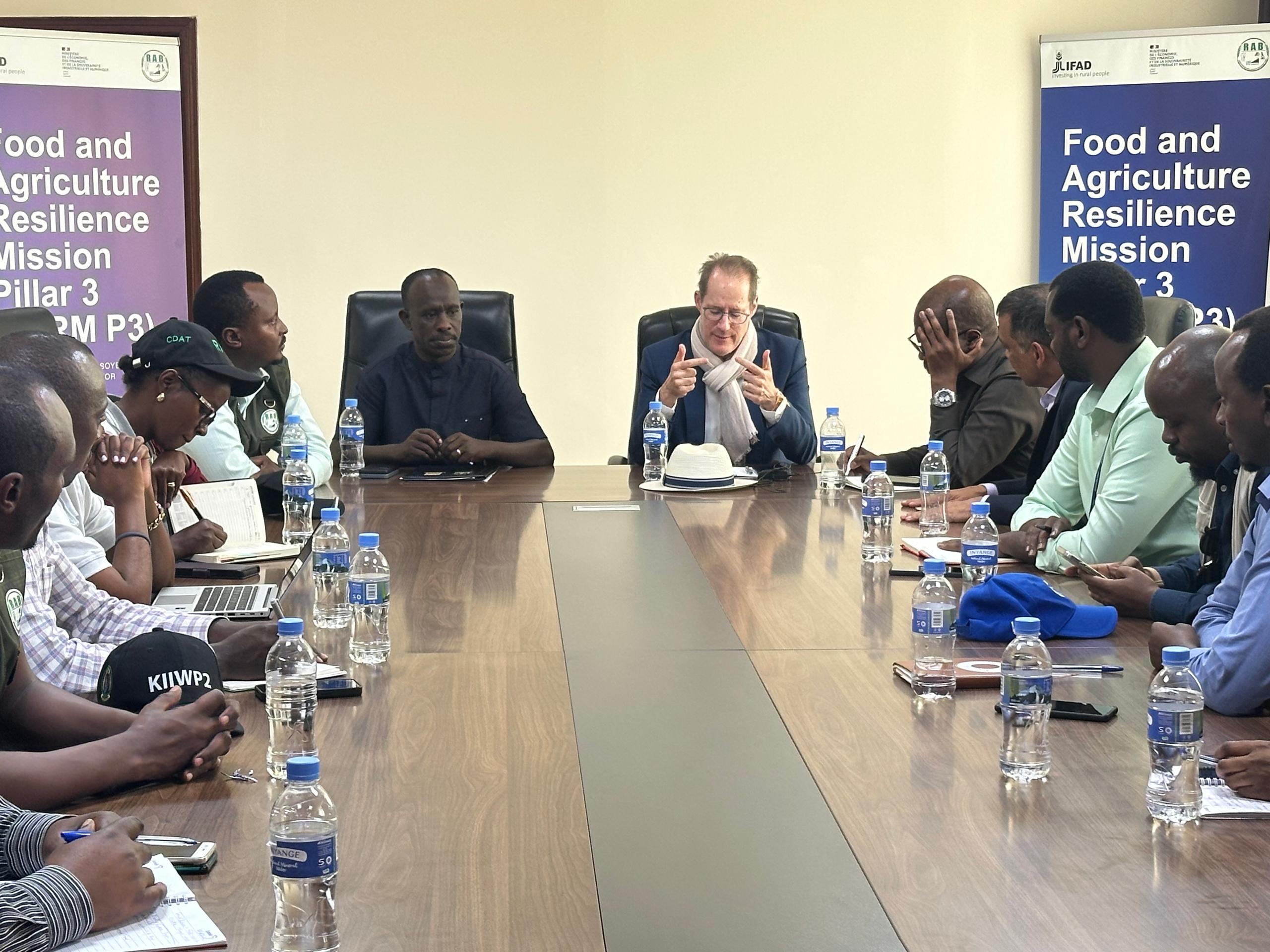 Stakeholders from government, development partners, and the private sector engage in discussions in a meeting room in Kayonza District before proceeding to the field visit.
  All photos by Elias HAKIZIMANA.
theinspirerpublications@gmail.com



Leave a Reply