
Why it is important for Civil Societies to do Evidence-based Advocacy
By Elias Hakizimana.
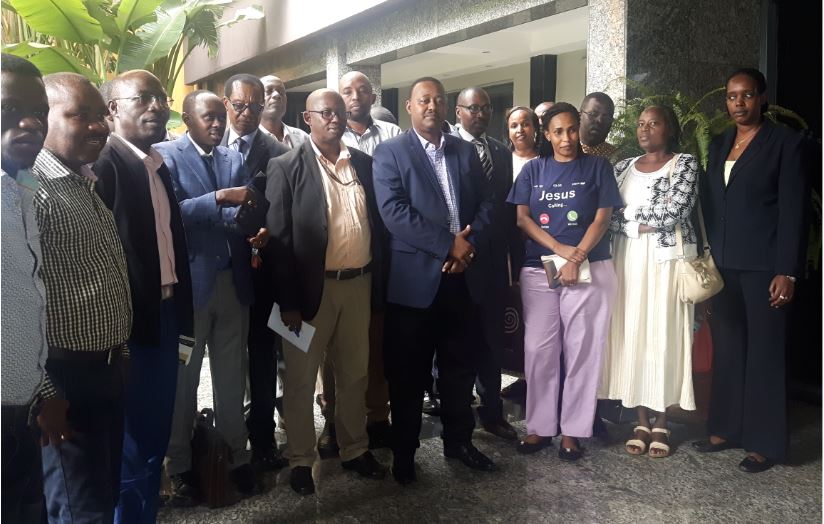
Around 30 Civil Society Organizations (CSOs) working in Justice and Human Right Sector from Kicukiro District were trained on techniques to do Evidence-based Advocacy when they seek solution for certain issues that are challenges to the community.
The training that took place in Kigali on Friday, October 11, 2019 was organized by Ihorere Munyarwanda (IMRO) Organization.
Aimable Mwananawe, National Coordinator of Ihorere Munyarwanda Organization (IMRO) that organized the training said that this initiative is to continue mobilizing CSOs in advocacy to strengthen their evidence-based-advocacy.
“It is better and understandable when you are seeking for information on the issue with evidence based research so that an official gives you needed information, it is the reason why we organize such trainings,” Mwananawe said.
He said that when advocacy techniques are not respected, sometimes the feedback on their requested information is not proceeded. 
Some examples of issues include land disputes, insurance laws where children are not equally treated like adults when it comes to compensation.
Research institutions are requested to facilitate CSOs to get needed information to continue with evidences.
Most of the times CSOs need official contents on policies and laws to be able to advocate for citizens.
Mwananawe highlighted that prevention is better than any other response that can come later after the issue has been identified, noting that everything requires evidences.
“We are helping Civil Society Organizations to map the places they can conduct advocacy activities, and know key power holders who can make changes and help them reach their advocacy goals.” He said.
The training will enable CSOs to refine their advocacy without making revolutions as other countries do. “We use strategic advocacy where we have evidence on a certain issue and know who we can approach to seek for a solution,” he added.
Following the financial capacity, the training will reach out other districts according to Mwananawe.
He said that another step to congratulate is that civil societies and government are no longer compromising each other, but complementing each other while seeking for a solution of citizens’ issues.
Trainees said that it is better to always seek for strategies to get information when advocating for an issue which is a barrier to the community.
Rose Uwimana, an official from ‘Association des Volontaires De la Paix’ (AVP) said that the training will add value to civil societies working on human rights.
She said it requires to increase knowledge in order to reach to adequate advocacy.
One of the challenges they use to experience is that some government entities do not hear from them when they bring an issue that is different from their priorities.
“Once it happened that we went to a government’s institution to seek for information on advocacy issue we had had but they denied giving us information, saying that they could help us only if we had the same goal of theirs to end Nyakatsi. So, if someone cannot hear from you today, you do not need to force him/her, you can instead look for another one to help you,” Uwimana noted.
Anthony Busingye, Executive Director of the umbrella of youth who strive for Human Rights and Development (AJPRODHO-JIJUKIRWA) said that the training is helpful as it increases knowledge on which advocacy we can do, when to do it, and whom we must partner to do that. The first challenge we had was lack of enough knowledge and we hope everything will be refined,” he said.

He embarked on the role of evidence based advocacy, saying that this is helpful to get to the right information you want.
Busingye said that civil societies must have good approach when seeking for information. “We do not need to go seeking for information as prosecutors, but we must have a friendly and professional way to approach people when we want information,” he noted.
theinspirerpublications@gmil.com



Leave a Reply