

Rwanda’s mining workers demand fair pay and safer conditions amid industry reforms
By The Inspirer.
Mining workers in Rwanda continue to face significant challenges, including mine collapses that often result in fatalities, poor wages, delayed payments, and a lack of formal contracts and insurance coverage.
In the Northern Province, where such incidents are more prevalent, Rwanda National Police spokesperson for the region, SP Jean Bosco Mwiseneza, recently warned against illegal mining activities. He emphasized that authorities will not tolerate such operations, as they pose serious safety risks, including fatal accidents and permanent disabilities.
“We urge citizens to avoid engaging in illegal mining because it is punishable by law and poses severe dangers. Many accidents occur due to unregulated mining, resulting in injuries, fatalities, and long-term disabilities,” Mwiseneza stated.
In recent years, Rwanda has taken significant steps to regulate and improve its mining sector, ensuring it aligns with environmental sustainability, security, and investment principles. The government has introduced strict regulations to eliminate illegal mining and enforce compliance among licensed operators. These measures aim to promote responsible mining that benefits the national economy while safeguarding workers’ well-being.
According to Mutsindashyaka, the head of the Rwanda Extractive Workers’ Union (REWU), advocacy efforts have led to 34% of mining site workers securing formal contracts. Additionally, workplace accidents have significantly decreased due to improved safety measures and proper protective gear.
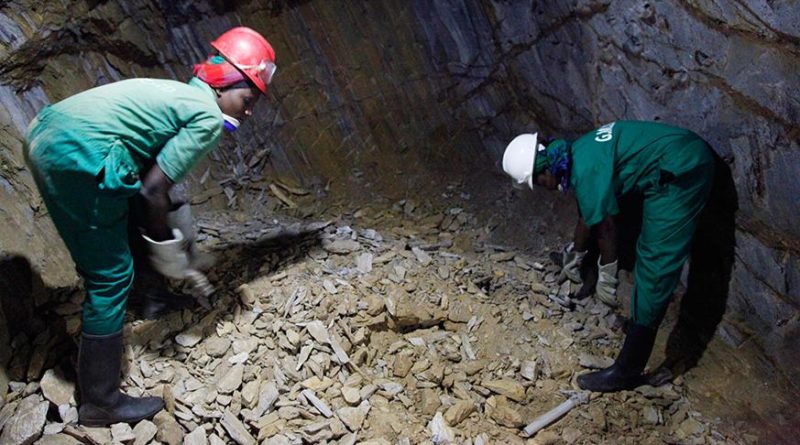
Training and workforce development
“More than 801 mining workers are equipped with the necessary tools, and many have received specialized training. Some workers hold university degrees, while others have acquired practical skills through on-the-job training. Many are from communities near mining sites, making mining a key economic activity in these areas,” Mutsindashyaka noted.
He further highlighted that approximately 2,700 workers have been trained in controlled blasting and other mining techniques through a partnership involving the Rwanda Mining Board (RMB), the Ministry of Public Service and Labor (MIFOTRA), the Rwanda TVET Board (RTB), and the Rwanda Mining Association (RMA).
Women’s participation in mining has also increased, rising from 11.4% in 2023 to an expected 24% by 2025. To support working parents, REWU and its partners have established Early Childhood Development centers (ECDs) at mining sites, allowing mothers to continue working without having to leave the workplace to breastfeed.
Workers’ benefits and economic impact
Through collaboration with REWU, miners receive daily incentives ranging from RWF 1,500 to RWF 4,000, in addition to payments based on their mining output. Currently, REWU has over 22,000 members, all legally employed in the sector. Among them, 5,300 workers receive their salaries directly through their bank accounts, reflecting improved financial transparency.
Looking ahead, the mining sector in Rwanda aims to enhance sustainability, environmental protection, and the fight against illegal mining. Mutsindashyaka expressed gratitude to partners such as the Rwandan government, Enabel, UNICEF, the EU, UN Women, and Pact Rwanda for their support.
Miners are encouraged to adopt environmentally friendly practices to prevent land degradation. “Mining should not be separated from environmental conservation, given Rwanda’s ongoing fight against soil erosion. It is crucial to identify and protect vulnerable areas,” Mutsindashyaka stated.
New mining law and future prospects
The insights in this report are based on Tristan Minyati, a Senior Advisor and Head of Legal Compliance at Trinity Metals, a leading mining company in Rwanda.
Mining is a major contributor to Rwanda’s economy, generating RWF 1.1 trillion in revenue in 2023, up from RWF 772 billion in 2022. This growth highlights the sector’s increasing role in economic development, especially as mineral resources are in high demand globally.
To ensure sustainable and profitable mining operations, Rwanda has introduced new laws and policies to regulate the sector. A revised mining law, enacted on July 24, 2024, addresses gaps in the 2018 law, particularly regarding penalties for illegal mining activities.
While the new law is expected to drive further growth, its successful implementation will determine its impact. The Rwanda Mines, Petroleum, and Gas Board (RMB) is responsible for ensuring compliance with these regulations.
In recent months, the government has intensified efforts to combat illegal mining and mineral smuggling. However, for these measures to be effective, mining stakeholders must be well-informed about their legal responsibilities.
The updated mining law marks a crucial step toward enhancing Rwanda’s mining sector. On the global stage, it positions Rwanda as a responsible player in mineral extraction, fostering economic growth while ensuring long-term sustainability.


Leave a Reply