
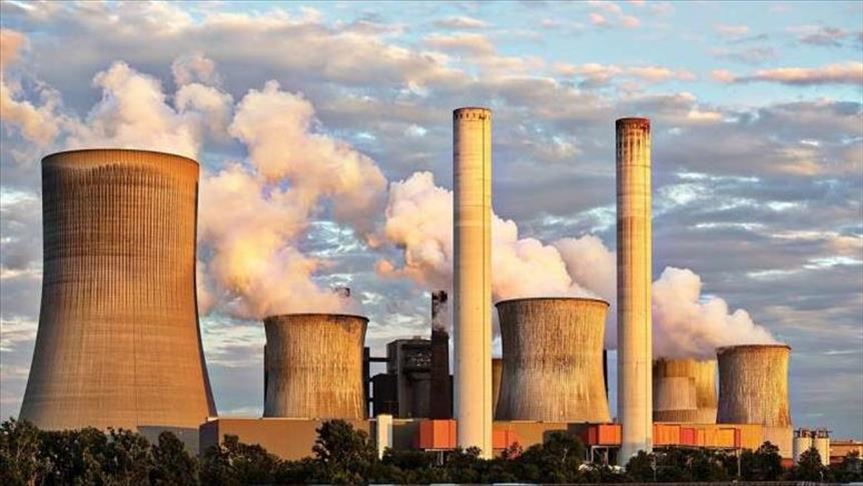
Rwanda reacts to COP28 outcome on fossil fuel phase-out as it seeks to hit 60% target
By Michel Nkurunziza.
The 28th UN Climate Change Conference-COP28 ended with a historic deal to transition from fossil fuels to keep global warming under 1.5 Degrees Celsius as a way of mitigating climate change effects.
The 14-week summit ended on Tuesday, December 12, 2023.
Countries agreed that fossil fuels need to be replaced with clean energy to reach global net zero by 2050.
This marks the first time fossil fuels have been addressed in the climate talks.
“Adoption of tripling renewable energy capacity globally by 2030 under Global Stocktake reaffirms the transformational journey Rwanda started by creating readiness to position itself as an ideal destination of green investment,” said Faustin Munyazikwiyea, Deputy Director General of Rwanda Environment Management Authority (REMA) who was Rwanda’s Lead Negotiator at COP28.
Global stocktake (GST) is an overall assessment of progress on the implementation of the Paris Agreement.
Rwanda aims to have 60 per cent of its energy come from renewable sources such as hydropower and solar by 2030.
Today, nearly 40 per cent of its power is derived from hydropower, while solar contributes a modest portion, under 10 per cent.
Rwanda turned off all its diesel power plants in June this year as the country’s hydroelectricity and methane gas sources expanded to make a significant contribution to the national grid.
ALSO READ: Global warming: Is it time to phase out fossil fuels?
Two new power plants, Rusumo Hydro Project and Shema Power Lake Kivu Ltd were opened recently, a development that facilitated the decommission of diesel power plants.
The Rusumo Hydro Project is a joint scheme shared by Rwanda, Burundi, and Tanzania. Upon full operation, it is expected to generate 80MW, with each country getting 26.6MW. Shema Power Lake Kivu Ltd is a methane gas power generation plant that aims at generating 56MW.
At COP28, Rwanda joined countries with a pledge to triple the world’s installed renewable energy generation capacity, of which solar power is part, to at least 11,000 GW by 2030, taking into consideration different starting points and national circumstances.
Countries to triple renewable energy by 2030 and double energy efficiency.
The COP28 outcome also recognises that costs of renewables are falling fast.
“After 14 days of intense negotiations, Rwanda is happy that parties managed to adopt the overall text of COP28 resolutions including the operationalization of Loss and Damage Fund (LDF) and Santiago Network on Loss and Damage (SNLD), measurable targets of Global Goal on Adaptation, and key elements of. We are also happy that parties made financial pledges and contributions at COP28 reaching $83.7 billion,” Munyazikwiye added.
Financing gap
Meanwhile, Mohamed Adow, Director of Power Shift Africa stated that the transition from fossil fuels is neither funded nor fair.
“There is not enough finance to help developing countries to decarbonise. This process may have delivered an agreement to move away from fossil fuels, but it’s failed to deliver a plan to fund it. Finance is where the whole energy transition plan will stand or fall. We also need much more financial support to help vulnerable people in some of the poorest countries to adapt to the impacts of climate breakdown. Unless the finance is provided, developing countries will not be able to do it.”
However, he noted, that for the first time in three decades of climate negotiations the words ‘fossil fuels’ have made it into a COP outcome. We are finally naming the elephant in the room.
“It is clear that the era of fossil fuels is coming to a close. We may not have driven the nail into the coffin here at COP28 but the end is coming for dirty energy. But there is a gaping hole in finance to fund the transition from dirty to clean energy in developing countries,” added Joab Okanda, Christian Aid’s Pan Africa Senior Advisor Advisor.
Wangari Muchiri, Africa Director, Global Wind Energy Council said:“For the first time we see renewable energy taking a prominent position, with the call for tripling renewable energy globally and doubling energy efficiency by 2030. We also see wind power, solar and storage recognized in the text as affordable and accessible technologies for the energy transition.”
The writer was reporting from the 28th UN Climate Change Conference in Dubai.
This story was produced with assistance from MESHA and IDRC Eastern and Southern Africa Office for science journalists reporting on COP28.




Leave a Reply