
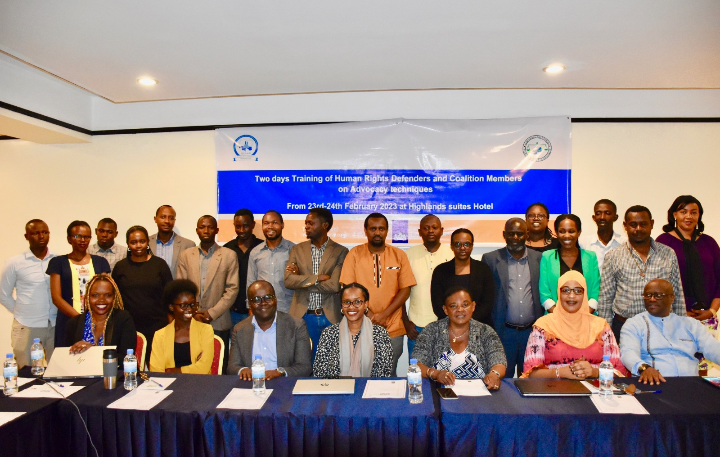
Human Rights Defenders’ policy is needed in Rwanda-GLIHD
By Elias Hakizimana.
According to the United Nations, Human rights are rights inherent to all human beings, regardless of race, sex, nationality, ethnicity, language, religion, or any other status.
They include the right to life and liberty, freedom from slavery and torture, freedom of opinion and expression, the right to work and education, and many more.
However, according to the Great Lakes Initiative for Human Rights and Development (GLIHD), this fundamental gift is not fully advocated for as Human Rights Defenders still lack a policy in place that protects them and enables them to do their work responsibly without confrontations with other government entities.
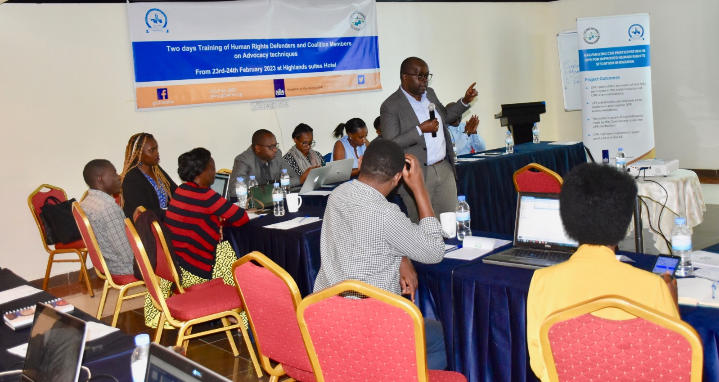
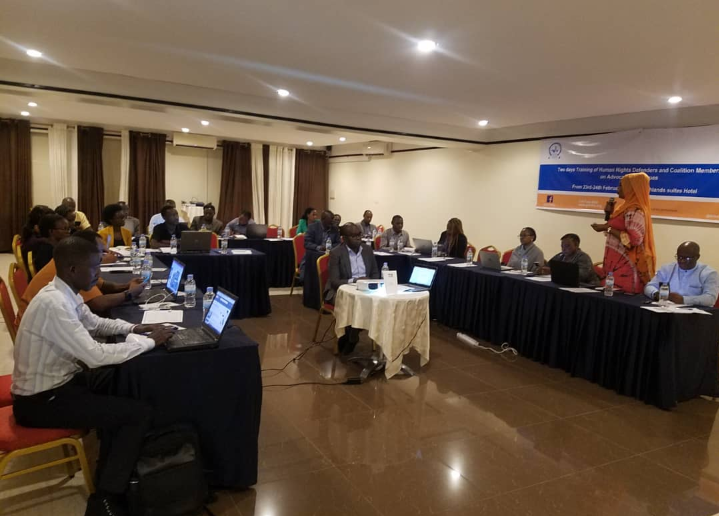
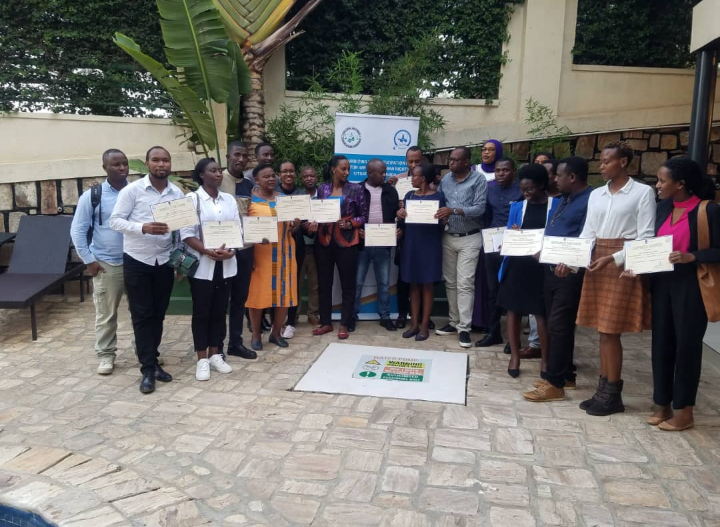
Speaking during a two-day training of Human Rights Defenders and Coalition members on advocacy techniques that was concluded in Kigali on February 24, 2023, Husna Vestine Umulisa, GLIHD Deputy Executive Director said that a big gap remains to define who is a Human Rights Defender in Rwanda as there is no policy/law in place to provide for the guidelines of how this person can work and how s/he can be protected legally.
“It is in this regard we have organized this workshop, calling different actors who deals with advocacy and strive to defend Human Rights on different issues, so as we discuss and find out who is a Human Right Defender (HRD). Trainees include Journalists, lawyers and Civil Society members,” Umulisa said.
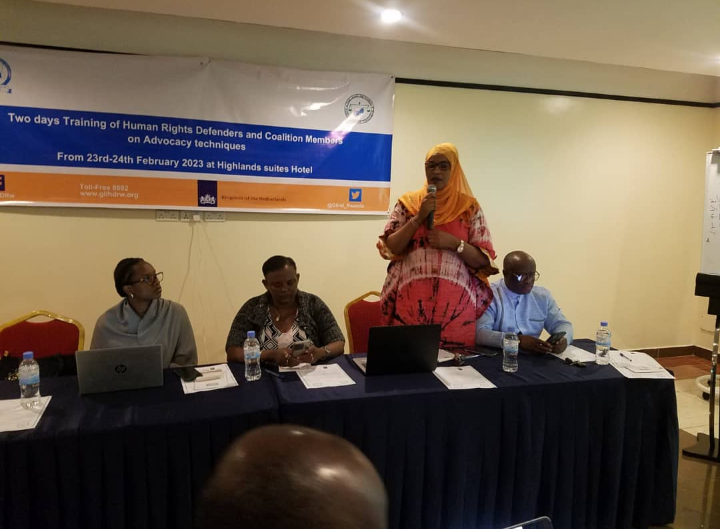
Umulisa explained that the training opens doors for further discussions with different Institutions to determine who is a Human Right Defender.
“The training helped everyone among trained actors to know whether s/he is a HRD or not, after this training, we will all work together to advocate for the law/policy establishment to provide for the guidelines for HRDs or any other possible policy in this regard, so that whoever acts as a HRD is protected legally,” Umulisa said.
She requested trainees to jointly work towards conducting advocacy for having a special law established to protect Human Rights Defenders in Rwanda.

The training was organized by GLIHD in partnership with Legal Aid Forum (LAF) with the support from Netherlands Embassy in Kigali.
Trainees speak out
Scovia Mutesi, Managing Editor of MAMA-URWAGASABO Media Outlet said that such a workshop is important as journalists need to know International Conventions and laws as well as internal rules in the country when doing news articles that advocate for Human Rights.
“The skills acquired will help me to continue working professionally and to play an outstanding advocacy role as a journalist,” She said.
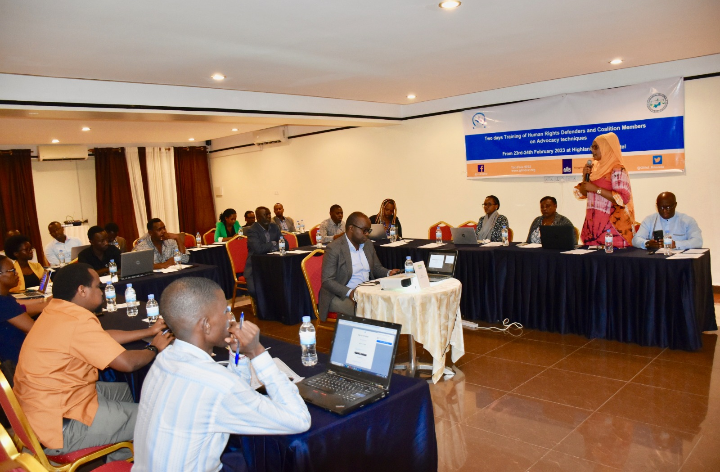
Bosco Dukundane, lawyer and programm associate at the Center for Rule of Law Rwanda (CERULAR) said that as recommended to Rwanda in the Universal Periodic Review (UPR), a need for a law in place to protect Human Rights Defenders is needed to let these actors free from any interference during their works.
“The training was vital, I have never faced challenges but I know many others including journalists whose cameras and other materials are broken by citizens due to their work, so, there’s need for a law in place to protect HRDs in Rwanda as the UPR used to recommend the country,” he said.
Me.Norbert Munana, a lawyer working with M-Advocates& Partners appreciated the training and the call for a law to be established to protect HRDs.
“Some government entities and authorities consider us the opponents instead of advisors and partners because they don’t know our responsibilities, when the law is established, it will define and determine who is the Human Rights Defender and how s/he can be protected,” Munana said.
The issue of lack of a law or policy in place to protect HRDs is reiterated by Noel Rwagasore, a civil society member working with Better Life Achievements Organization (BLAO).
“Sometimes we conduct advocacy on certain issues but end up with no solution because there are no legal provisions to protect our job.” Rwagasore noted.
theinspirerpublications@gmail.com



Leave a Reply