
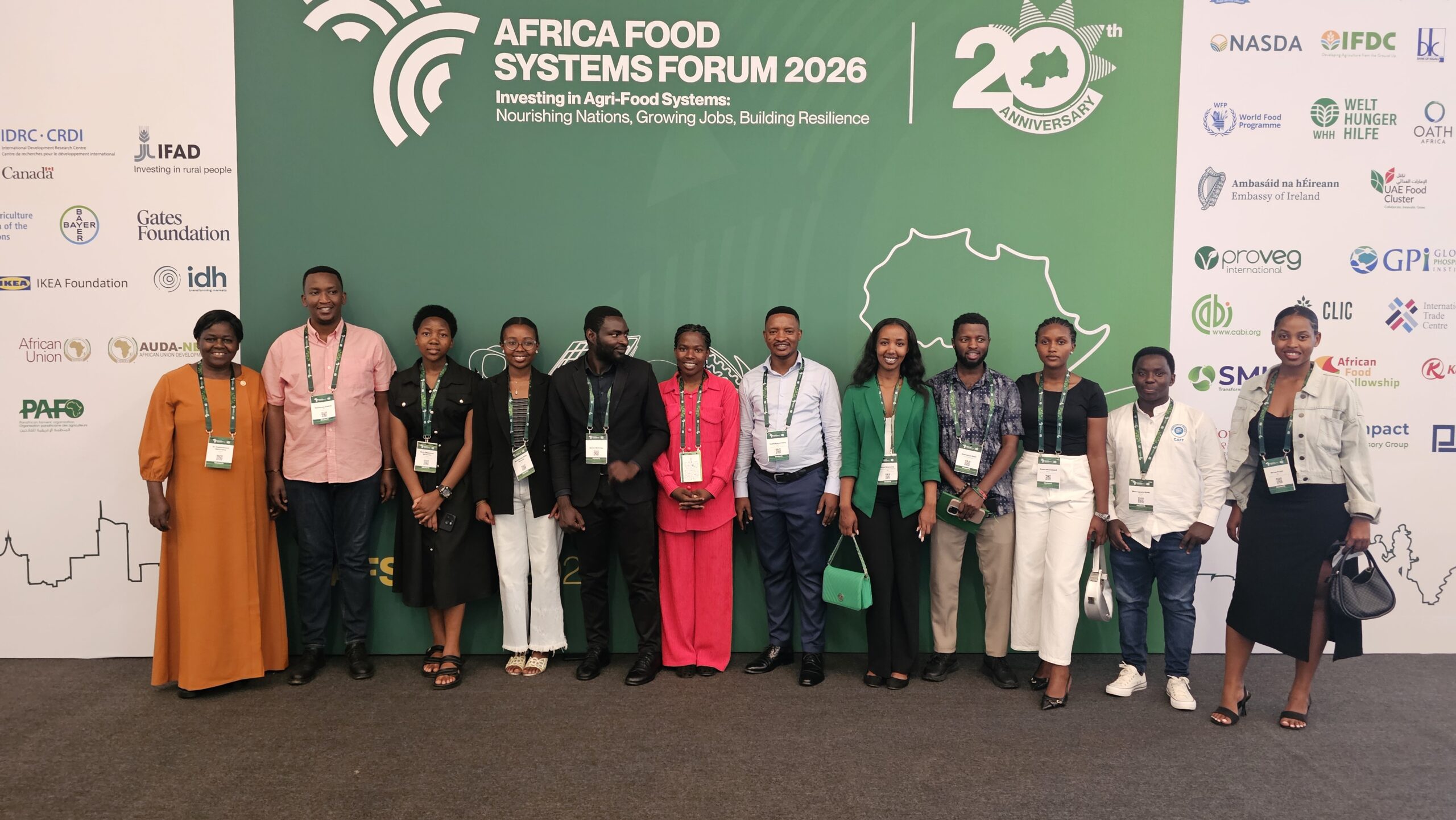
From classrooms to markets: How UR-CAFF is cultivating Africa’s next generation of agripreneurs and talents for Rwanda’s agriculture sector transformation.

By The Inspirer
Agriculture in Africa has long been viewed by many as a profession for people with limited education and few alternatives. Yet the continent’s prosperity increasingly depends on transforming it into a modern, knowledge-based sector capable of feeding nations, creating decent jobs and building resilience.
That was the message at the Africa Food Systems Forum 2026, held at the Kigali Convention Centre from August 31 to September 4 under the theme, “Investing in Africa’s Agri-Food Systems: Nourishing Nations, Growing Jobs, Building Resilience.” The Forum brought together more than 5,000 delegates from over 50 countries to discuss Africa’s food-system future.
For the University of Rwanda’s College of Agriculture, Forestry and Food Science (UR-CAFF), this transformation must begin with education that produces not only graduates seeking jobs, but also innovators and entrepreneurs capable of creating solutions and employment.
At its Busogo Campus, this approach is being advanced through the Career Guidance, Entrepreneurship and Employability Services Unit (CGEES), which combines career guidance, employability support, entrepreneurship development and the UR Busogo Agribusiness Incubator.
Building a new agricultural workforce
Africa must increase productivity, reduce post-harvest losses, improve nutrition, respond to climate change, expand value addition and create opportunities for its growing youth population. For Rwanda, these challenges are intensified by limited land, high population density and smallholder farming. The country therefore needs a knowledge-based and commercially oriented agricultural sector built around innovation, productivity and value addition.
As Dr. Alphonsine Mukayisenga Dushimimana, who leads the UR-CAFF Career Guidance, Entrepreneurship and Employability Services (CGEES) Unit and manages the college’s agribusiness incubation program at UR Busogo Campus, the CGEES Unit was established to support this vision and its tole is to nurture job-creators and job-ready graduates through career counselling, employability training, entrepreneurship coaching, mentorship, internships, networking, career fairs, exhibitions and links with employers and industry partners. It also nurtures student entrepreneurship and innovation through organizing innovation competitions, bootcamps, student clubs and incubation activities.

From knowledge to solutions
For UR-CAFF students attending the Africa Food Systems Forum, the event offered lessons beyond the classroom.
Marie Silencieuse, an Agriculture Economics and Agribusiness student, said academic knowledge must be complemented by networking and exposure to experienced professionals.
“Classroom knowledge alone is not enough. We also need skills such as networking and learning from others,” she said.
Masengesho Emile, a Food Science and Technology student, said the Forum taught him how to prepare and present business ideas to investors.
“It is about how we can make a proper pitch and prepare our best project so that we can present it in front of investors and move from the level of an idea to a project,” he said.
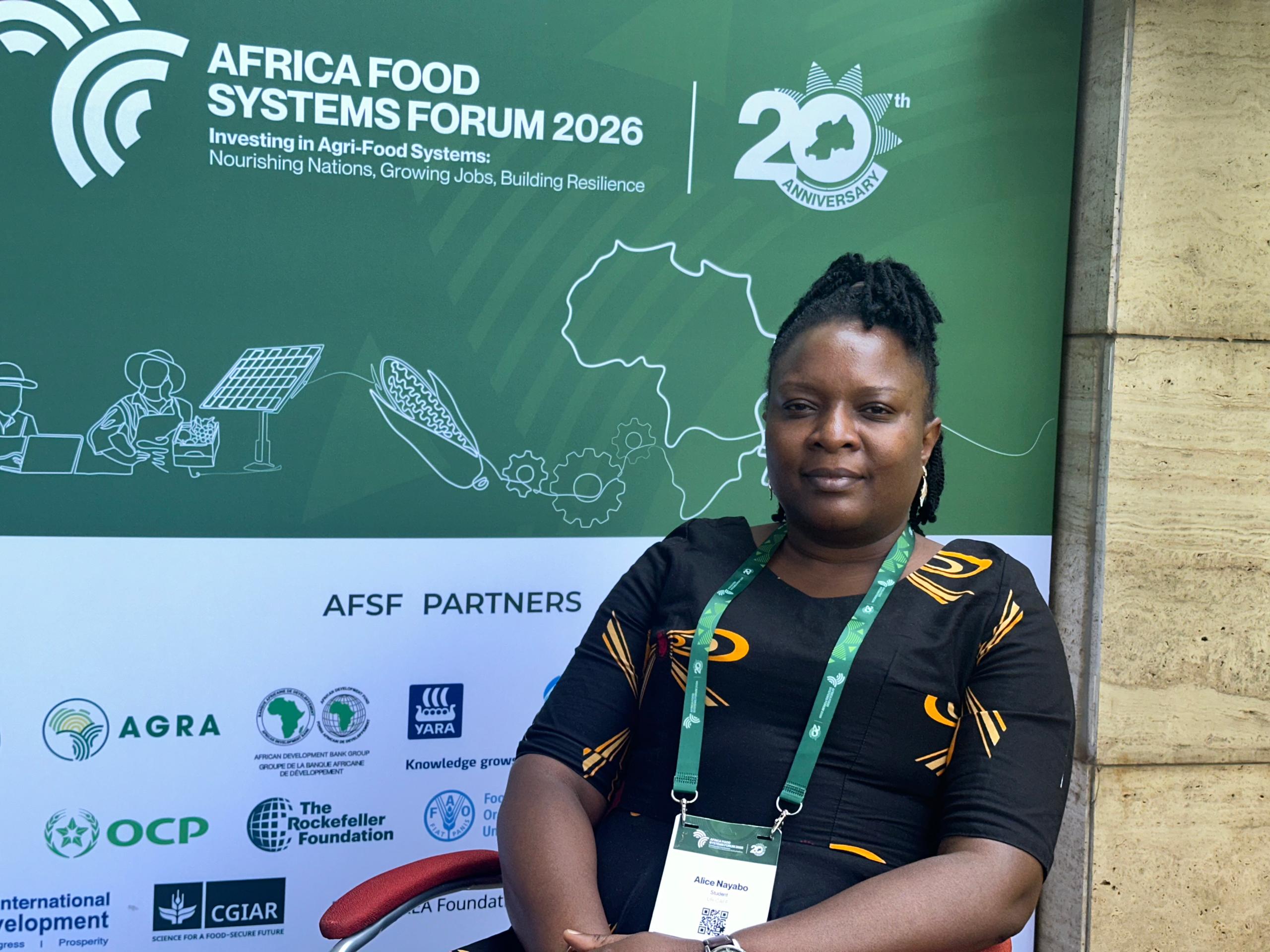
Alice Nayabo, an assistant lecturer and food-science mentor, stressed the importance of practical learning.
“If you cannot cook in your mother’s kitchen, then don’t say that you are a food processor,” she said.
For Nayabo, food systems extend from the field to the kitchen, market and consumer. She also urged agricultural professionals to communicate their ideas clearly to farmers, investors, policymakers and the wider public.
Turning students into job creators
Reflecting on the benefits of exposing students to major platforms such as the just-concluded Africa Food Systems Forum 2026, Dr. Alphonsine Mukayisenga Dushimimana, CGEES Unit Director, said such opportunities prepare them to become solution creators.
“We are enhancing their visibility as solution creators by bringing them to this forum, where they can network and connect with fellow innovators, industry leaders, policymakers and funders. These interactions broaden their horizons and help propel their innovations to greater heights of success,” she said.
The incubator helps students move from ideas to prototypes, market testing and viable enterprises through mentoring, entrepreneurship training, innovation challenges, bootcamps and business-development support.
The model received continental recognition in October 2024 when the UR-CAVM Agribusiness Incubator at Busogo was named Africa’s Coworking Space of the Year at the Africa Startup Ecosystem Builders Summit and Awards in Accra, Ghana. Dr. Dushimimana was also named Africa Startup Coach of the Year. The awards recognised 45 winners from more than 2,000 nominations across 30 categories.
Innovations from the UR Busogo Agribusiness Incubator
Innovations nurtured through the programme include Solar Agritech Ltd, which uses solar-powered and smart technologies to improve irrigation and farm productivity; MJP Heaven Product Limited, which produces vegetables and supports farmers with training and market linkages; and Ndebera E-Babi, an AI-powered application that detects crop diseases from leaf photographs.
Other examples are Imena Processing, which produces chicken feed from cereals, soybeans and processed bones; Sadia Agri FOP, which makes banana- and pumpkin-based foods; Icyanga Fruit and Vegetable Value Tech, which converts surplus fruits into products such as jam, yoghurt and wine; CeliBan Flour, which processes green bananas into flour; Agri-Friend Ltd, which produces organic fertiliser; Smart-Coop, a digital cooperative-management platform; and a solar-powered IoT fishpond aerator.
The portfolio also includes a solar-powered tea-leaf harvester, the ReNova Plastic Project, which converts plastic waste into paving stones, and Uburyohe Prime Taste, which adds value to crops such as soybeans, sugarcane, okra and peppers.
These are only a few among the several hundreds of innovations nurtured and brought to market since the UR Busogo Agribusiness Incubation Programme was launched in November 2019.
The projects address major agricultural challenges, including irrigation, crop diseases, post-harvest losses, nutrition, animal feed, soil fertility, aquaculture, cooperative management and environmental protection. They also demonstrate that modern agriculture includes technology, renewable energy, processing, mechanisation, digital services and entrepreneurship—not only primary production.
Lessons for agricultural education
UR-CAFF’s participation in the Africa Food Syatems Forum 2026 provided an opportunity to reflect on how the college can further strengthen its academic and non-academic programmes.
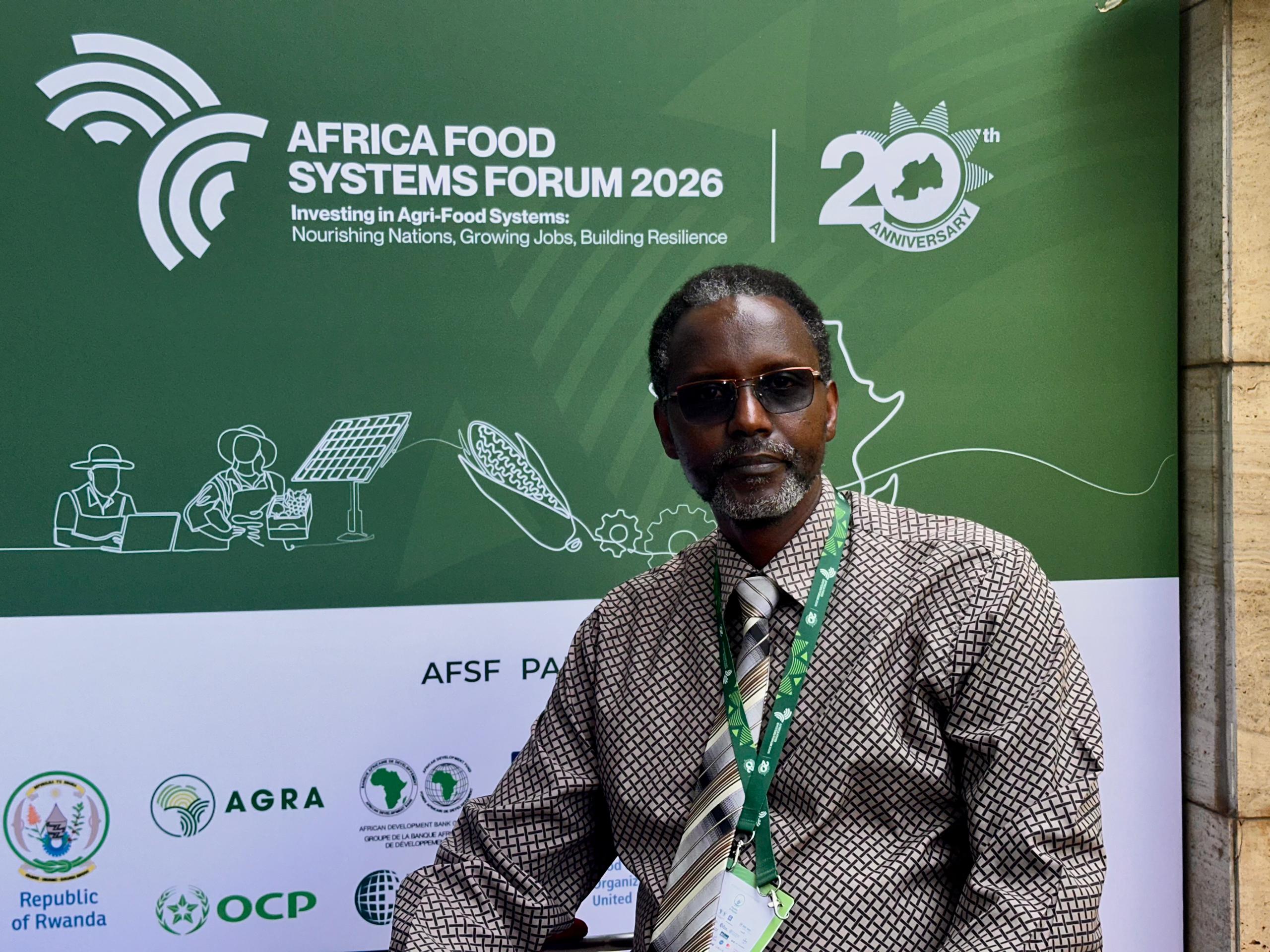
Dr. Guillaume Nyagatare, Principal of UR-CAFF, said the college has approximately 4,000 students across three schools and is working to contribute to Rwanda’s food security through education, research and knowledge transfer.
Because Rwanda has small farms and high population density, he said, it needs a distinct agricultural pathway.
“We are trying to transform our agricultural landscape from subsistence agriculture to a knowledge-based and commercial agriculture,” Nyagatare said.
He also called for stronger support for research and postgraduate education so universities can develop solutions to climate change, food insecurity, low productivity and limited value addition.
The UR-CAFF experience offers a practical model for agricultural universities across Rwanda and Africa. Career guidance prepares students for both employment and entrepreneurship, while employability training builds communication, confidence, teamwork and problem-solving skills. The Agribusiness incubation program then helps turn students’ innovative ideas into market-oriented ventures.
For final-year student Sylvain Niyitanga, the wider impact is clear:
“Rwanda will get food. We’ll get food, jobs and money from this effort,” he said.
At Busogo, classrooms, laboratories, career services and incubation spaces are being brought together to prepare a generation that sees agriculture as a field of innovation, enterprise and prosperity.




Leave a Reply