
How Far Has Rwanda Progressed in Its Goal to Restore Two Million Hectares of Land by 2030?
By The Inspirer writer.
The Rwanda Forestry Authority (RFA) has announced that the Government of Rwanda is making significant progress towards its goal of restoring two million hectares of land by 2030, as part of efforts to conserve and protect biodiversity.
In 2011, various countries met in Bonn, Germany, and set a target to restore 150 million hectares of land by 2020 and 350 million hectares by 2030. Each country committed to restoring a specific number of hectares to achieve this global goal. Rwanda, recognizing that sustainable development is impossible without conserving biodiversity, set a target of restoring two million hectares.
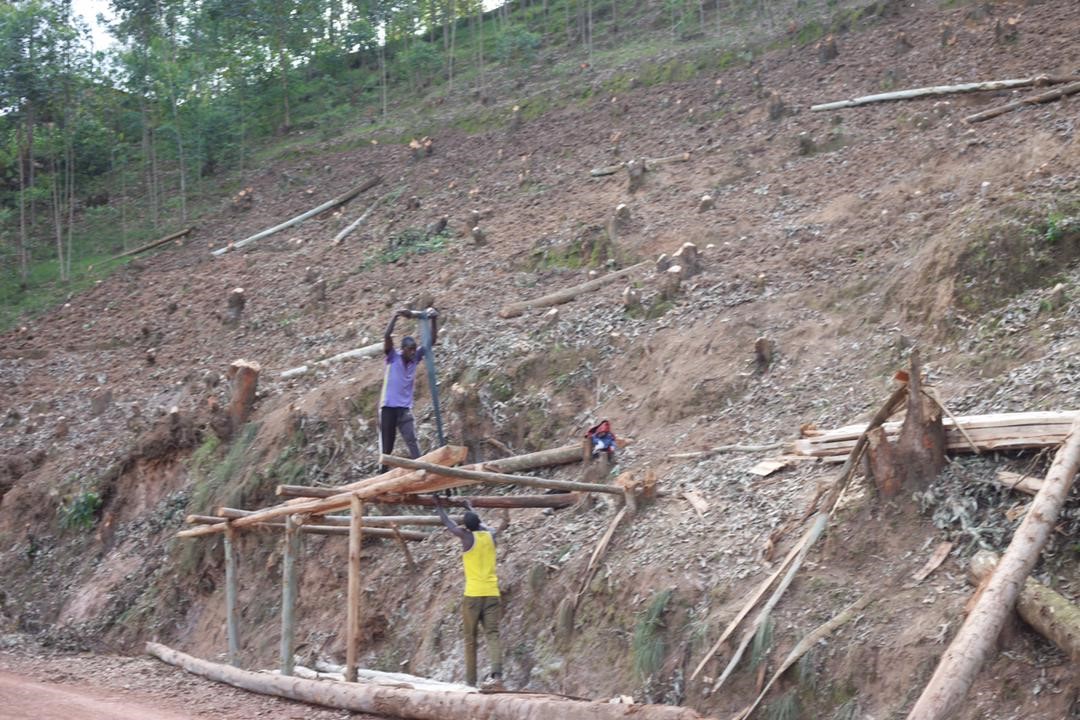
The land to be restored includes areas where forests have been degraded by human activities, which negatively impacts other biodiversity, leading to the decline of certain plants and animals. Without urgent action, more species could become extinct.
RFA Director General Dr. Nsengumuremyi Concorde, in an interview with IGIHE, stated that Rwanda is making considerable progress towards this goal.
He said, “We have reached 68%. In reality, we are well on our way to achieving this target. The two million hectares do not only consist of trees, but also include all activities that can restore the land. Forests are often highlighted because they play a major role in restoring the original quality of the land.”
In addition to tree planting, other activities contributing to the Bonn Challenge include constructing contour terraces, progressive terraces, digging anti-erosion ditches, planting grass on ridges, and integrating agroforestry.
The implementation of this goal is supported by partners dedicated to biodiversity conservation and climate change mitigation.
Dr. Ange Imanishimwe, an expert and Director of the BIOCOOCOR organization, which focuses on biodiversity in Rwanda, told IGIHE that Rwanda’s commitment has attracted projects and sponsors aimed at restoring areas damaged by human activities.
He said, “In fact, it will also help trees to grow well. The remaining biodiversity will thrive and increase.”
Dr. Imanishimwe emphasized that Rwandans should be proud of the country’s efforts to protect biodiversity, as it will ensure the continued availability of traditional medicine, attract tourists and researchers interested in plants, create jobs for the youth, and boost beekeeping since bees will have ample foraging areas.
Source: IGIHE.




Leave a Reply