
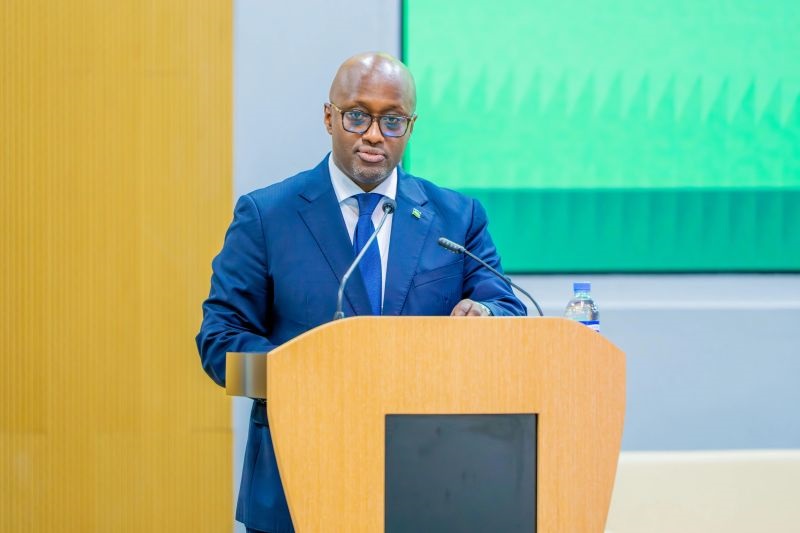
Nduhungirehe calls on Africa to prioritize trade-enabling infrastructure
By The Inspirer.
Minisitiri w’Ububanyi n’Amahanga n’Ubutwererane, Ambasaderi Olivier Nduhungirehe, has urged African countries to invest more in infrastructure that facilitates trade among them, in order to reduce costs and improve regional commerce.
Speaking at an international development conference held in Rabat, Morocco on May 21, 2026, Nduhungirehe said Africa’s development must be anchored in transformative infrastructure, stronger human capital, and expanded intra-African trade.
He said the infrastructure gap in Africa is not only a development challenge but also a major barrier to competitiveness on the global stage.
“Africa’s infrastructure gap is not just a development issue, but also a competitiveness constraint,” he said.
He emphasized that transport systems and related infrastructure must be central pillars of Africa’s development agenda, as they play a key role in reducing the high cost of doing business across the continent.
He noted that the cost of moving goods within Africa is often higher than importing from outside the continent, which undermines competitiveness and slows down the goals of the African Continental Free Trade Area (AfCFTA).
“African trade often faces higher costs within the continent than when importing from global markets. This undermines competitiveness and the ambition of a unified African market,” he said.
Nduhungirehe called for increased investment in transport corridors, ports, railway systems, air transport networks, and modernized border management systems across Africa.
He described the AfCFTA as a major opportunity for the continent, noting that it could become the world’s largest free trade area, connecting over 1.4 billion people.
He stressed that African integration should go beyond political commitments and be treated as a real opportunity for trade expansion, investment, and improved livelihoods.
He said that for AfCFTA to function effectively, Africa must reduce border fees, harmonize trade regulations, improve payment systems, and modernize border infrastructure.
“This also requires building a continental value chain that enables Africa to move beyond exporting raw materials and instead advance toward industrialization and value addition,” he said.
Nduhungirehe further noted that strengthening intra-African trade, investment, and cooperation would enhance the continent’s voice in the global economy.
“The future of Africa will not be defined by its challenges, but by the way we collectively address them. The decisions we make today, the investments we prioritize, and the partnerships we build will shape the economic future of our continent,” he said.
He reaffirmed Rwanda’s commitment to working closely with African countries and international partners to advance sustainable and inclusive continental development.





Leave a Reply