
The law on access to information needs to be revised
The law on access to information needs to be revised and more publicized to accelerate the development of the country.
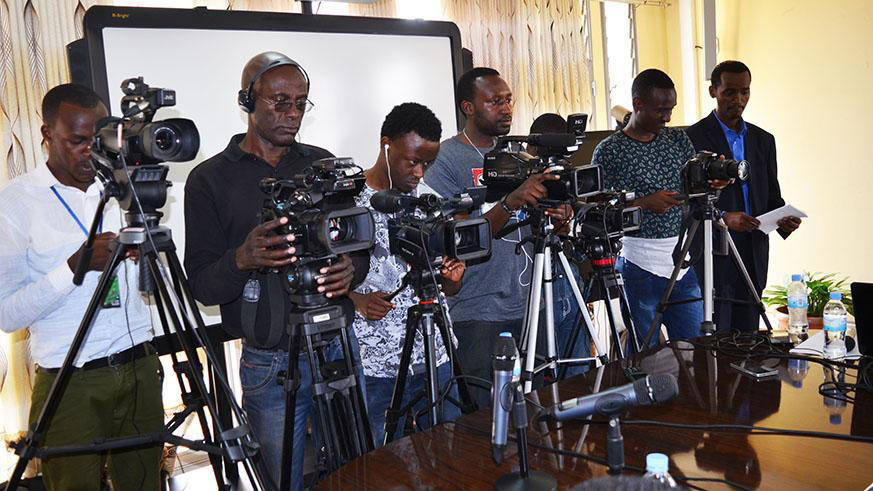
Various media outlets in Rwanda agree that the law on access to information needs to be updated and more educated to accelerate the country’s development. This was reiterated at a conference held on Thursday 18/3/2021, organized by the Rwanda Journalists for Sustainable Development (RJSD) to analyze the implementation of the current information law.
It is a conference organized after analysis on the findings of a study conducted by SOBANUKIRWA in collaboration with JP Media in 2020.
The conference was attended by various stakeholders in the field of access to information law, including the Office of the Ombudsman, RMC, RURA, Transparency International Rwanda, CERULAR, researchers and journalists.
Some of the journalists who attended the meeting pointed out some of the obstacles, including the fact that information is being stolen without action, and those who deny it (leaders) should not be affected because the law does not have a provision for punishment.
One of these journalists is Samuel Baker BYANSI. “The law without penalty is difficult to enforce. Sometimes this law is not known to most people but even those who know it immediately realize its limited power that there is no provision for punishment, which causes them to deliberately kill it. So, it is difficult for us to have access to information at a satisfactory level unless they have revised this law,” he said.
Another journalist is Christophe HITAYEZU. He explained that the law should be taught and publicized, especially among the authorities, as many are unaware of its interest in national development. “The problem now is that some officials do not understand this law and feel that a journalist is their enemy.”
HITAYEZU continues: “A journalist has the right to access information and pass it on to the public. Authorities do not fully understand the benefits of providing information because they themselves benefit from the development of the company they lead. Leaders need adequate training on the benefits of this law,” he said.
The participants of the conference also pointed to the PR, communication & information officers in various institutions who themselves have shown little effort in understanding the content of the law and are also in need of additional knowledge.
Emmanuel MUGISHA, the executive secretary of the RMC, believes that people who also violate the right to information should be punished. “While there are no sanctions against the ones who violating this law, we find that there should be sanctions that are probably not criminal, but maybe the courts will be fining people who deliberately killed this law”.
The remarks were also confirmed by Cecile MUGENI, who represented the ombudsman’s office in the conference, saying that he was going to deliver these views to her high managers. “It is true that this law on access to information needs to be updated, although it is not yet time to update it, but we have included additional provisions that provide for penalties for people who misrepresent information” – MUGENI.
RJSD spokesman Celestin Ntawirema said it is real time for the law to benefit the country in its development as part of the organization’s programs. “The law, which came into force in 2013, has clear provisions, but more needs to be done to build a sustainable media sector. In brief, we urge our legislators to revise the law on access to information, and we, as the RJSD, are ready to make our contribution by establishing a permanent way to continue educating those who understand this law and better understand it, so that it can lead to our development,” RJSD spokesman said.
The RJSD calls for this to be done soon as possible, so that this law on access to information helps the country to achieve sustainable development as information is usually a key pillar in accelerating the development of everyone and the country.
It is in 2019 that journalists from the Rwandan and foreign media, together established the RJSD to help Rwandans in general to achieve sustainable development, with a sustainable approach and the right to information, especially for information for development. Other activities planned by the RJSD include working with universities and higher institutions that teach journalism, media & communications. It is to help the students in these schools to increase the knowledge they need today and to help them get into the professional journalism.





Leave a Reply