
Rwanda’s inflation expected to stay around 5% for the remainder of 2024, says central bank governor
By The Inspirer.
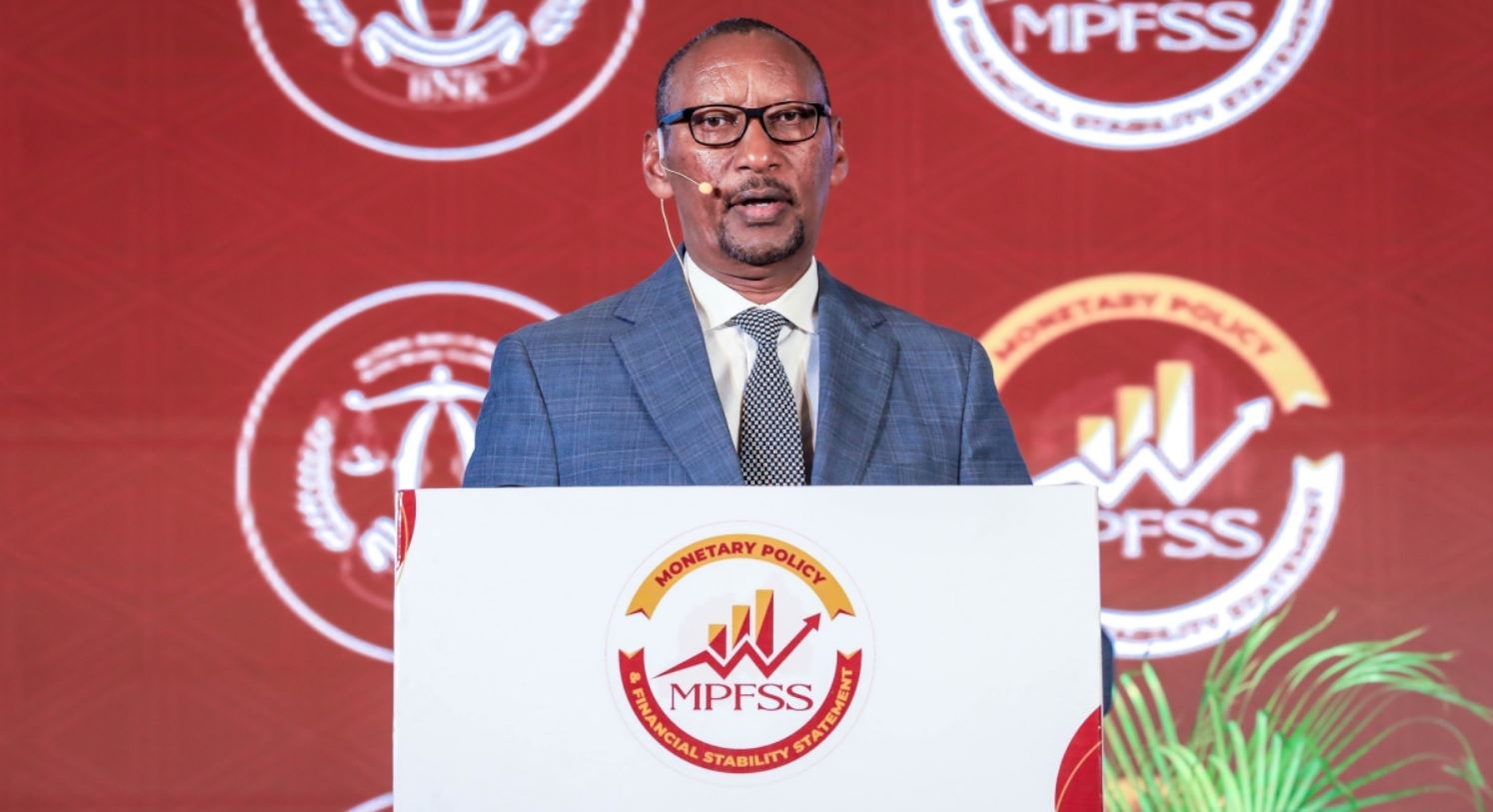
Headline inflation in Rwanda is expected to revolve around the central bank’s policy benchmark of 5 percent for the remainder of 2024 and 2025, according to John Rwangombwa, Governor of the National Bank of Rwanda (NBR).
He was presenting the Monetary Policy and Financial Stability Statement (MPFSS), an assessment of the economic and financial developments for the first half of 2024 and an outlook for the rest of the year, on September 25.
“Headline inflation moderated to 4.9 percent in the first half of 2024, down from 17.7 percent recorded in the first half of 2023,” Rwagombwa said, adding that the deceleration was driven by declines in both core and fresh food inflation.
Headline inflation measures the overall increase in prices for goods and services within an economy.
Core inflation, which excludes volatile components like food and energy prices, eased due to falling global food prices. Fresh food inflation declined due to increased supply following a strong agricultural harvest in Season A of 2024.
However, energy inflation rose in response to higher international oil prices, impacting domestic energy costs during the same period.
Global inflation has also been on a downward trend, averaging 5.9 percent in 2024, compared to 6.7 percent in 2023, with expectations to drop further to 4.4 percent in 2025.
These global inflation levels, however, remain above the historical annual average of 3.9 percent observed between 2000 and 2019.
The annual headline inflation in Sub-Saharan Africa (SSA) is projected to remain in double digits but on a declining trend.
Inflation in SSA moved from 16.2 percent in 2023 to 15.3 percent in 2024, driven by high inflation rates in countries like Zimbabwe, South Sudan, Sierra Leone, and Nigeria, where food prices have sharply increased.
Monetary policy interventions in Rwanda addressed the inflationary pressures that began rising in 2021 and peaked at 21.1 percent in the fourth quarter of 2022.
From November 2023, the Central Bank Rate (CBR) was maintained at 7.5 percent, following a cumulative increase of 300 basis points since February 2022.
The CBR was reduced to 7 percent in May 2024 and further cut by 50 basis points to 6.5 percent in August, after inflation stabilized at around 5 percent.
“Inflation is expected to remain at 5 percent for the rest of the year and into 2025, with all conditions remaining constant,” the Governor said, noting that climate-related challenges and global geopolitical tensions are risks to the outlook.
With the tightening of monetary policy in 2023, the interbank rate rose by 66 basis points in the first half of 2024, averaging 8.21 percent compared to 7.55 percent in the same period of 2023.
The interbank rate further declined to 7.32 percent in August 2024 following the easing of the policy rate.
According to the Governor, lending rates showed a slight decrease of 3 basis points between 2023 and 2024, from 15.71 percent in the first half of 2023 to 15.68 percent in the same period this year.
Commenting on the lending rates, Bank of Kigali’s CEO, Diane Karusisi, mentioned that the rates are expected to stabilize at around 15 percent.
“The 15 percent, as shown by the central bank, is an average, but this does not mean it’s the same for all sectors, as some are riskier than others,” Karusisi explained, adding that interest rates are influenced by customer behavior and industry competition.
Deposit rates increased to 10.24 percent in the first half of 2024, up from 9.48 percent in the same period of 2023.
theinspirerpublications@gmail.com




Leave a Reply