

Rwanda to Showcase Cutting-Edge GMOs at Agricultural Technology Conference
By The Inspirer.
Rwanda is set to showcase its advancements in genetically modified organisms (GMOs) at the upcoming Science and Partnerships for Agriculture Conference (SPAC). This prestigious event brings together agricultural experts from across Africa to discuss the latest technologies and innovations in agriculture and livestock development.
GMOs, which involve altering the genetic material of organisms to incorporate new traits, are a focal point for Rwandan researchers. This technology has the potential to revolutionize agriculture by addressing critical issues such as disease resistance, climate resilience, and increased productivity.
The conference, spanning three days, will feature various innovations from different countries, highlighting solutions designed to help agriculture combat the challenges posed by climate change. These challenges include unpredictable weather patterns, which can lead to crop damage and significant losses for farmers.
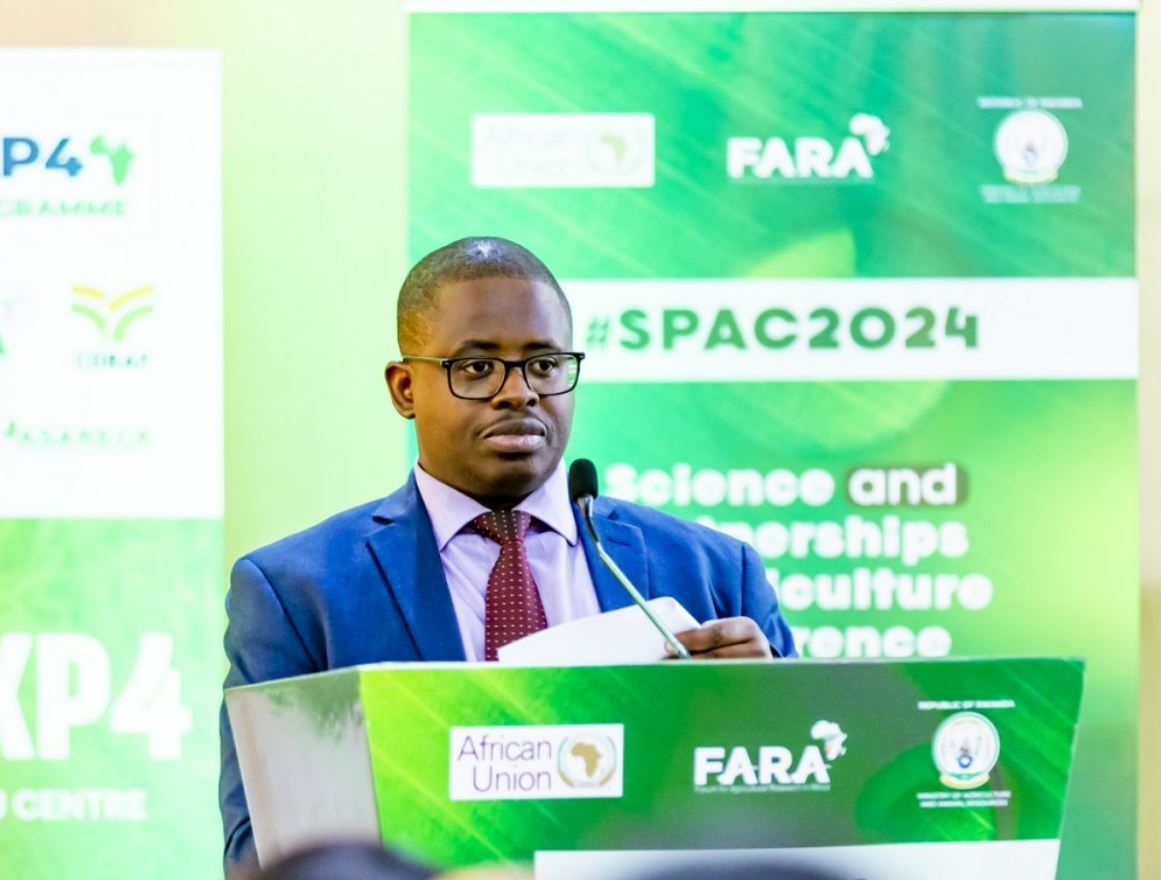
Dr. Olivier Kanama, Permanent Secretary in the Ministry of Agriculture and Animal Resources, emphasized Rwanda’s commitment to advancing GMO technology.
“At this conference, Rwandan researchers will present high-quality genetically modified seeds we have developed. We have these seeds, and the law permitting their use has already been approved,” he stated.
Although GMO technology has been approved at the national level in Rwanda, it has not yet been implemented among the public. Establishing the law is one step, but implementing it is another. To ensure proper oversight, Rwanda is setting up a committee to monitor the use of these seeds, marking the beginning of this technological journey.
The initial focus is on staple crops such as potatoes, which can withstand heavy rains and require fewer pesticides, maize that tolerates high temperatures, and beans. Dr. Kanama noted, “We are continuing research on other seeds, but our well-developed seeds that can address these problems are in these crops. We plan to produce these seeds and bring them to the market once all requirements are met.”
Dr. Athanase Nduwumuremyi, Head of cassava research and technology transfer program at RAB explains. including potatoes, sweet potatoes, and cassava, is also among the researchers working on this technology in Rwanda. He mentioned that their research has expanded to include cassava resistant to mosaic disease and maize that can withstand fall armyworms. “Once these structures are in place, we will begin distributing these seeds to farmers,” Nduwumuremyi said.

The conference will also provide an opportunity to learn from other countries. Nduwumuremyi highlighted successful collaborations, such as sending maize seeds to the Central African Republic, where they are performing well. In Nigeria, advanced GMO technology for maize has already reached farmers, and Kenya is also making significant strides. “We could request their assistance for trials,” he added.
Dr. Aggrey Agumya, head of the Forum for Agricultural Research in Africa (FARA) of the African Union Commission, praised Rwanda’s progress in agricultural development and infrastructure. However, he noted areas needing improvement, such as research. “Rwanda should focus on increasing investment in research, both in terms of funding and building the capacity of researchers,” Dr. Agumya emphasized.
Globally, genetically modified crops are cultivated on 200 million hectares, with soybeans, maize, and cotton being the most common. This technology is well-established in countries like the United States, Brazil, Argentina, India, and Canada.
As Rwanda continues to advance its agricultural technology, the insights and collaborations from the SPAC conference will be instrumental in shaping the future of its agricultural sector.
theinspirerpublications@gmail.com





Leave a Reply