
Rwanda Nears Full Food Security as 83% of Citizens Achieve Self-Sufficiency
By Prince Boris CYUBAHIRO.
Kigali, October 16, 2025 — Rwanda is edging closer to full food security, with 83% of its population now able to meet their own food needs, a notable rise from 79.2% recorded in previous years.
The progress, announced by the Ministry of Agriculture and Animal Resources (MINAGRI) ahead of World Food Day celebrations, marks a significant milestone in the country’s journey toward sustainable agriculture and nutrition security.
This year, Rwanda will celebrate World Food Day on October 24, under the global theme, “Working Together for Food Security to Build a Better Tomorrow.”
Although the Food and Agriculture Organization (FAO) officially observes the day every October 16, countries are free to choose their own date for national commemorations.

From Recovery to Resilience
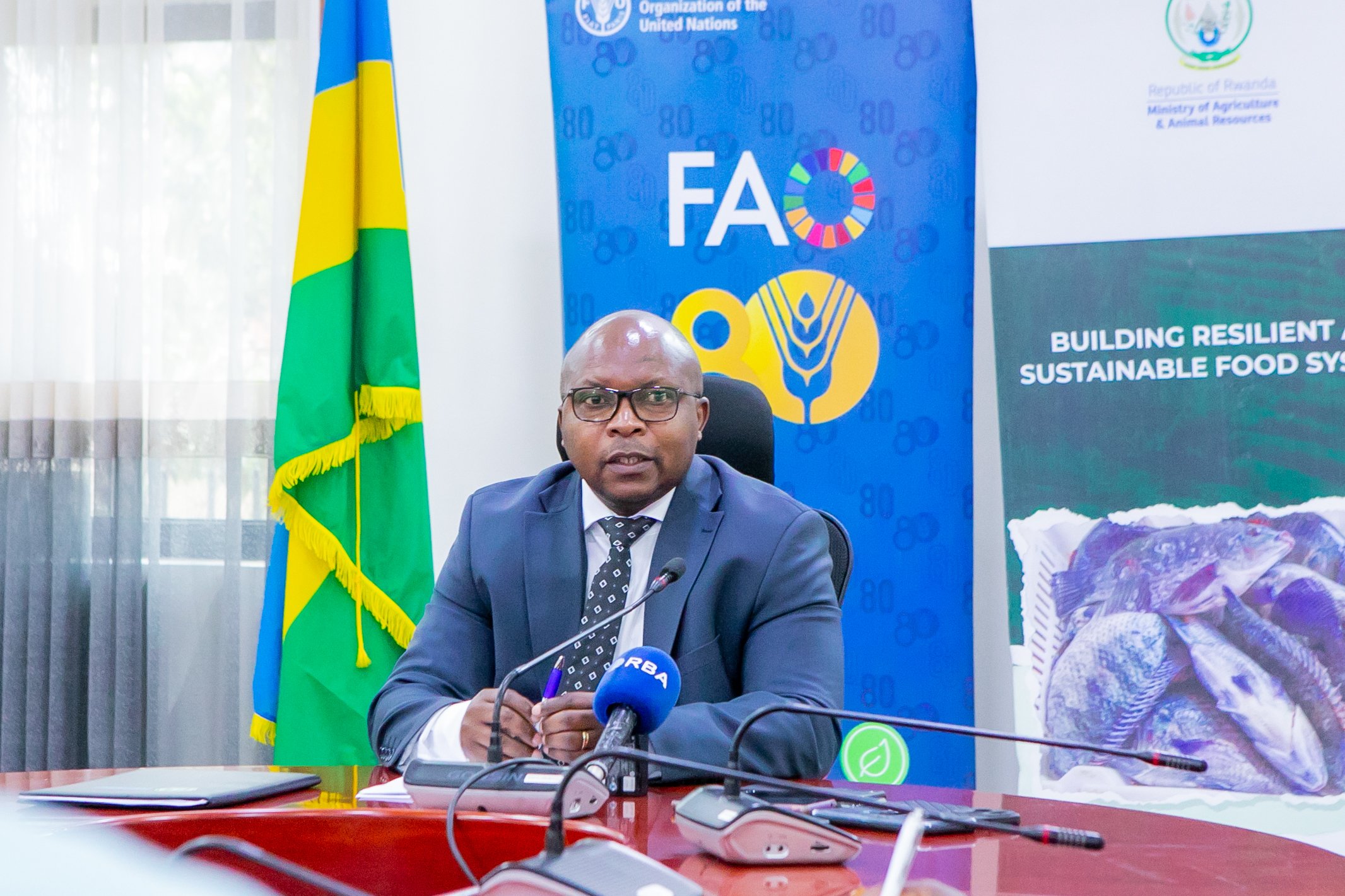
Speaking during a press briefing in Kigali, Dr. Telesphore Ndabamenye, Minister of State in charge of Agriculture, said the achievement is a direct result of deliberate policy interventions, especially those introduced in the aftermath of the COVID-19 pandemic.
“We have implemented strong programs to promote agriculture and livestock, with substantial government investment to ensure that families vulnerable to hunger are significantly reduced,” he said.
Dr. Ndabamenye explained that beyond recovery, Rwanda’s efforts now focus on resilience—helping communities adapt to climate shocks and market fluctuations while maintaining food availability.
“Food self-sufficiency has increased from 79.2% to 83%. However, this doesn’t mean every Rwandan consumes the same quantity or quality of food,” he noted. “The share of people experiencing mild or moderate food shortages has dropped from 2% to 1%, while those eating only once a day have fallen from 19% to 16%.”
Nutrition Still a Challenge
Despite these gains, nutrition specialists warn that food availability does not always translate to dietary diversity.
Dr. Christine Mukantwali, Head of Nutrition at FAO Rwanda, urged households to pay closer attention to what they eat, not just how much they eat.
“Being food secure goes beyond having enough food. It means consuming a balanced diet from at least 12 food groups, including cereals, roots, vegetables, fruits, meat, fish, milk, and water,” she explained.
However, she noted that only 5% of Rwandan households consume meat, fish, or milk weekly, leaving 95% without regular access to animal-sourced proteins.
“People should strive to eat cereals and animal proteins daily and include a moderate amount of healthy oils in their meals,” she added.

Nyamagabe Hosts National Celebration
This year’s national World Food Day celebration will be held in Nyamagabe District, identified by MINAGRI as having the lowest food self-sufficiency levels.
The district will host a series of community activities, including fruit tree planting and distribution of small livestock such as chickens, pigs, and rabbits to help improve household nutrition.
The ministry also plans to engage primary and secondary schools to instill agricultural values in young people and inspire the next generation of food producers.
“Encouraging the youth to value farming and understand food production is essential for Rwanda’s long-term food security,” said Dr. Ndabamenye.
Global Perspective
According to FAO’s latest data, around 700 million people worldwide remain food insecure—unable to access sufficient food for a healthy life. Of these, 240 million live in Sub-Saharan Africa, where climate change, conflict, and economic instability continue to threaten food systems.
For Rwanda, however, the progress made so far tells a different story—one of persistence, policy commitment, and community action.
As Dr. Ndabamenye emphasized: “Food security is not achieved overnight. It’s a continuous effort—a national responsibility we all share.”




Leave a Reply