

Rwanda and DRC seal historic Washington Peace Accords to end decades of conflict
By Elias HAKIZIMANA.
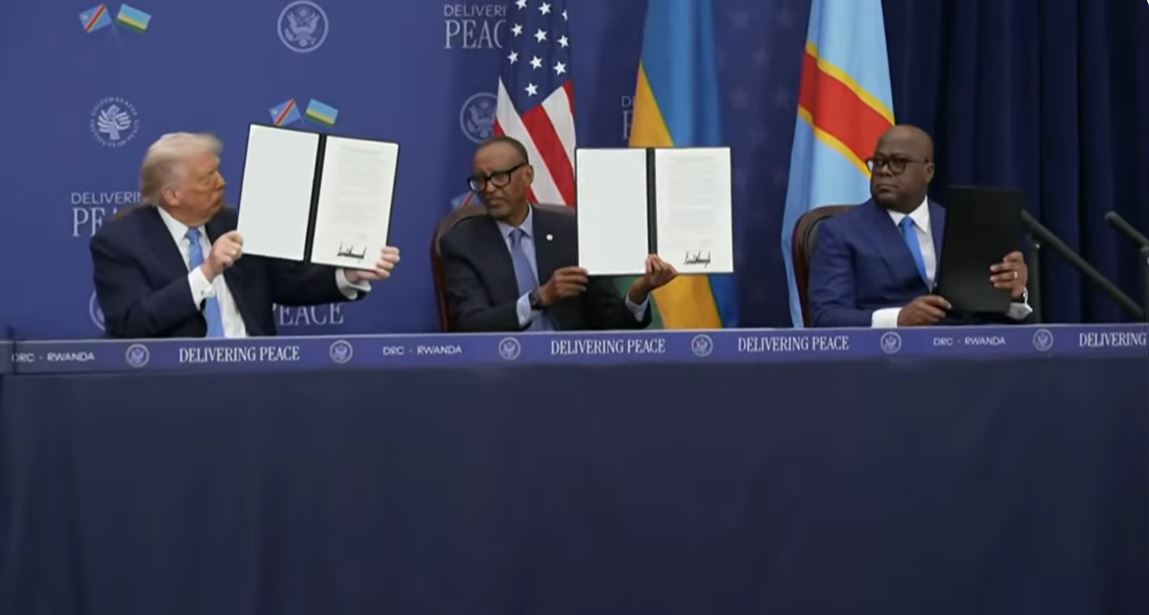
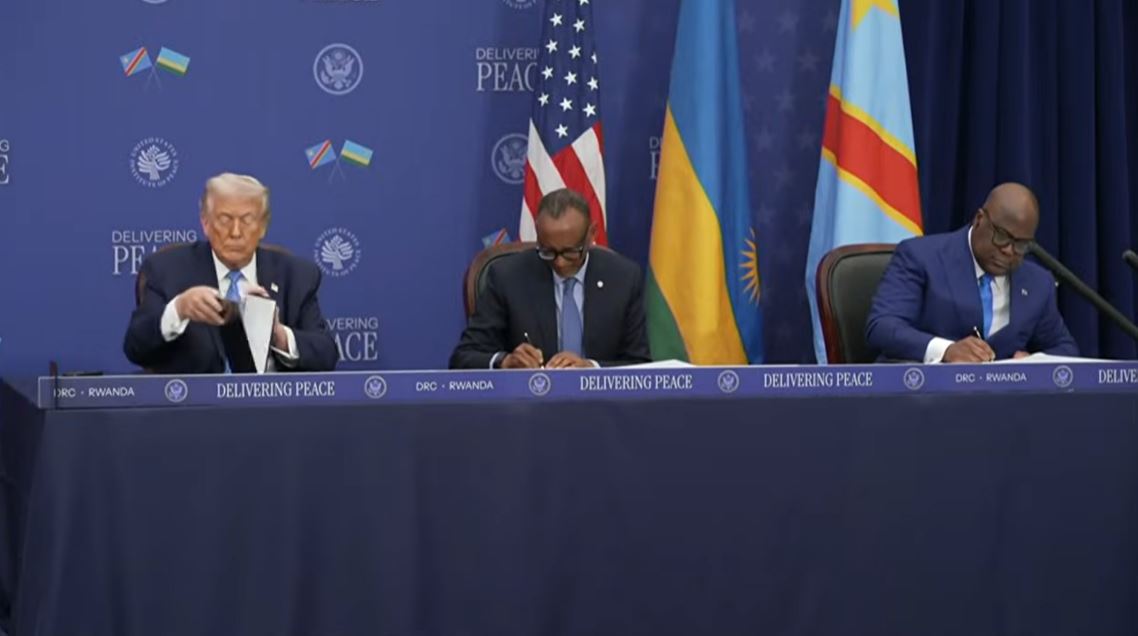
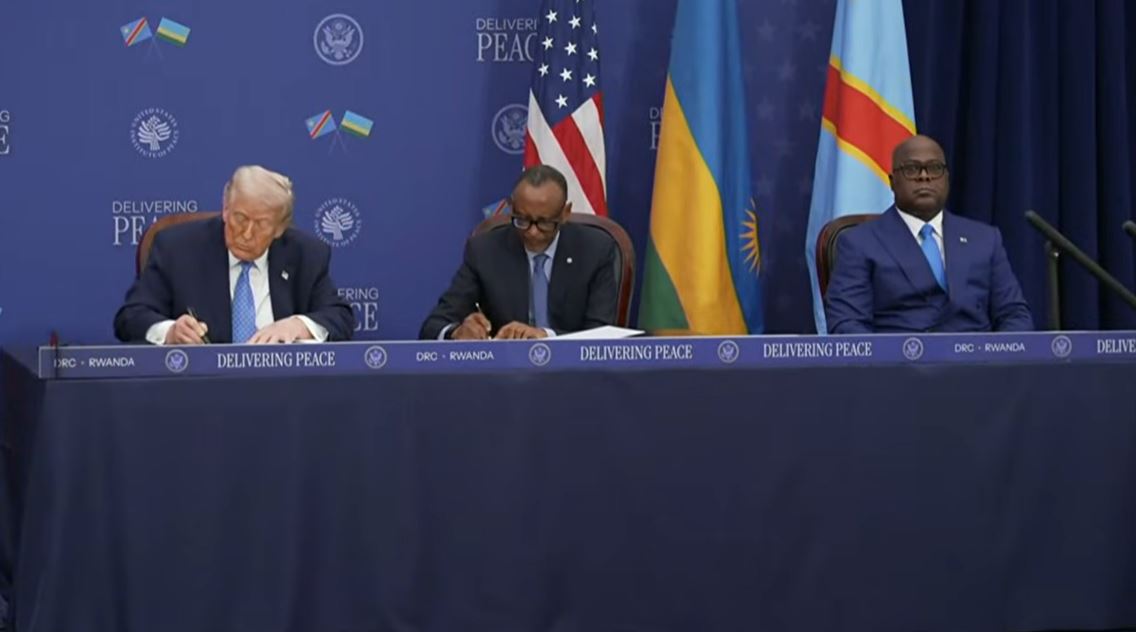
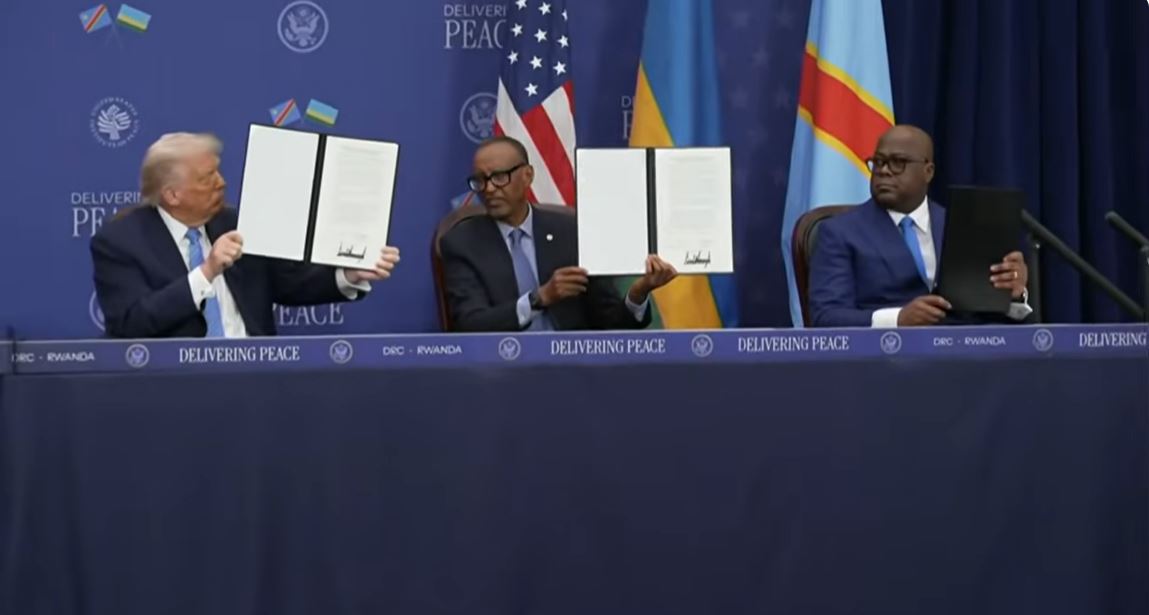
Rwanda and the Democratic Republic of Congo on Thursday signed the Washington Accords, a landmark peace agreement aimed at ending more than 30 years of conflict that has claimed over 10 million lives and destabilized the Great Lakes region.
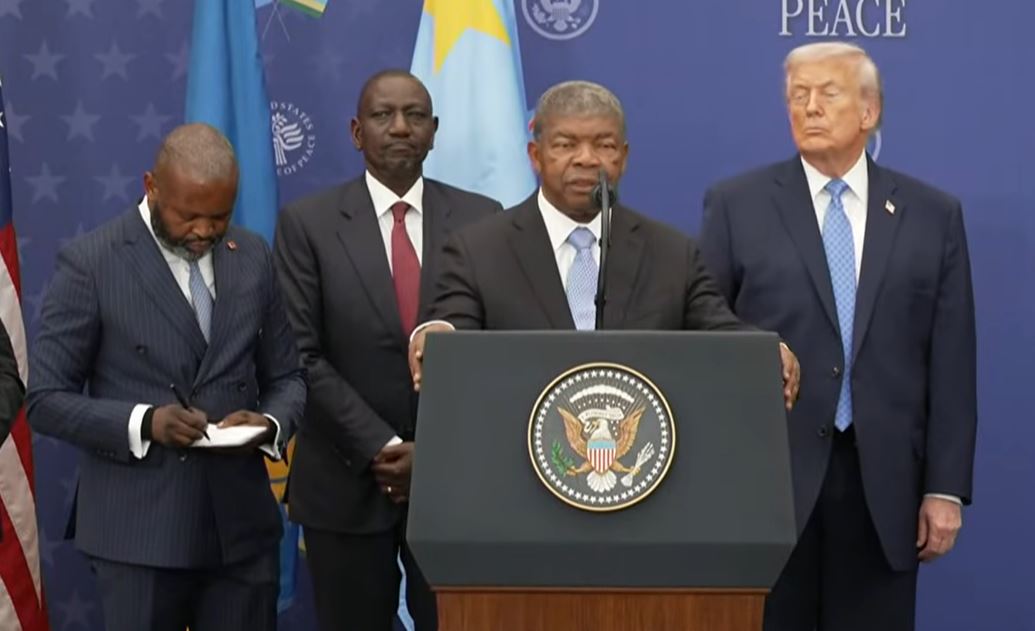
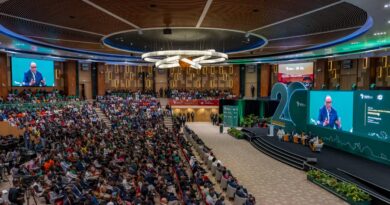
The signing ceremony took place at the U.S. Institute of Peace in Washington, D.C., overseen by U.S. President Donald Trump, who hosted leaders and dignitaries from across Africa and the Middle East.
Trump hailed the breakthrough as “a momentous occasion” and “a new era of harmony and cooperation,” noting that numerous mediation attempts over the decades had failed to resolve the root causes of the conflict.
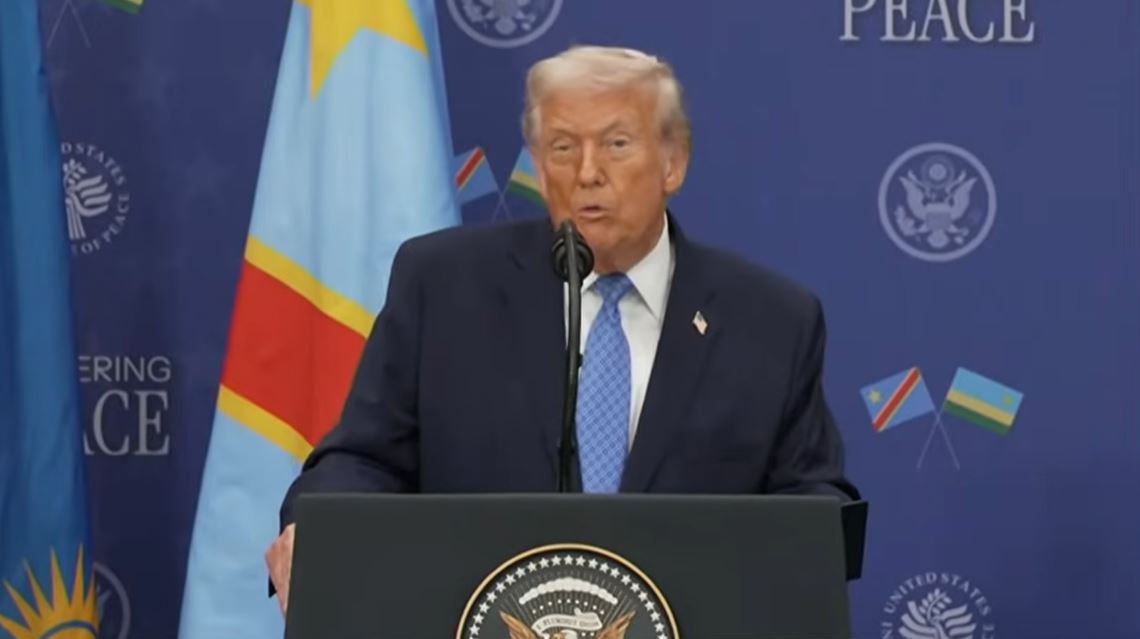
He praised both countries’ leaders for choosing dialogue over confrontation, saying the agreement establishes a permanent ceasefire, the disarmament of armed groups, the return of displaced families, and accountability for atrocities committed during the long-running crisis.
The U.S. president also announced new bilateral agreements with Kigali and Kinshasa, including cooperation on critical mineral supply chains and expanded economic partnerships.
Washington plans to support the region’s economic integration by encouraging major American companies to invest in both countries. Trump said U.S. involvement aims to turn a region “stained with blood” into one of shared prosperity.
Expressing gratitude, Rwanda’s President Paul Kagame credited the United States—particularly President Trump—for injecting “a new and effective dynamism” into the peace process.
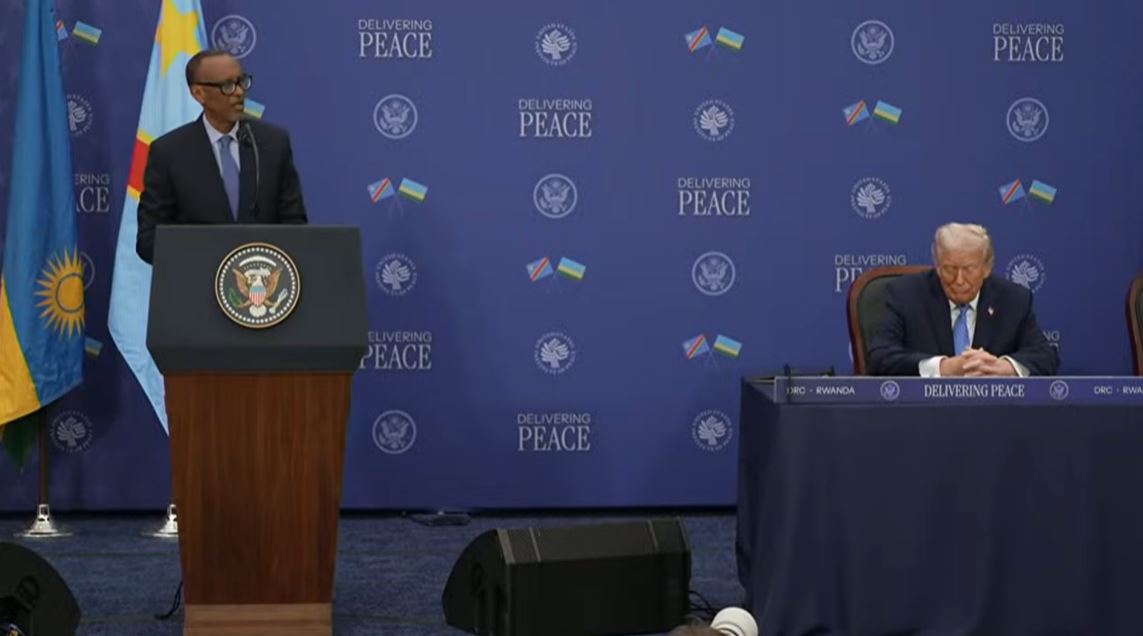
He said previous mediation efforts had stumbled because they failed to address core issues, but the Washington Accords offer the “clearest and most viable path” to ending the conflict. Kagame underscored that durable peace now depends on regional commitment, stressing Rwanda’s readiness to fully implement the agreement and pursue lasting stability.
DRC President Félix Tshisekedi described the accords as a decisive turning point, combining principles of peace, regional economic integration, and long-term cooperation.
He thanked the United States and regional partners—including Angola, Kenya, Qatar, and the African Union—for sustaining efforts that led to the agreement.
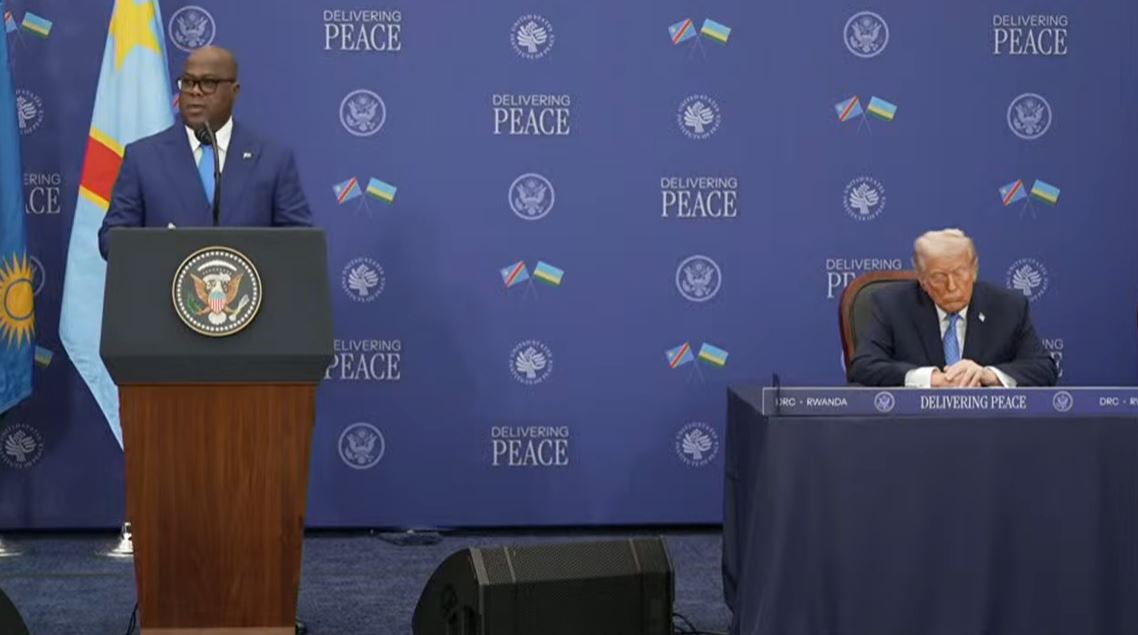
Tshisekedi reaffirmed his government’s commitment to implementing the accords with “seriousness, rigor, and sincerity,” emphasizing noninterference, joint action against armed groups, and the protection of territorial integrity.
Both leaders acknowledged that the road ahead will be challenging, but expressed confidence that the agreement marks the beginning of a new chapter.
Tshisekedi called the accords a symbol of “irreversible commitment” to peace, while Kagame said the region now has an unprecedented opportunity to break with its violent past.
The Washington Accords are being seen as the strongest joint pledge yet by Rwanda and the DRC to move beyond decades of mistrust and conflict, offering new hope for stability and prosperity in the Great Lakes region.
theinspirerpublications@gmail.com




Leave a Reply