

New fertilizer recommendations boost Irish potato yields in Rwanda
By Elias Hakizimana.
In a significant shift for the agricultural community of Rubavu District in western Rwanda, the introduction of new fertilizer recommendations has demonstrated tangible benefits for Irish potato farmers.
Despite initial resistance, the change has proven to enhance crop yield, reduce costs, and increase profitability.
The journey to this breakthrough began two years ago when farmers were initially hesitant to adopt a new, research-backed fertilizer recommendation aimed at improving potato yields.
In November 2024, Rwanda launched the new fertilizer guidelines for both potatoes and rice, and the results from recent demonstrations are compelling—showing farmers that using less but nutrient-targeted fertilizers can lead to higher, more cost-effective yields.
Scientific backing and demonstration sites
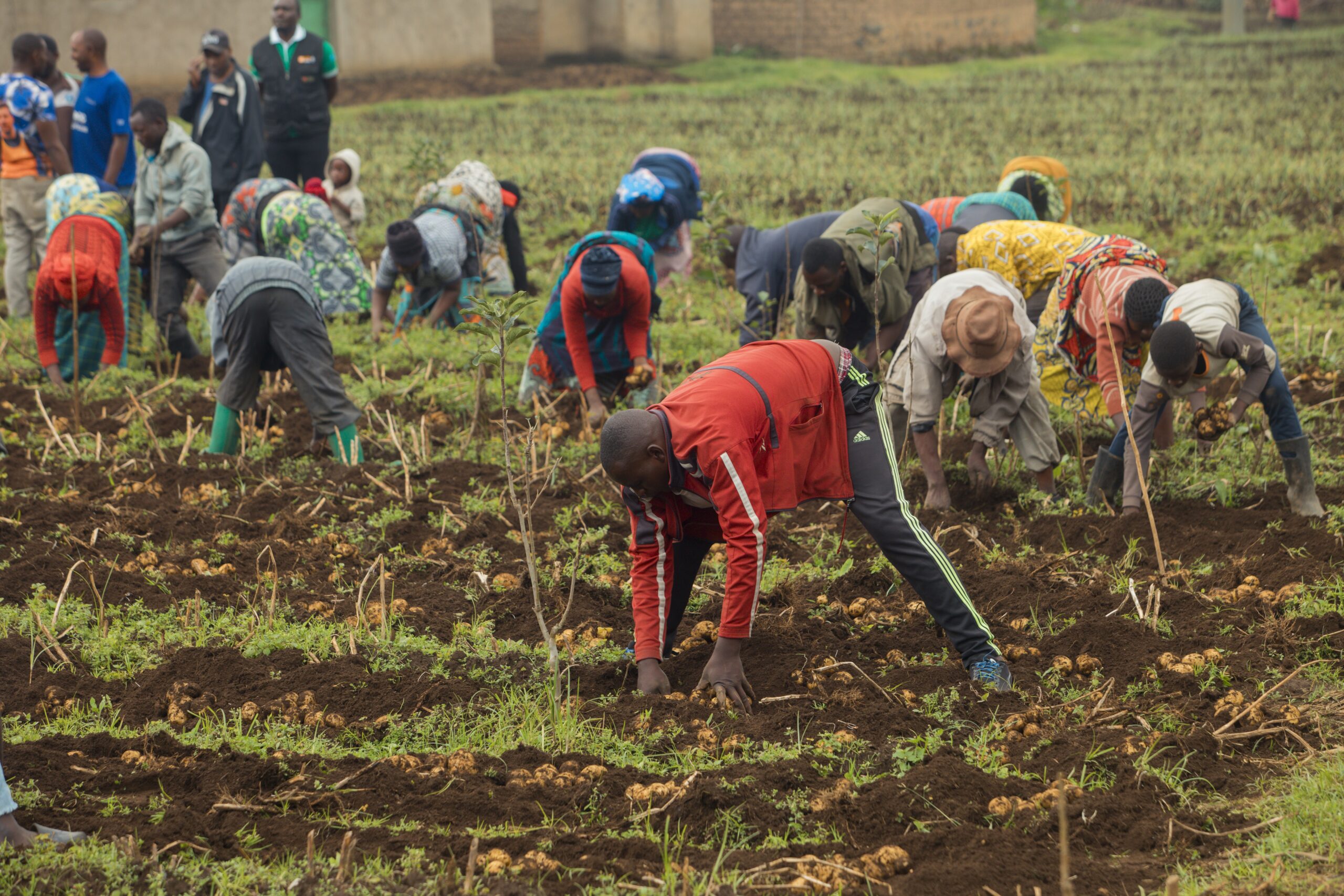
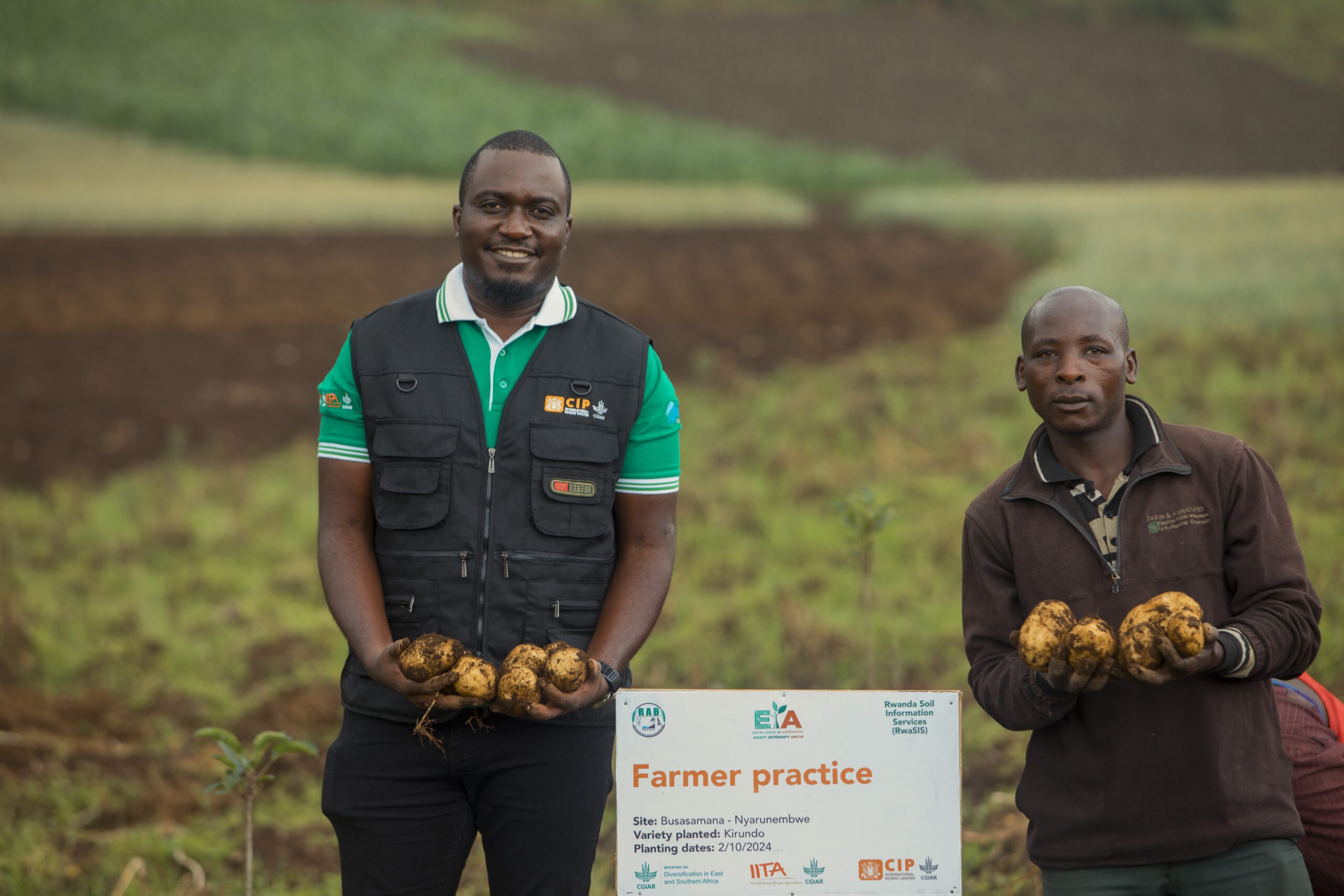
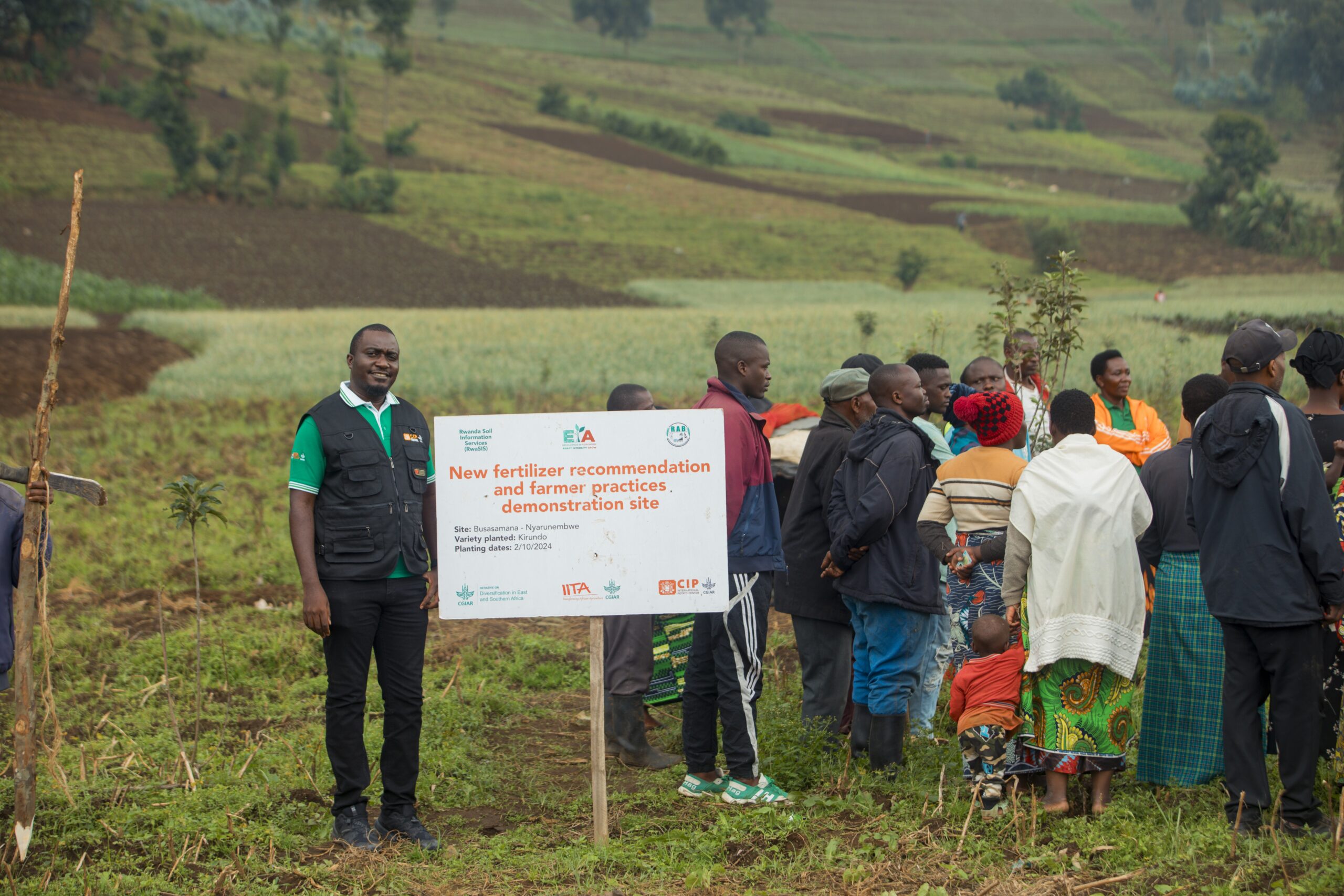
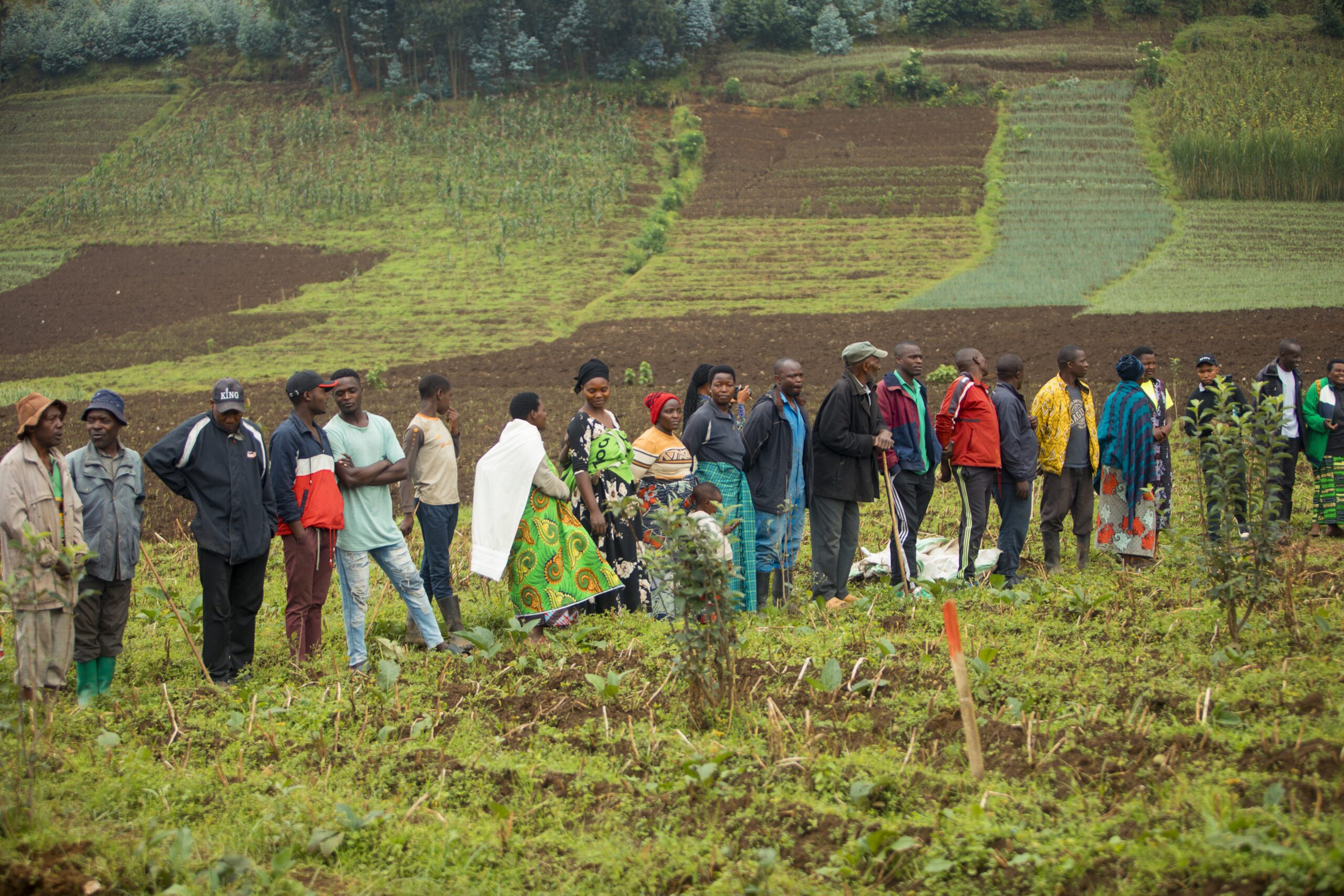
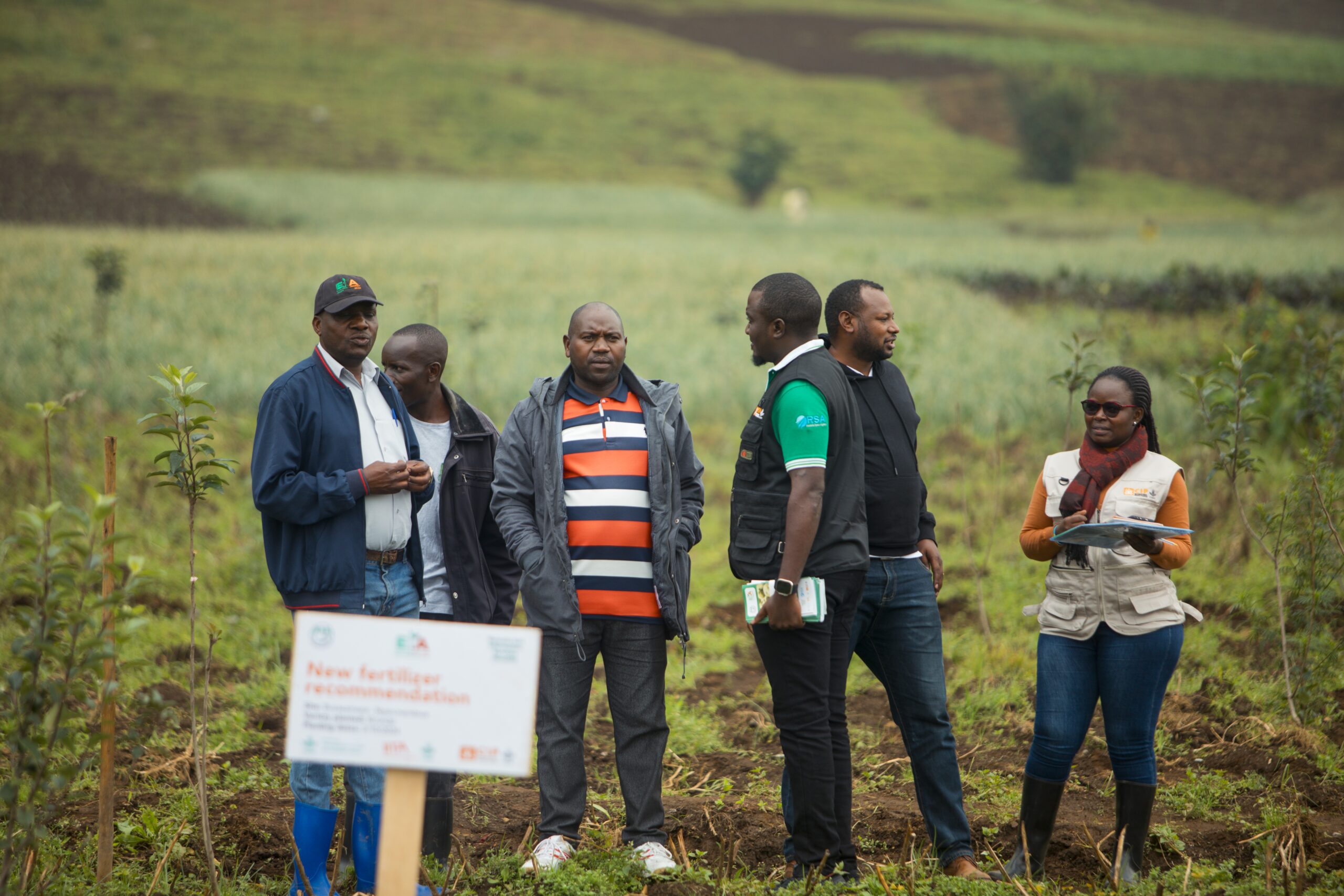
On Thursday, February 6, 2025, a farmer field day was conducted to showcase the results of the new fertilizer recommendations in Rubavu. During the visit, researchers from the Rwanda Agriculture and Animal Resources Development Board (RAB) led the group through two demonstration fields where different fertilizer quantities had been applied.
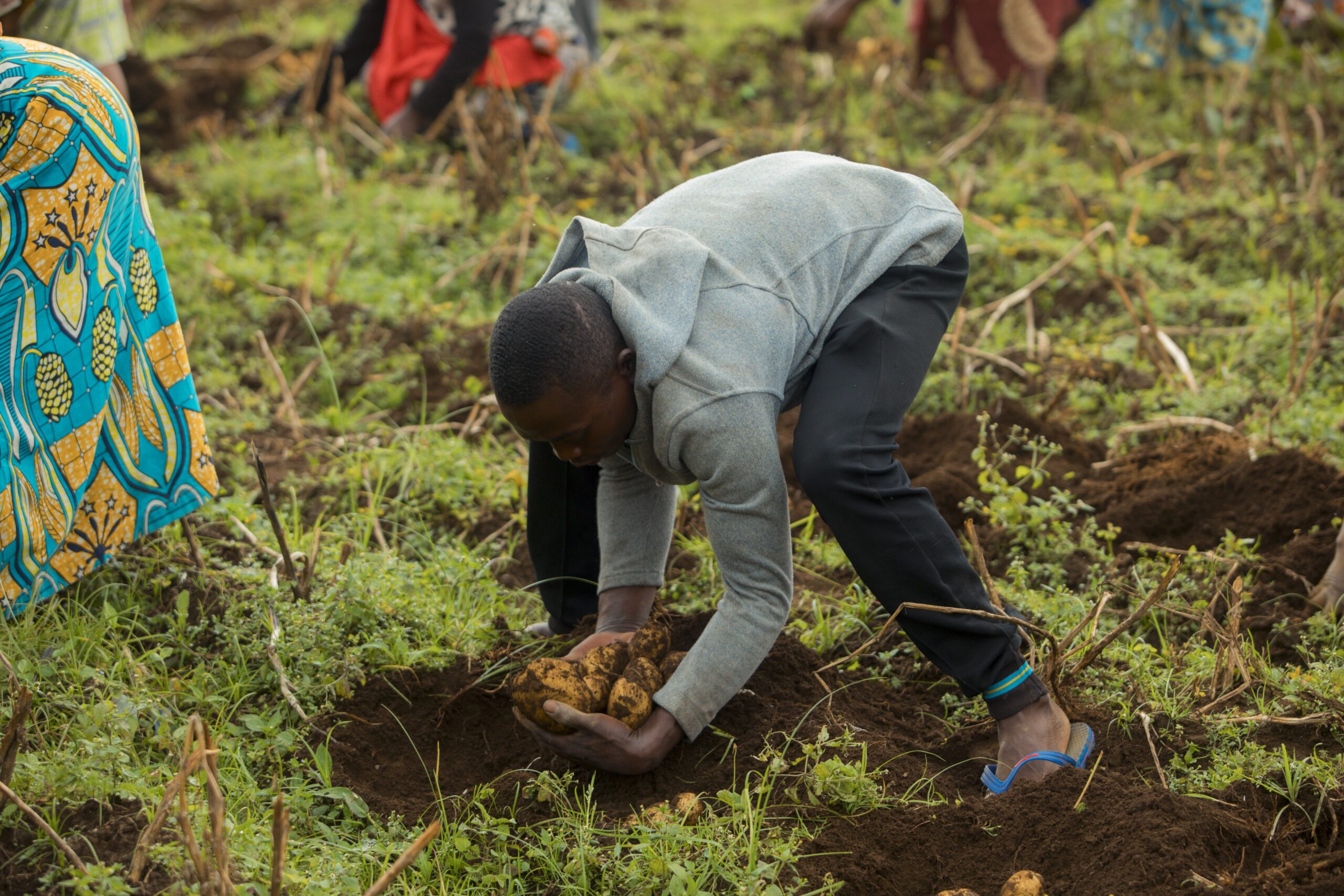
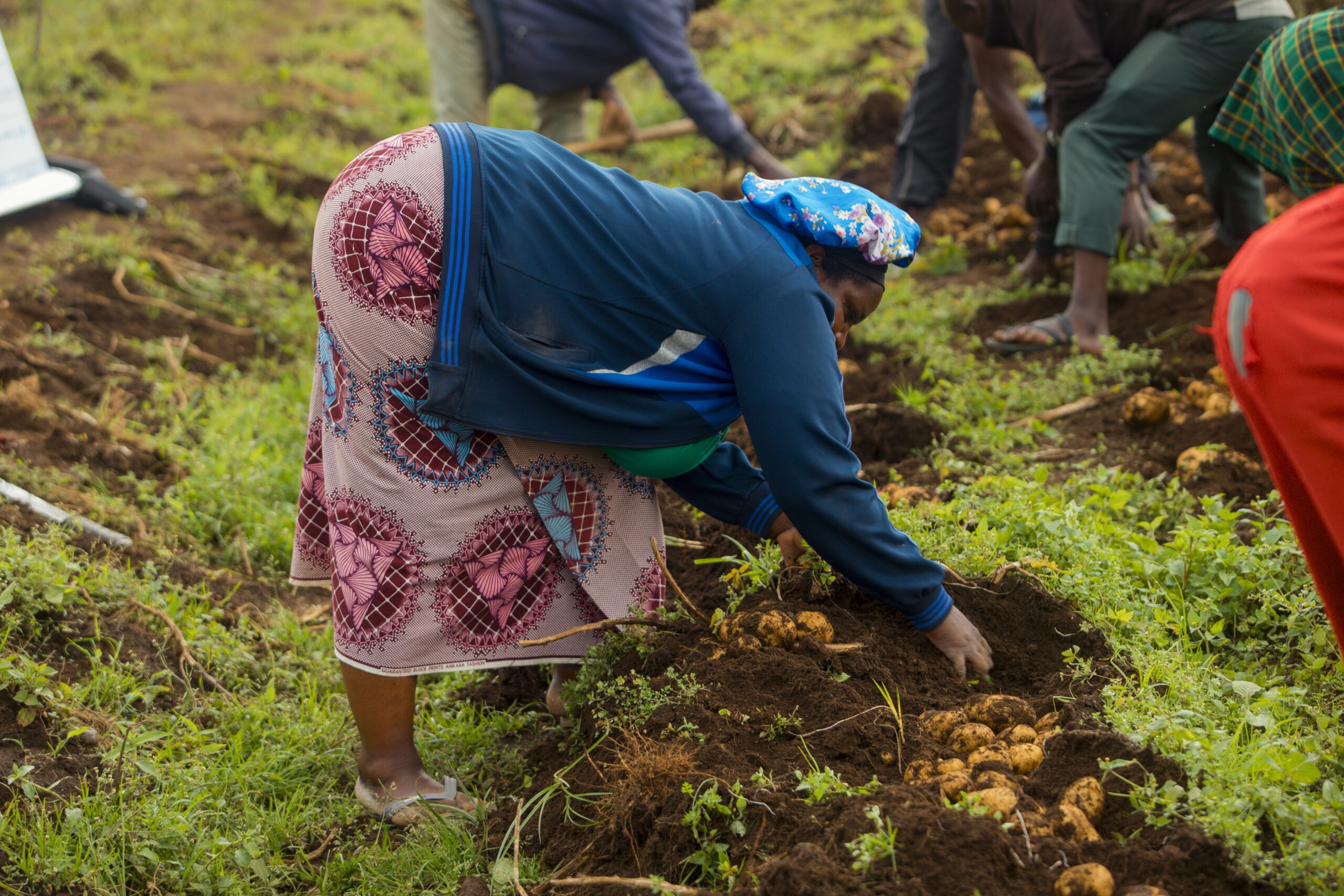
Felicien Nsengiyumva, a researcher at RAB, oversaw the harvest of Irish potatoes from both experimental sites. The results were striking.
John Kayumba, a researcher at RAB, explained that the initiative was the result of a two-year research project in collaboration with the International Potato Center (CIP) and the CGIAR’s Excellence in Agronomy (EiA) initiative. The first step involved testing the soil to assess its nutrient status.
The research revealed varying fertilizer practices across different sectors of Rubavu, with some farmers using as much as 600 kg of NPK fertilizer per hactare. Based on these findings, the researchers recommended 350 kg per hactare—a significantly lower amount, which was initially met with skepticism.

Reduced fertilizer, higher yields
The results of the demonstration fields proved the research hypothesis correct. In one field, farmers using the farmers practice rate of 600 kg/ha of NPK fertilizer harvested just 604 kg of Irish potatoes from a 2-ares plot. In contrast, an adjacent field managed by the same farmer, using the recommended nutrient-targeted application rate of only 350 kg/ha of NPK, DAP and Urea fertilizers, yielded 686.5 kg of potatoes—an impressive difference of 82.5 kg which equates to 4,100 kg/ha or 4.1 t/ha
In another demonstration site, farmers who followed traditional practices and used the 600 kg/ha rate of NPK, DAP and Urea fertilizers harvested 616.5 kg of potatoes from 2 ares, while those who adhered to the new recommendation produced 708.8 kg—resulting in a difference of 92.3 kg equating to 4,615 kg/ha or 4.6 t/ha.
Both fields used an equal quantity of 130 kg of seed potatoes, emphasizing that the increase in yield was directly attributable to the difference in fertilizer application.
This project is part of the CGIAR Excellence in Agronomy Initiative (EiA), and a strong partnership between RAB and CIP.
Dr. Bester Mudereri, a Data Science Agronomist at CIP and the current interim manager, shared his excitement over the success of the demonstration.
“We are very happy today to witness the application of science in action, particularly through machine learning and artificial intelligence,” Dr. Mudereri said.
“We developed site-specific fertilizer recommendations for potato and rice, and today’s demonstration on the potato, shows that our research is delivering better results at a lower cost.”
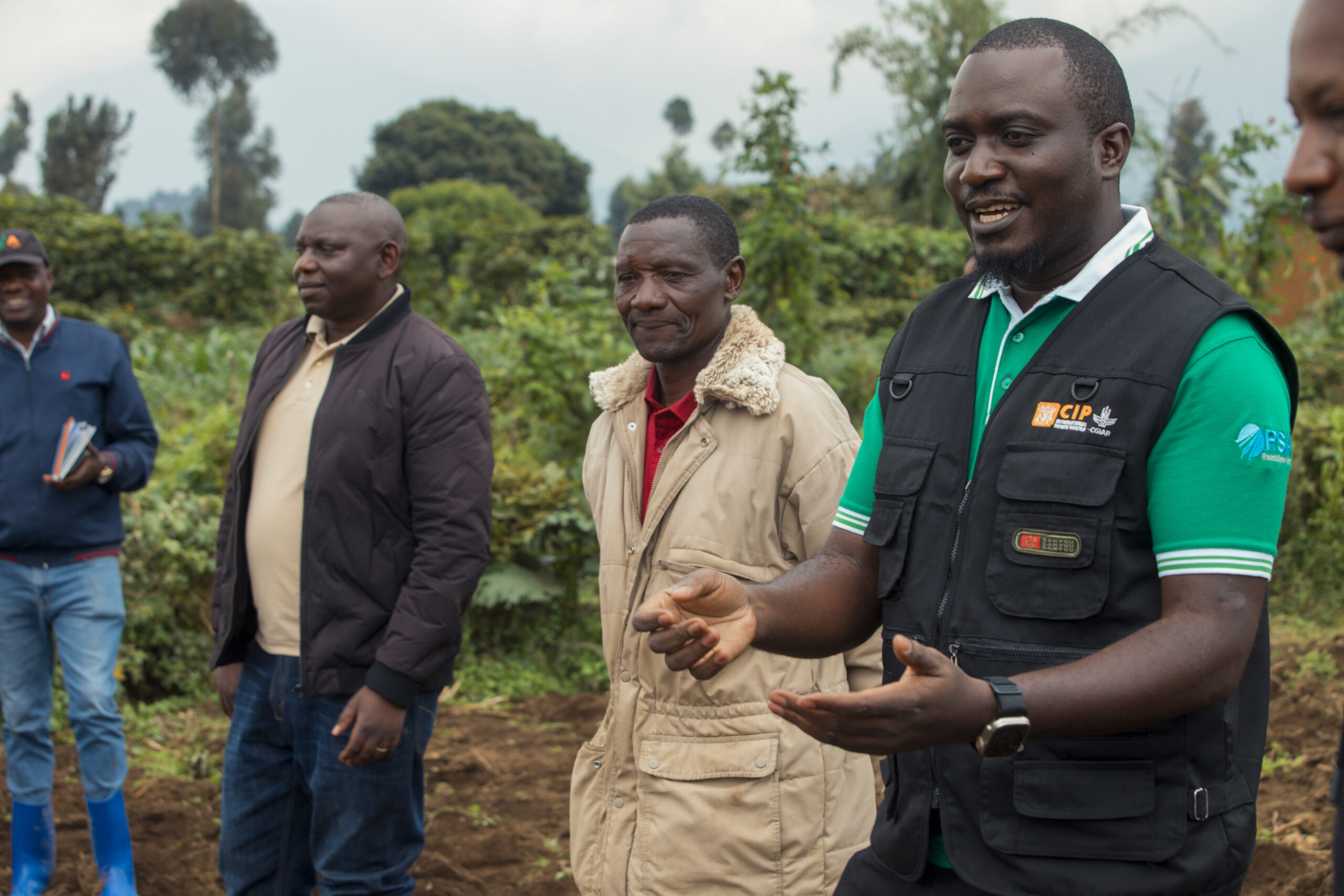
Dr. Mudereri elaborated on how, during the validation phase, they realized that farmers’ traditional fertilizer usage was too high and inefficient. The new, lower fertilizer recommendation—350 kg/ha, combining DAP, NPK and Urea fertilizers—proved to be not only more cost-effective but also more productive.
“We’ve seen a remarkable difference in both yield and cost,” he continued. “In just a 2-ares plot, the difference of 82 kg translating to 4.1 t/ha in output, demonstrates the potential for farmers to earn more while investing less. This is a huge win for farmers.”This is not only good for the farmer’s pocket but results in the improvement in soil health, environmental health and ultimately human health.
Farmer testimonials: A shift toward sustainable practices
The demonstration’s impact on local farmers was immediately evident. After witnessing the impressive results, many expressed their eagerness to adopt the new fertilizer practices in their own fields.
Esperance Nyiraribagiza, one of the farmers involved in the demonstration, remarked, “We can see the difference in the yield, and we always need benefits, not losses. Thanks to the interventions of this project through RAB and CIP, we now have hope for more successful harvests.”
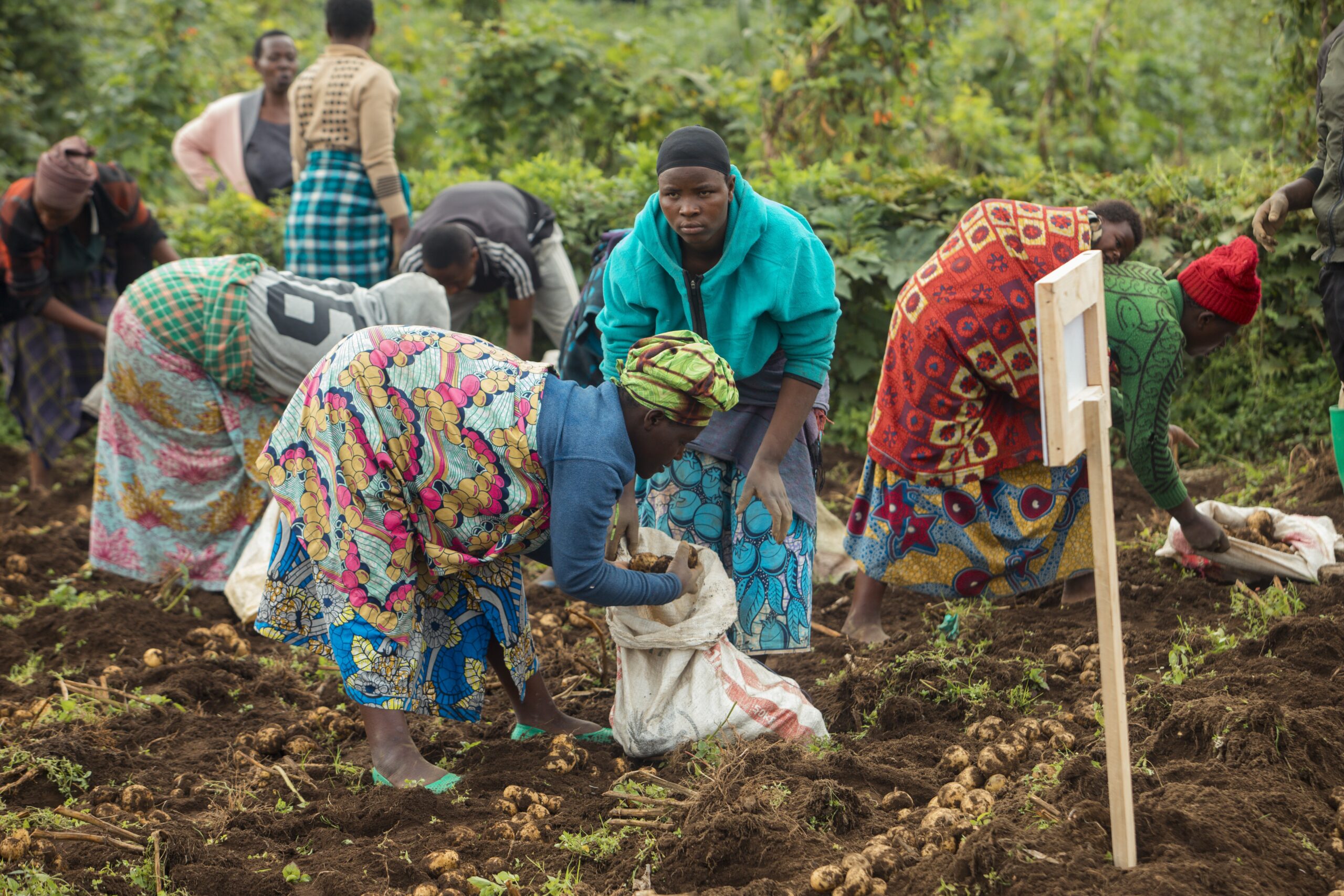
Pauline Mujawabera, whose field was also part of the demonstration, shared her transformation: “I used to cultivate this field, and I never harvested even 200 kg. I regret the effort I put into such a large area. Today, seeing 700 kg of potatoes from the same area gives us hope for a better future. This initiative is truly timely.”
Alexis Bizimana, a farmer advisor, affirmed that the demonstration results provide a real testimony to other farmers.
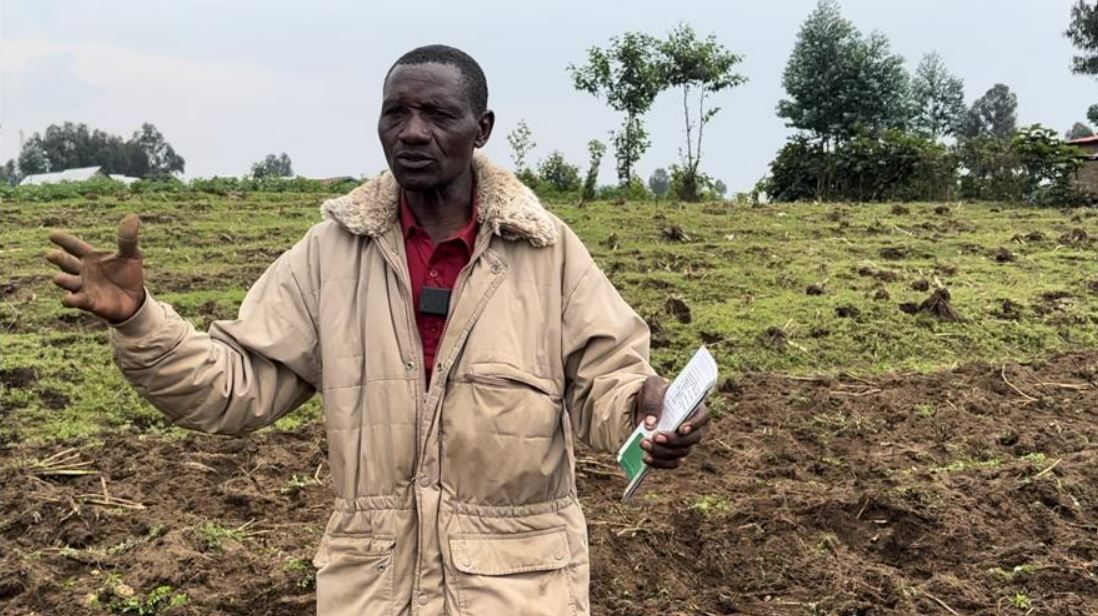
Azarias Niyonzima, another farmer whose field was used for the research, admitted that he was initially skeptical.
“I hardly accepted to participate, but today I can proudly share the success of this method with others. The results are undeniable,” he said.
Niyonzima also noted the importance of combining traditional knowledge with modern techniques: “By respecting best agricultural practices and applying the new fertilizer recommendations, I’ve seen a remarkable improvement. I now believe in this method and will continue to follow it.”
Future Plans and Government Support
The new fertilizer recommendations, which were officially launched in November 2024, are now part of Rwanda’s national agricultural policy.
Dr. Mudereri expressed optimism about expanding the initiative across the country. “We are hopeful that, within a short time, we will roll out this initiative nationwide,” he said.
“We believe that farmers everywhere will benefit from this science-based approach.” He added.
Rwanda’s government, through RAB, has shown strong support for this initiative. The country’s push for greater agricultural productivity, particularly in Irish potatoes, has been well-supported by organizations like CIP and CGIAR centers.
The field demonstration in Rubavu District serves as a testament to the power of research and innovation in transforming agricultural practices. By reducing fertilizer usage without sacrificing yield, the initiative promises to make Irish potato farming more sustainable and profitable, contributing to Rwanda’s long-term goal of agricultural self-sufficiency.

theinspirerpublications@gmail.com




Leave a Reply