

New Assessment Calls Government to Amend Media Policy, Address Access To Information Challenges
By Felicie Tombola.
Access to information (ATI) in Rwanda, especially among journalists remain a subject of debate, as various obstacles still hinder them to easily get information, though it is a fundamental human right and an ingredient for a transparent and accountable governance.
A new assessment conducted by the Center for Rule of Law Rwanda (CERULAR) has learnt that major threats are the existing laws that don’t meet the international standards in relation to access to information.
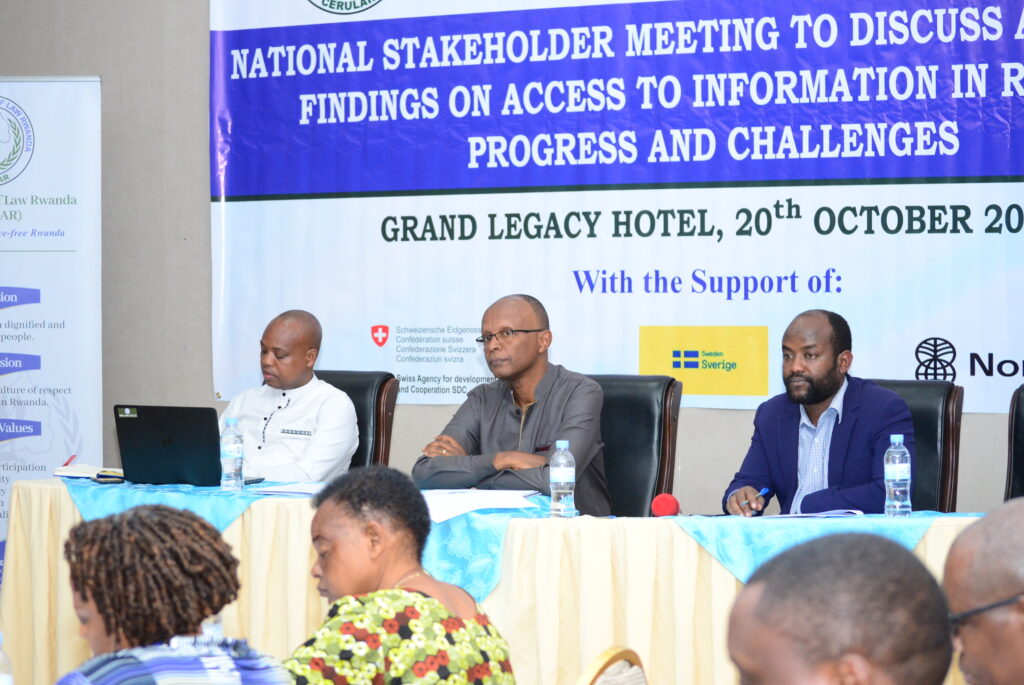
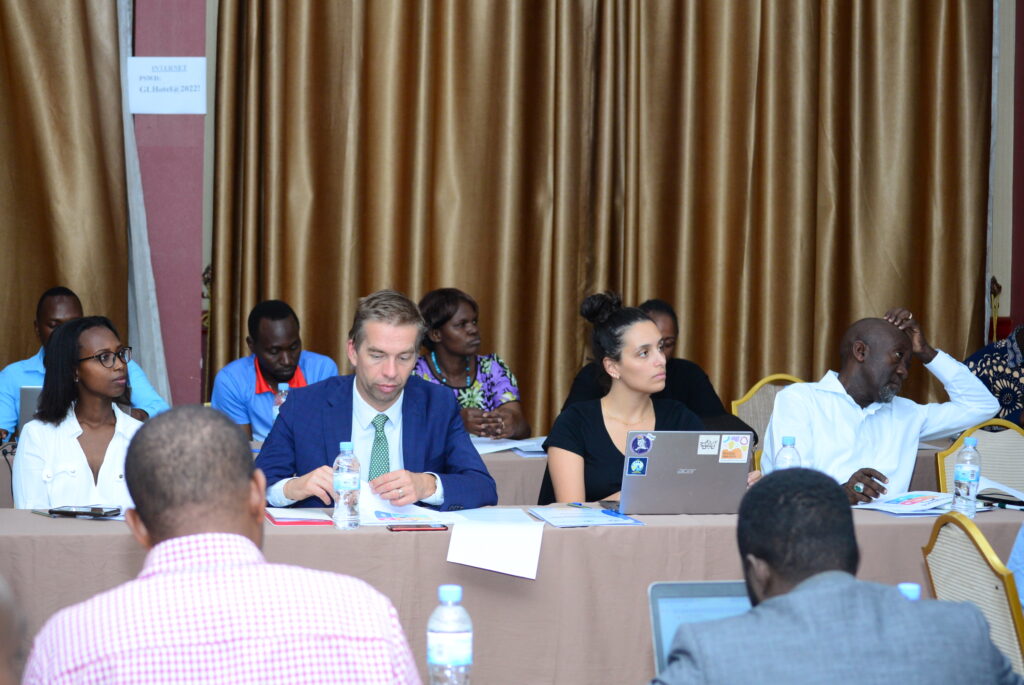
The Assessment’s findings were officially presented to professional media practitioners in Rwanda on Thursday, October 20, 2022 in Kigali.
Some of the gaps and challenges that the assessment exposed include minimum disclosure [of information] and unwillingness to provide information, lack of awareness, and people who are harassed because they talked to media.
Others are procedures that are not clear, issues of people with disabilities (in regards to their access to information), scarcity of ICT/Broadcasting infrastructures in some areas, and [inadequate] ICT and media literacy.
Among the assessment’s recommendations to the Government and Policy makers, “there is need to initiate revisions of the laws in order to repeal some provisions that hinder full enjoyment of the access to information, to revise the media policy to consider new trends and address all the existing challenges, to provide for sanctions with the access to information law to people who deny to give information to journalists, to modify existing laws to ensure that they meet all the international standards in relation to access to information, […]”
The assessment also recommends the government and policy makers to mandate appropriate institution for the following up the enforcement of the access to information law and to avail a comprehensive freedom of expression module for induction to the local leaders and other duty bearers, to increase infrastructure such as internet and radio frequency coverage in the country and to promote disability and gender inclusion with legal and policy framework among others.
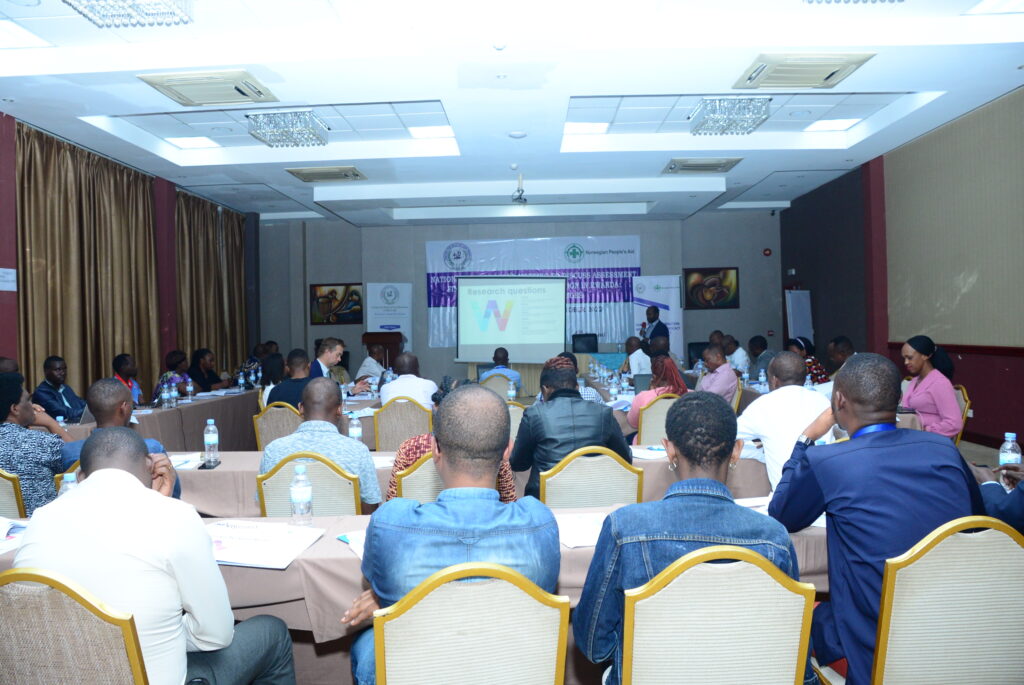
Speaking during the national stakeholder meeting to discuss assessment findings on access to information in Rwanda, Peacemaker Mbungiramihigo, the Media Policy Analyst at the ministry of local government (MINALOC) said that the assessment there is need for solidarity between media, government, private sector and civil society organizations (CSOs) in Rwanda for the better accessibility of information.
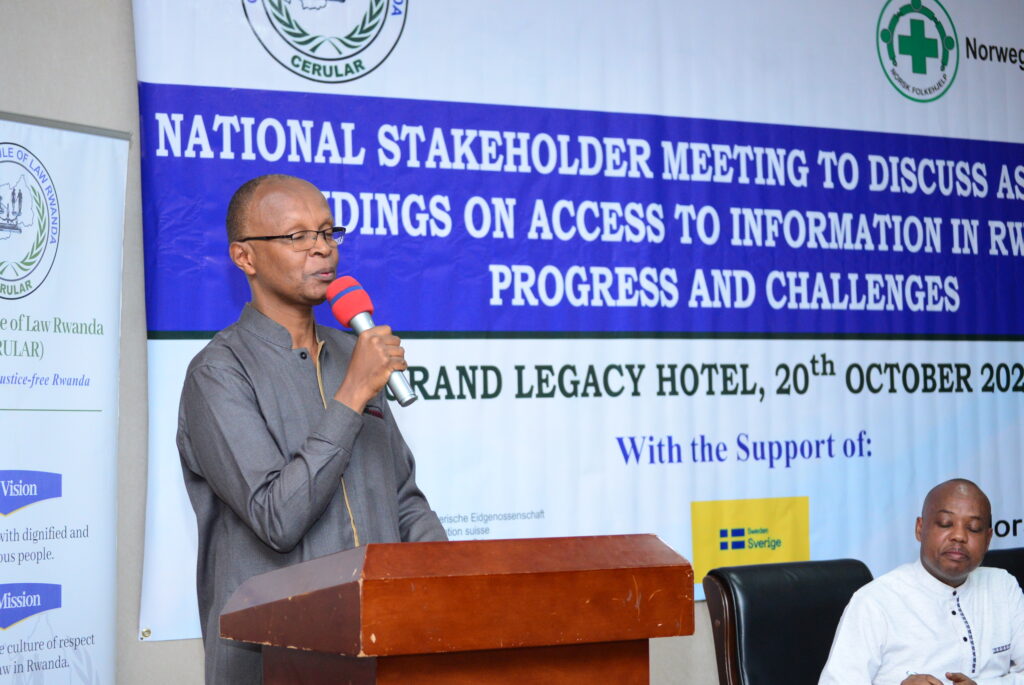
The assessment aimed to learn from the progress and find out how the existing challenges can be addressed through informing appropriate legal, policy and institutional reforms.
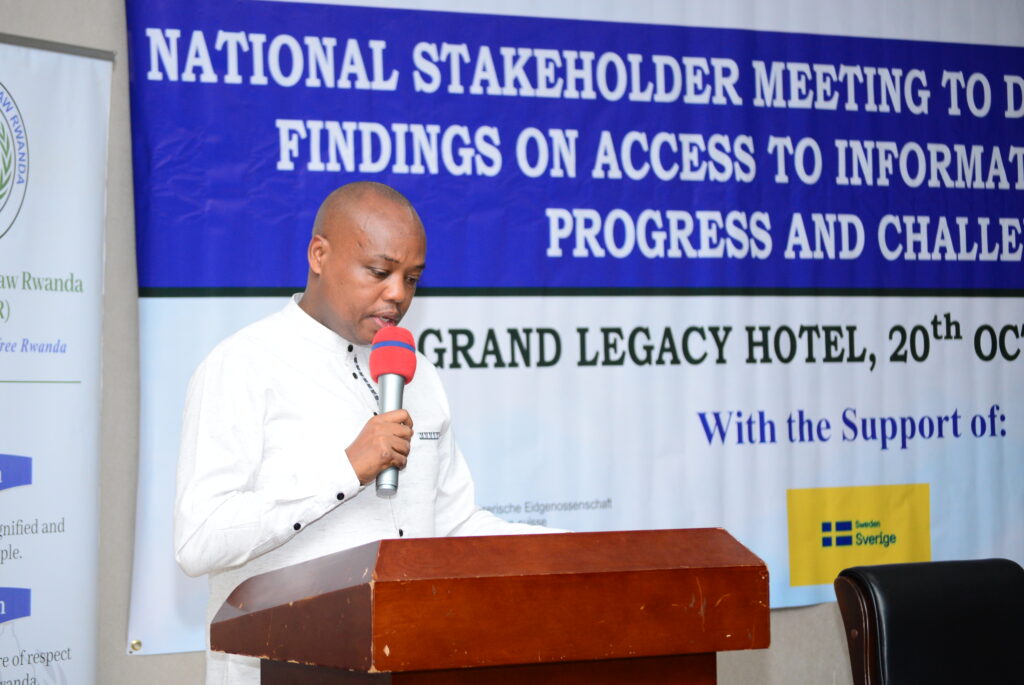
“Rwanda has made significant progress regarding the promotion of access to information over the last decade. These include; putting in place a conducive legal and policy framework such as the access to information law No 04/2013 of 08/02/2013 as well as myriad of the media reforms. However, despite the progress made, journalists, civil society organizations, researchers/academicians and ordinary citizens continue to struggle to access information from different custodians of public information,” said John Mudakikwa, Executive Director of CERULAR.
Among other recommendations from this assessment, Media, CSOs and development partners need to advocate for the modification of relevant laws and policies, embark on information technology and media literacy among the citizens, provide enough funding for initiatives aiming at promotion of enjoyment of access to information among others; while the general public need to be cooperative with the media, to make use of access to information law at maximum, and to report abuses and malpractices.
theinspirerpublications@gmail.com



Leave a Reply