

Land use consolidation, terracing save farmers from drought-related losses in Kayonza
By Elias Hakizimana
Farmers from the areas prone to drought in Kayonza district especially those from Kabarondo, Ndego, Murama and Ruramira sectors could count losses related to climate change impacts such as droughts and erosion that used to ravage their crops and take away fertilized soils.
The issue became a burden between 2015-2018, pushing some citizens to flee their sectors to seek life from elsewhere.
Since the Kayonza Irrigation and Integrated Water shed management Project (KIIWP) phase I was introduced in 2019, there has been a remarkable change in crop production as farmers were trained on best agricultural practices to cope with the situation.
Some of the interventions by the KIIWP project that is funded by the International Fund for Agriculture Development (IFAD) include farmers’ training and supported practices in land use consolidation and terracing as well as planting agroforestry trees to prevent erosion and keep rainwater and fertilized soil.

The IFAD-funded Project KIIWP1 was a three-year pro-government project implemented by Rwanda Agriculture and Animal Resources Development Board (RAB) with the budget of $24 million (RWF 22.2 billion) aiming at contributing to poverty reduction in the drought-prone Eastern Province of Rwanda.
Its development objective was to sustainably improve the food security and income of 50,000 rural households and boost their climate resilience Situation.
Due to the Covid-19 pandemic that hampered some activities, the project phase1 was extended to the phase II, KIIWP 2022-2028 to last over the next 6 years with an additional budget of $61 million.
Testimonies show how things turned around after several years of hunger and economic crisis in these sectors.
Rachel Uwambajimana, the mother of three children from Nkuba I village in Kabarondo sector says how terracing helped them to improve crop productivity, to fight poverty and improve nutrition.

“Now our crops are healthy and productive, before, the rain could ravage the crops, both soil and crops could end up in the valley by erosion. We grow sunflowers, maize, beans, sweet potatoes and irish potatoes. We can now get enough to eat and to sell,” she says.
Curbing poverty, malnutrition
Reuben Uzabakiriho, another farmer from Cyabajwa village, Nkuba I cell, Kabarondo sector in Kayonza district says that growing crops on terraces retrieved their hope of life as crop produce increased drastically, saving them from poverty and malnutrition.
“We plant our crops on terraces, before, floods and erosion used to take the soil and entire crops down in the marshland during the rainy season, I could harvest 4 to 5 cassavas on a tree due to drought, but it increased to 10 cassavas on a tree because water and manure remain in the soil. Through this project, we got training and grasses for livestock to plant on the belts of farms, we get food for cows and for people at the same time, milk produce increased.” Uzabakiriho says.
Land consolidation
Uzabakiriho says that they use 2 hectares for maize and 2 hectares for beans, which all give a good produce each.
The KIIWP project identified irish potatoes, cassavas and Orange sweet potatoes for Nkuba I cell, and they contributed a lot in reducing hunger according to Noah Twizeyemungu, another farmer.
“I am among KIIWP beneficiaries, and I represent another project that helps farmers to multiply seeds in this cell. I was with KIIWP for 3 years, they are training farmer volunteers on multiplying the seeds of Irish potatoes, cassavas and sweet potato vines,” he says.
Madeleine Usabyimbabazi, Acting Operation Manager of KIIWP said that the project has so far benefited over 16,430 families, with 73,935 farmers who are set to graduate from poverty.

“We are conducting an outcome survey to evaluate the status of drought reduction, over 3 years ago, the project tried to reduce drought crisis at the maximum level, we made terraces in Kabarondo, Ruramira, Murama, Ndego and Rwinkwavu sectors that were very prone to drought. We added compost and lime into the terraces to further soil fertility. Farmers can now get enough and quality produce of beans, maize,” Usabyimbabazi says.
The KIIWP I&II phases will leave over 5,300 hectares of terraces created and will employ thousands of citizens. An estimated 100,000 fruit trees and other 670,000 climate resilient trees on the sloppy hills are expected to be planted during the project phase II.
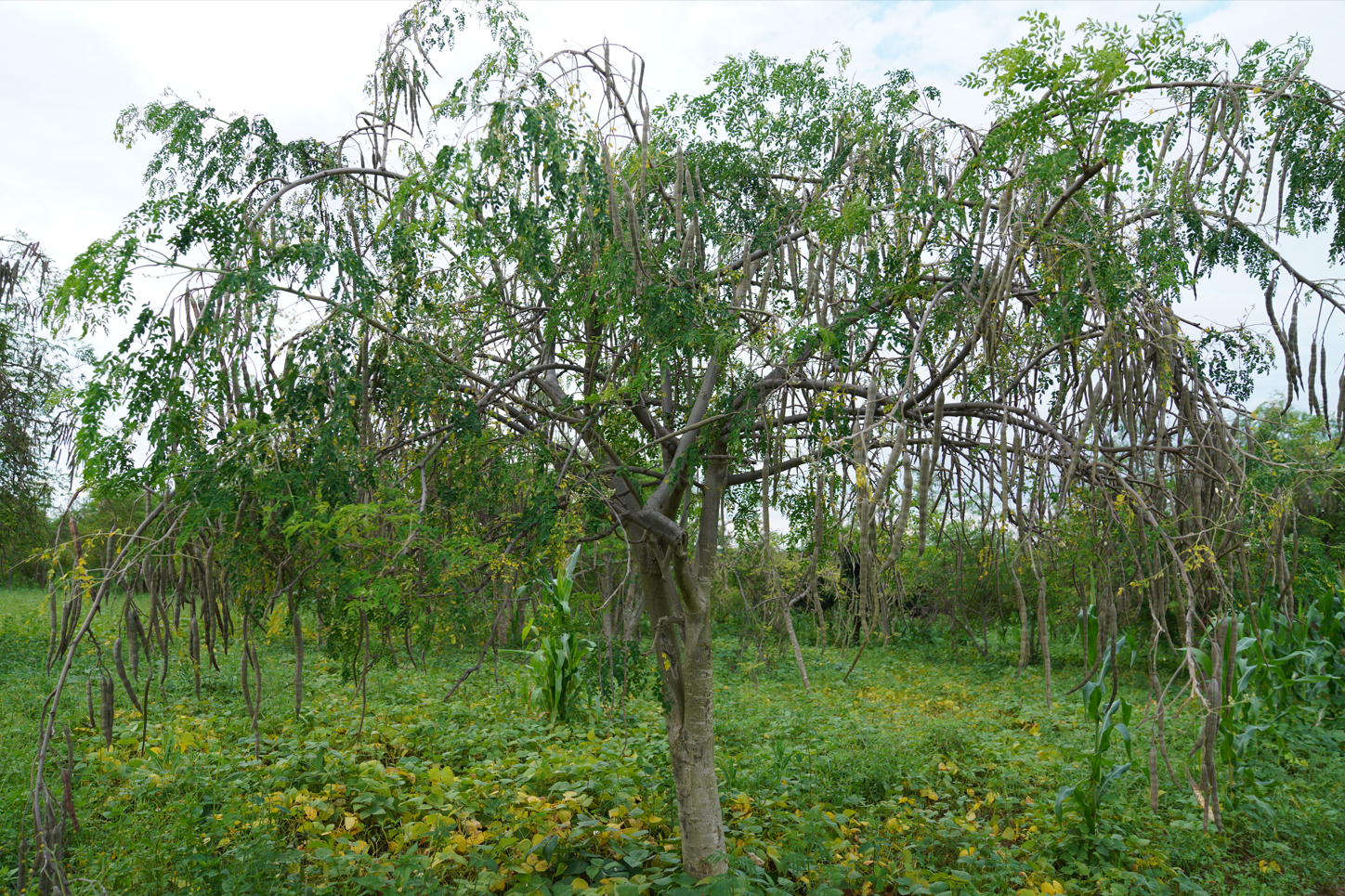 Moringa tree is a god agroforestry specie that is planted together with crops.
  Sweet potato vines give the yield of orange sweet potatoes in only 3 months.

 theinspirerpublications@gmil.com
Follow us @theinspirerpubl



Leave a Reply