
Family farming holds the answer to hunger and climate challenges in Rwanda
By Elias HAKIZIMANA.
In the small plots of Rwanda’s countryside, family farmers are doing more than growing crops. They are feeding communities, sustaining livelihoods, and protecting the environment.
At a time when climate change, land scarcity, and malnutrition threaten food security, family farming is emerging as a vital solution.
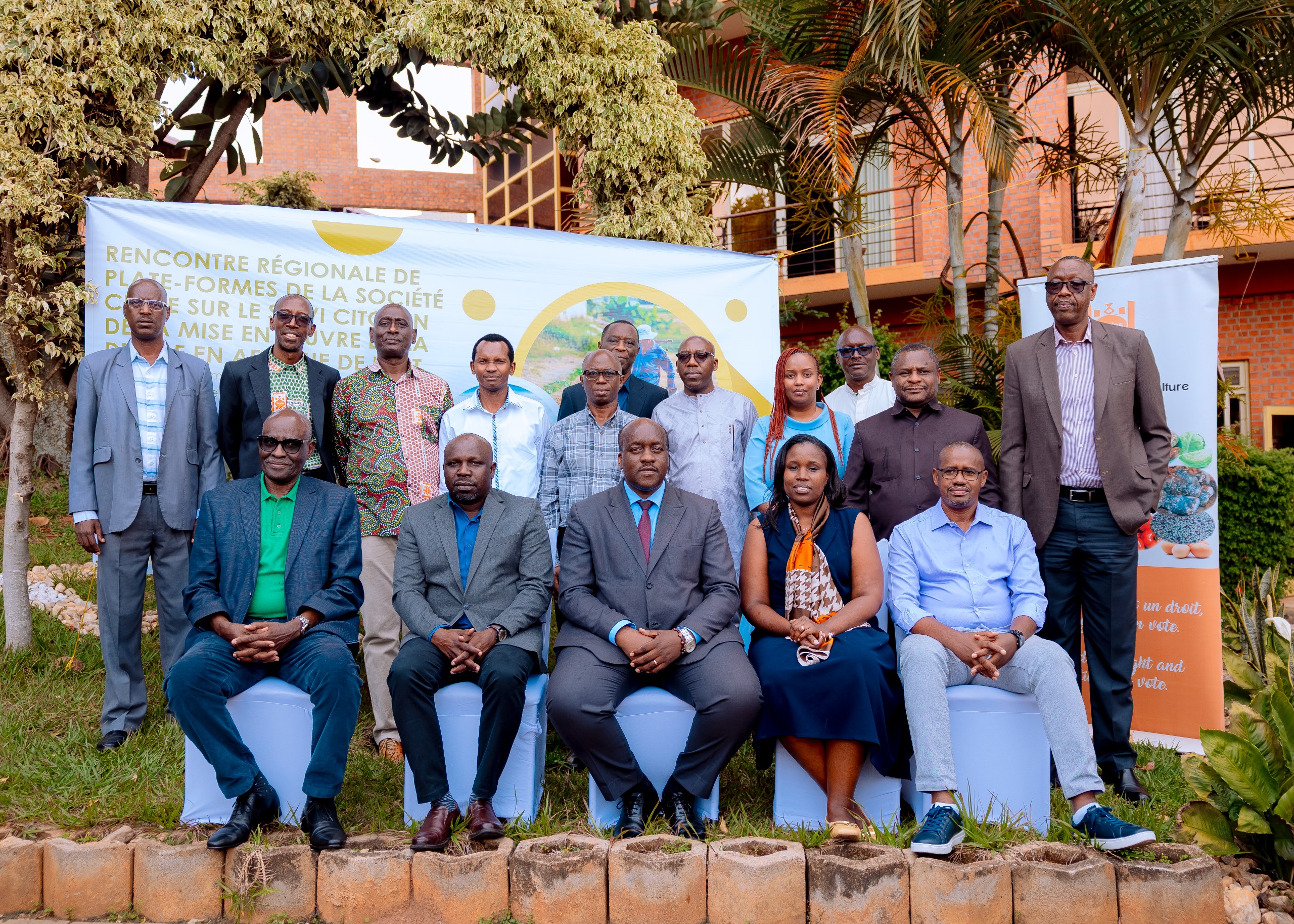
This message was central at the East Africa Regional Meeting on Citizen Monitoring of the United Nations Decade of Family Farming (UNDFF), held in Kigali from October 6 to 8, 2025.
The three-day gathering brought together civil society organizations from across the region to exchange knowledge, develop strategies, and advocate for policies that strengthen family farming as a cornerstone of sustainable development.

Feeding families before markets
“Family farming is not just about producing food—it is about sustaining life, preserving ecosystems, and ensuring that future generations can thrive,” said a representative of INADES-Formation, the organization coordinating efforts in Rwanda.
For Manasse NSHIMIYIMANA, in charge of advocacy and institutional development at INADES-Formation, the stakes are high.
“We have a large number of people to feed and a small portion of land to exploit. If we continue conventional agriculture with intensive use of chemicals, it will degrade our land. We need sustainable alternatives that feed the growing population while protecting the soil that sustains us.”
NSHIMIYIMANA emphasized the importance of farmers themselves being nourished:
“Why feed others if ourselves are not adequately nourished? Campaigns should teach farmers to consume what they produce to tackle malnutrition before selling surplus food.”

He noted that while some countries with fertile, large-scale land have advanced, Rwanda still struggles with basic agricultural inputs and organic fertilizers.
“It is possible to produce manure and organic fertilizers locally to support sustainable farming.”
The human cost of food insecurity
The human impact of these challenges was highlighted by Athanase Kayijamahe, a member of INADES-Formation Rwanda:
“Nearly 80 percent of Rwandans are farmers, yet only a few are truly satisfied. Limited land and resources mean many children suffer from stunting. Farmers must prioritize feeding their families—ensuring children eat eggs or vegetables before selling them. Farmers are not just beneficiaries; they are key actors in their own development.”

Building sustainable food systems
Participants stressed that family farming creates jobs, supports local economies, and promotes social equity. Strategies were discussed to engage youth, advance gender equality, and adopt climate-resilient practices that protect biodiversity and preserve traditional knowledge.
A National Technical Committee will oversee the development of a National Action Plan, with INADES-Formation providing coordination, training, and guidance.
The plan aims to secure healthy, diverse, and sustainable diets for all, improve farmers’ livelihoods, and build an agricultural system resilient to climate change.
As Rwanda works to balance food production, family well-being, and environmental sustainability, the voices of family farmers remain central. Their experiences and innovations show that solutions to hunger and climate challenges start at home, in the fields, and on the plates of every family.











theinspirerpublications@gmail.com




Leave a Reply