
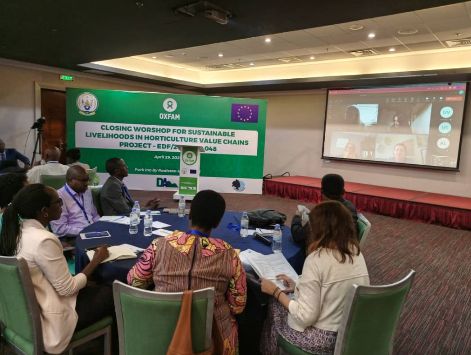
How DUTERIMBERE Oxfam EU-Funded Program enhanced horticultural production in Rwanda
By Elias Hakizimana.
Over the past four years, some farmers faced losses due to limited knowledge and financial capacity for market-based agriculture.
In January 2020, Oxfarm Rwanda launched the ‘Duterimbere’ project, funded by the European Union, aiming to bolster horticultural production in four districts of Rwanda: Nyagatare, Rulindo, Kamonyi, and Nyamagabe.
Godfrey Gakwandi, Oxfam Rwanda’s Country Director, emphasizes, “The project trained and mobilized 21,414 farmers, promoting horticulture cooperatives across 4,400 hectares.”

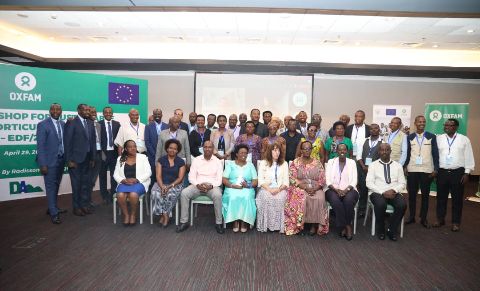
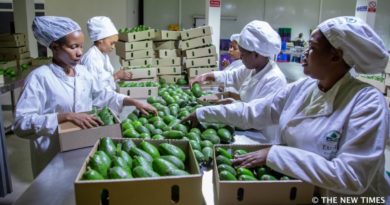
During the project’s conclusion in Kigali on April 29, 2024, Gakwandi shares, “The project facilitated horticultural exports, creating local and regional markets for vegetables and fruits.”
Egide Mutabazi, a Crop Products Supply Chain and Market Analyst at the Ministry of Agriculture and Animal Resources (MINAGRI), underscores the importance of the Cold Value Chain program.
“It encourages collaboration between farmers, the government, and partners to enhance crop quality and productivity,” Mutabazi explains.
Mutabazi further adds, “Private sector involvement, combined with government partnerships, ensured the project’s success, fostering sustainable development.”
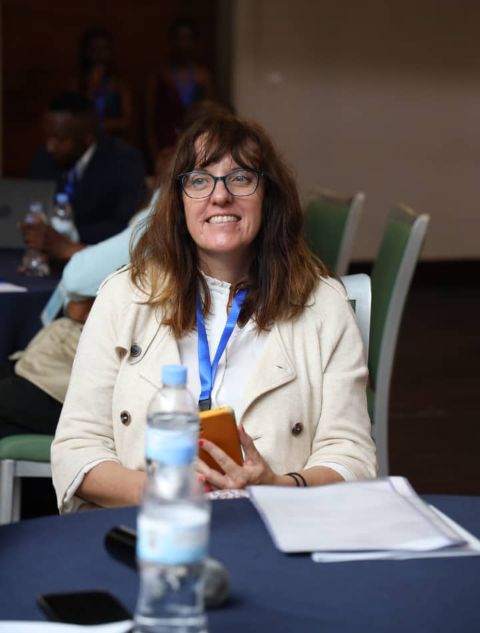
Amparo Gonzalez Diez, First Secretary and Team Leader at the EU Delegation to Rwanda, commends Oxfam’s role in project implementation.
“Oxfam’s effective implementation has expanded our activities to 21 districts, benefiting over 10% of rural households,” Diez acknowledges.
Diez highlights, “Under the ‘KUNGAHARA’ Program, aimed at improving local food production and quality, 15 projects, including this one, are underway, totaling an investment of 11 million Euros.”
Beneficiaries, such as Augustin Ngamije, share their success stories.
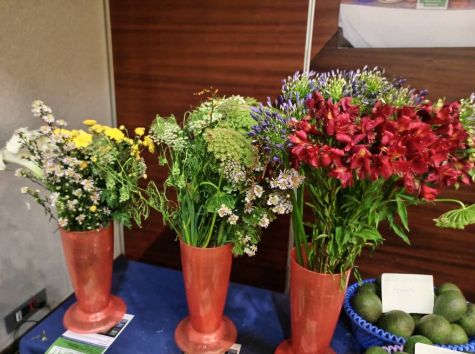
“Thanks to Oxfam’s training, I shifted from subsistence farming to export-based agriculture, focusing on chili production,” Ngamije says, detailing his increased income.
Jean Pierre Kidamage, an entrepreneur, recounts how the project enabled him to invest in environmentally friendly bead farming, reducing Rwanda’s dependence on bead imports.
Merecianne Uwamwezi, another beneficiary, highlights her venture into pineapple and banana processing, showcasing the project’s diverse impact on agricultural entrepreneurship.


theinspirerpublications@gmail.com



Leave a Reply