

Experts seek ways to sustain mining sector by establishing University curricular
By Elias Hakizimana.
Geologists-Experts discuss ways to boost mining activities done on small scale mining zones in Rwanda as small scale miners lack skills capacity to exploit minerals.
The sustainability of small scale mining that requires the establishment of a scientific University curricular is the subject of discussion at the three-day national consultation workshop on educational curricular on Artisanal and Small scale Mining (ASM) in Rwanda that started on November 3, 2021 at Rutongo School of Mining in Rulindo District.
The workshop was organized by Rwanda National Commission for UNESCO (CNRU) in partnership with the UNESCO Regional Office for Eastern Africa and Ministry of Education (MINEDUC).

“After the research conducted by the United Nations Educational, Scientific and Cultural Organization (UNESCO) in the East African Region to see what hinder the progress of small scale mining, it was found that there is lack of needed skills and kits as well as teachers’ capacity to deliver practical skills in regard to sector development.” Said Ir. Dominique Mvunabandi, Director of Science and Technology Unity in Rwanda National Commission for UNESCO (CNRU).
“These result in health effects like (accidents), it is this context we requested UNESCO to help us gather various experts here to discuss what can be a sustainable solution.” Mvunabandi added.
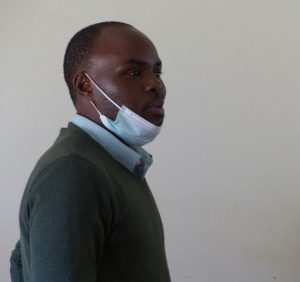
He said that there is a need for setting up an educational curricular to support professional miners by developing teaching materials and training teachers.
“We have different experts include those from the Rwanda Land Management and Use Authority RLMA), Rwanda TVET Board (RTB), Rwanda Mines, Petroleum and Gas Board (RMB), IPRCs and University lecturers who will contribute to content generation of the curricular.” He said.
He added that UNESCO is fully engaged in helping professionals and investors to explore available opportunities, to conduct research and training in order to make it easier to find mining zones.
The draft of an educational curricular will be shared to different concerned institutions for their inputs and it will be handed to Rwanda TVET Board (RTB) and MINEDUC after validation.
Experts’ views
Engineer Hildebrand Kanzira, a geologist expert and researcher in Rwanda since 1970 said that Rwanda is still using traditional mining technologies while the research on geological maps started since 1920.
He said that $2million is invested in geological research every year since 2008 but there is still a gap in this regard.
“It is not the government’s responsibility to invest in research, instead, it is for private companies.” He said, adding that companies fear to invest in drilling, the last part of mining that requires much money as they need to pay $8000 per 1 meter.
Rwanda’s mining sector export revenues grew up to $730 million, against an initial target of $600 million last year, according to official data from the Rwanda Mines, Petroleum and Gas Board (RMB).
The sector is the second-largest export revenue earner in the country, just behind tourism.
Jean Claude Ngaruye, Mining Exploration Division Manager in RMB said that every sector of Rwanda has minerals that are unexploited according to the photos taken by the flight.

He encouraged interested investors to approach RMB offices to get clear information and access different research findings that clarify the existing mining zones in the country.
Dr. Abel Sebahashyi Ngabo, a consultant in Mining based in Rurongo School of Mining said that there is need for a research that follows five steps including Prospection, exploration, development and exploitation to show the quantity of minerals on the land of the country.
“Investors fear the third step which is development, this stage requires much money to break the rock and grab the mine which is inside. It is a risk taking as investors use own resources to get revenues later after”. Sebahashyi noted.
Rwanda has 773 mining zones under exploitation of which 369 are active, governed by 259 companies.
theinspirerpublications@gmail.com Follow us @theinspirerpubl





Leave a Reply