
DR Congo, AFC/M23 move closer to peace with Doha framework deal
By The Inspirer.
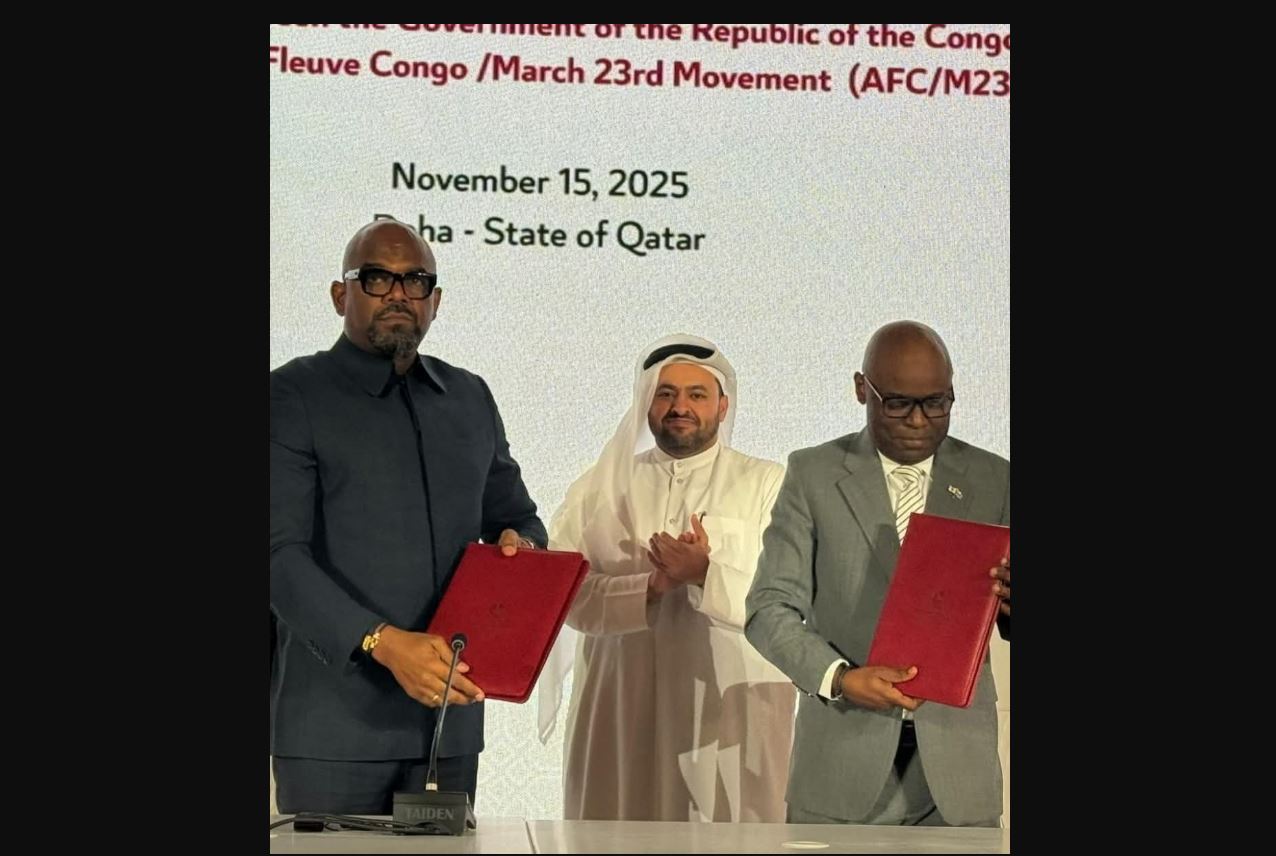
The government of the Democratic Republic of Congo (DRC) and the AFC/M23 rebel movement have taken a significant step toward ending years of instability in the country’s east, signing a framework agreement on Saturday, 15 November, in Doha, Qatar.
The document, which outlines the methodology and timeline for the remaining negotiations, is not the final peace accord but a roadmap designed to guide the two sides toward a comprehensive settlement.
Key Elements of the Doha Framework
According to officials involved in the talks, the agreement lays out several priority areas:
- Progressive restoration of state authority in conflict-hit territories.
- Creation of a transitional security mechanism to stabilize volatile zones.
- Setting up a truth, reconciliation, and justice commission to address long-standing grievances.
The framework further commits both delegations to fast-track negotiations and finalize detailed Protocoles by the end of November.
Next Steps: Permanent Ceasefire and Prisoner Release
In the next round of talks, the parties are expected to negotiate and sign:
- A permanent ceasefire, and
- Commitments on the release of prisoners, building on mechanisms already initialed in September and October 2025.
The final Protocoles to follow will cover critical areas including humanitarian access, transitional security arrangements, disarmament and reintegration (DDR), restoration of state authority, the return of displaced people and refugees, economic recovery, and transitional justice.
Restoring State Authority
The roadmap includes specific proposals for re-establishing government institutions and services in liberated or contested zones. These encompass public order, freedom of movement, civil registry access, security services, and financial operations.
Transitional Security Arrangements
On security, the framework stresses the need for temporary joint arrangements to:
- Maintain public order
- Protect civilians
- Prevent renewed hostilities
Details on the composition, command structure, and mandate of these transitional forces will form part of the Protocoles now under negotiation.
Negotiators emphasized that beyond ending active hostilities, the process aims to address the root causes of the conflict—combatting discrimination, reinforcing national unity, and building more inclusive governance structures.
Progress Amid Ongoing Tensions
Saturday’s signing comes as both sides continue to accuse each other of violating earlier ceasefire understandings on the ground. Despite these tensions, the Doha framework is seen as one of the clearest and most structured steps toward a durable settlement in years.
If the agreed timeline holds, the DRC government and the AFC/M23 could sign a final peace agreement soon, potentially opening a new chapter for stability and reconstruction in the eastern provinces.




Leave a Reply