
CNRU Trains Varsity Graduates to boost education system, tackle unemployment challenges through Artificial Intelligence
By Elias Hakizimana.
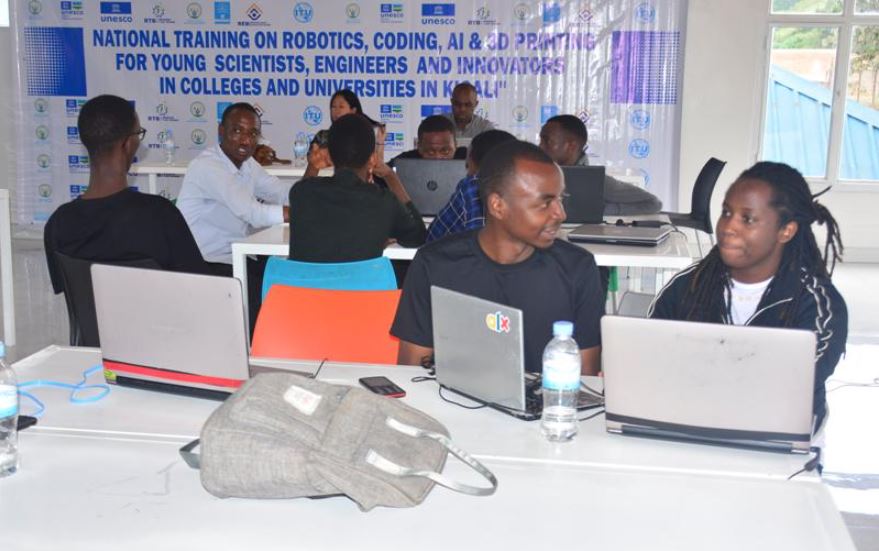
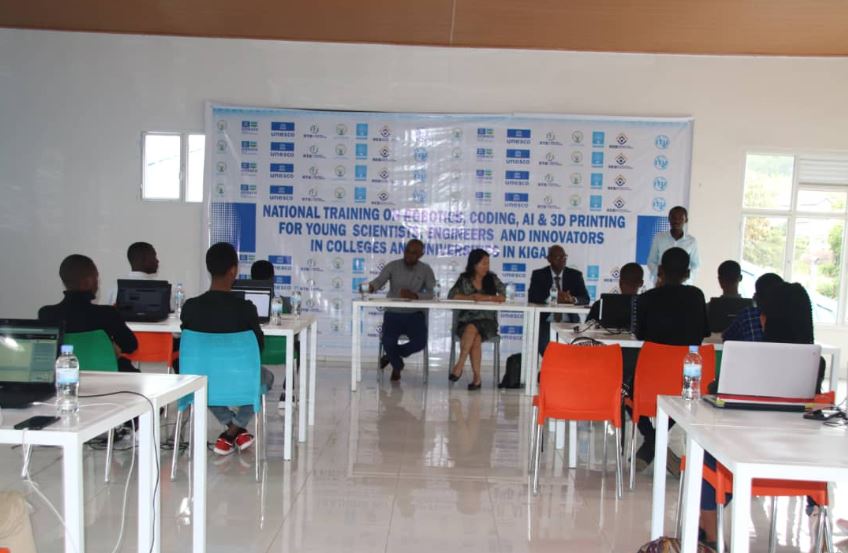
Varsity Graduates from different disciplines who are already running businesses in ICT, Robotics and coding have gained skills in the National Training for students and teachers in High & TVET School in Rwanda organized by Rwanda National Commission for UNESCO.
The workshop was conducted by Rwanda Commission for UNESCO (CNRU) in partnership with local education partners including Rwanda TVET Board (RTB) and Rwanda Education Board (REB) following the celebration of the International Girls in ICT DAY 2022 under the theme: ”Access & Safety: Unlocking coding opportunities for Students and teachers with Disability in Rwanda’’.
Albert Mutesa, Secretary General of Rwanda National Commission for UNESCO said that the training is vital in nurturing students with necessary skills to compete at the labour market.
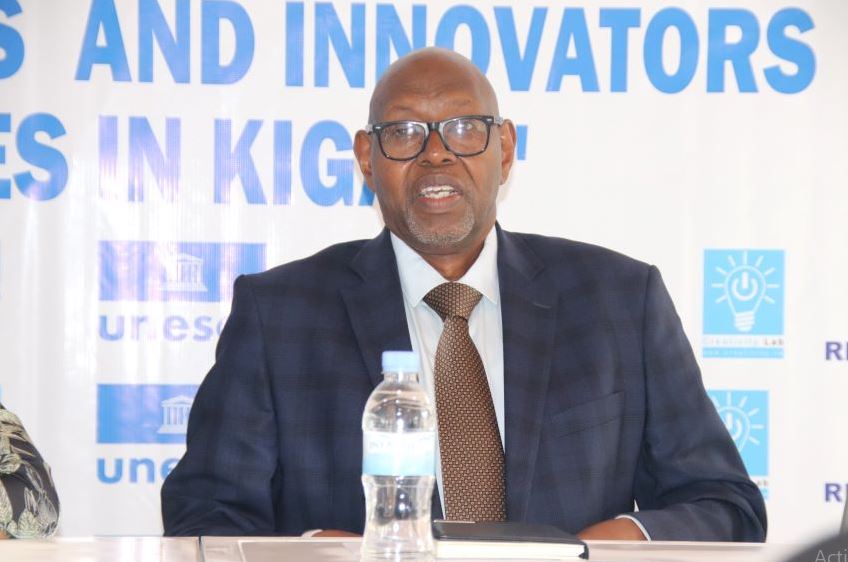
“This workshop is a side-event of other conferences UNESCO is conducting this week long from June 2nd to 4th 2022 to foster Science and Technology and prepare youth to be ready to provide solutions to existing problems towards the development of the fourth industrial revolution.” Mutesa said.
“Knowledge in Artificial Intelligence, Coding and 3D Printing will help them to perform in different works. We currently train students and encourage youth to embrace skills in Science, Technology, Engineering and Mathematics (STEM) education.” Mutesa added.
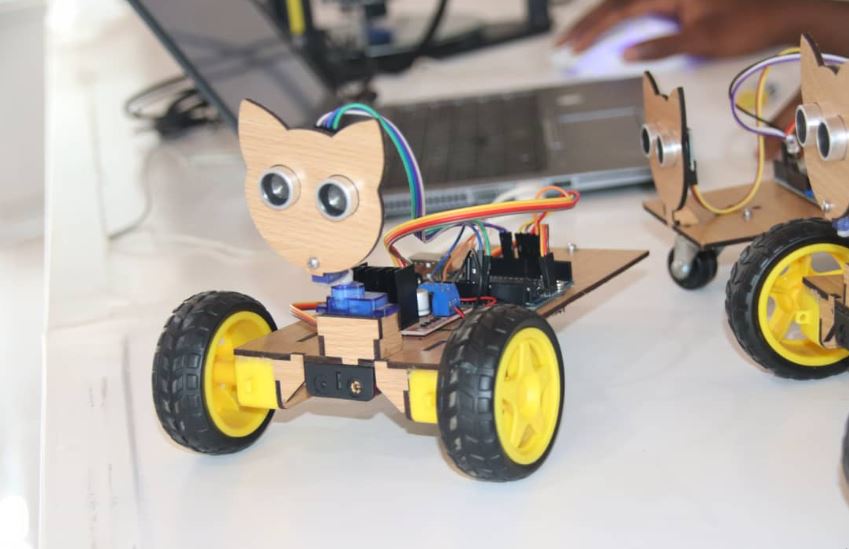
CNRU currently trains younger students and their teachers from high schools and is expanding the knowledge in AI, coding, robotics and 3D printing to University graduates to empower education system through digital and scientific skills training and tackles unemployment challenges in many aspects of life, such as environment, health, agriculture, energy, water, infrastructure, etc.
The realization of the global agenda requires new knowledge and technologies to address emerging challenges and to underpin new goods and services for society. The growing sectors of economy require an increasing number of skilled workers with qualifications in ICT and related field such as Robotics, Coding, Artificial intelligence (AI), Internet of Things (IoT), etc.
Trained graduates said that they still encounter a big challenge of lack of suitable materials to implement their project in AI because it costs them much to import them from China.
Alphonsine Nyiransengiyumva, member of Seed Technology Engineering (STE) Group that deals with IOT in Agriculture in detecting soil input and outputs is one of the trainees. She studied Irrigation and drainage at University.
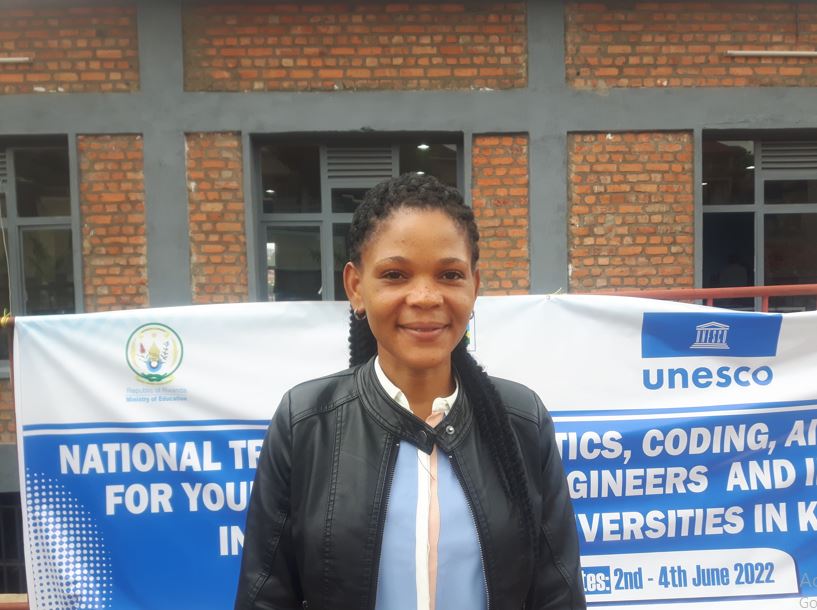
“We have a device called “BAZA Farm” that we put in the soil to measure the quantity of water and Agro-inputs in the soil. This workshop is very important. I did not know like 3D Printing and Robotics. I realized that we need robotic system in Agriculture transformation. We need robots to monitor our devices in the farms.” She said.
She highlighted that a big challenge is lack of machines to implement the skills from the training as they only use prototypes when teaching and learning.
“What I can request the country is to bring the machines and other materials we need to produce feasible products.” Nyiransengiyumva added.
Albert Hafashimana, another graduate said that these skills are necessary and important but lack of materials remains a challenge. “Here we are using academic materials as prototypes to show us that things are possible, sensors and small moters, but we need materials to help us translate the skills into normal life for us to be able to solve community problems.”

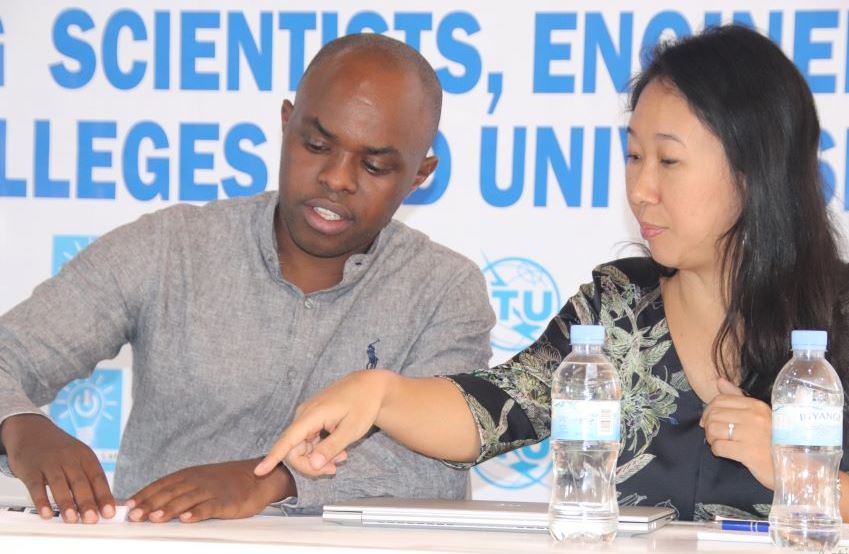
Misako Ito, Regional Advisor for Communication and Information at UNESCO Regional Office for eastern Africa in Nairobi said that all of these programs are aimed at helping young people, especially girls, to acquire knowledge in modern technology.
The Ethics of Artificial Intelligences recommendations highlights that today, artificial intelligence plays a role in billions of people’s lives. Sometimes unnoticed but often with profound consequences, hence transforming societies and challenges what it means to be human.
According to CNRU, experts believe that AI can provide millions of students with support to complete secondary education, fill an additional 3.3 million jobs, and, more urgently, help us tackle the spread and the aftermath of the COVID-19 pandemic. Along with multiple advantages, these technologies also generate downside risks and challenges, derived from malicious use of technology or deepening inequalities and divides.
Coding has the potential to be transformational and improve people’s lives while ensuring environmental sustainability, and providing the basis for new approaches and solutions to new and existing global challenges.
theinspirerpublications@gmail.com




Leave a Reply