

Community service providers, Health providers and local leaders benefit from Afro Ark training to facilitate young women access to HIV/SRH and SGBV services in Nyagatare and Gatsibo districts
By Elias Hakizimana.
As cases of teenage pregnancies continue to rise, a need for strong and performing health systems to ensure Sexual Reproductive Health Rights (SRHR), HIV and Sexual and Gender Based Violence (SGBV) services are provided may serve as a response and life-saving intervention.
Rwanda has been experiencing and mitigating this burden for years with 17,337 teenagers conceiving in 2017, 19,832 in 2018, 23,544 in 2019, 19,701 in 2020 and 23,000 in 2021.
Through the support of The Joint United Nations Programme on HIV/AIDS (UNAIDS), AfroArk organization as a youth and women led and community based organisation that was founded to address challenges faced by women, children and youth in Rwanda has last month conducted a workshop in Nyagatare and Gatsibo districts to enable community health providers and local government officials to support existing health systems to avail Sexual Reproductive Health Rights services, which is also believed to address teenage pregnancies at all costs.

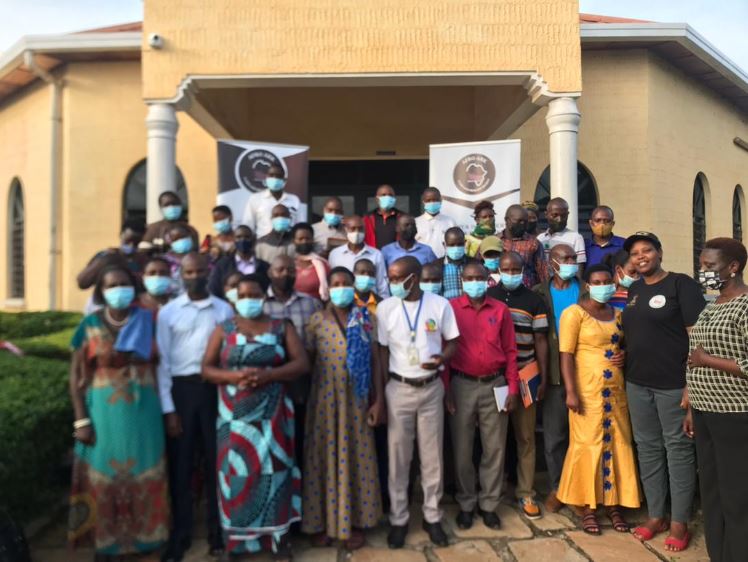
Trainees include Community Health Workers (CHWs), Inshuti z’Umuryango (IZU), Representatives of family evening, nurses and Sector Representives of social affairs and isange one stop centre among others.
Patience Iribagiza, Executive Director of AfroArk explained that the main objective of this workshop is to contribute to efforts for addressing issues related to structural barriers for community support for access to SRHR/HIV and SGBV services and mitigation of increasing cases of teenage pregnancies, defilement and sexual violence with a direct implication to risks for HIV infection, in Nyagatare and Gatsibo Districts between April and June 2022.
“This also aims at enhancing the capacity of community service providers to support the health system in availing SRHR/HIV/SGBV services within community settings in Nyagatare and Gatsibo Districts.”
Naomi Mukagasana, Director in Charge of Gender in Gatsibo District requested CHWs, IZUs and other Community actors to report cases of SGBV, HIV and unwanted pregnancies for their access to justice and Health services.
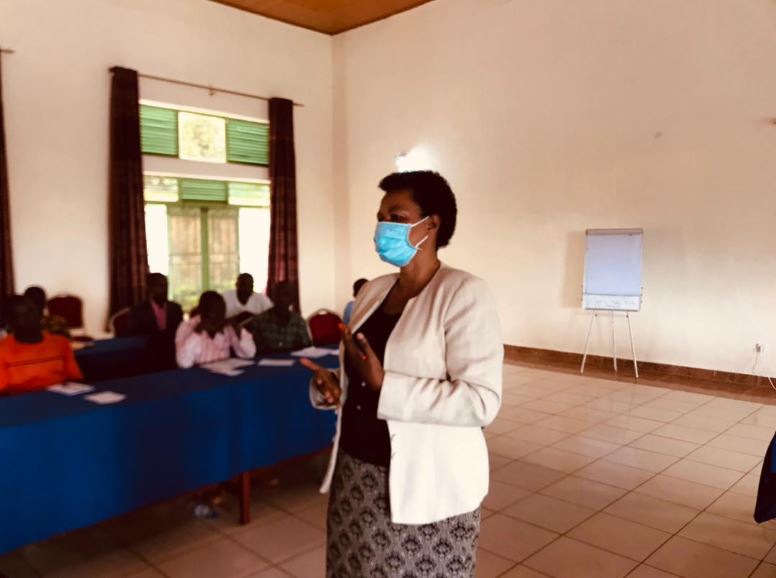
“The Girl Child rights have to be realized at all costs by providing necessary Services including HIV/SRH and SGBV services.” said the Vice Mayor for Economic Affairs while Closing a Workshop of Health Providers hosted by Afro Ark in Gatsibo district.
Trainees committed to provide SRHR/HIV/SGBV to adolescent girls and young women to respond to the nation’s efforts in reducing early pregnancies among the young generation.
The training was organized under AfroArk’s project dubbed: “Strengthening Community support structures in the provision of SRHR/HIV and SGBV services among Adolescent Girls and young women in Nyagatare and Gatsibo districts”.
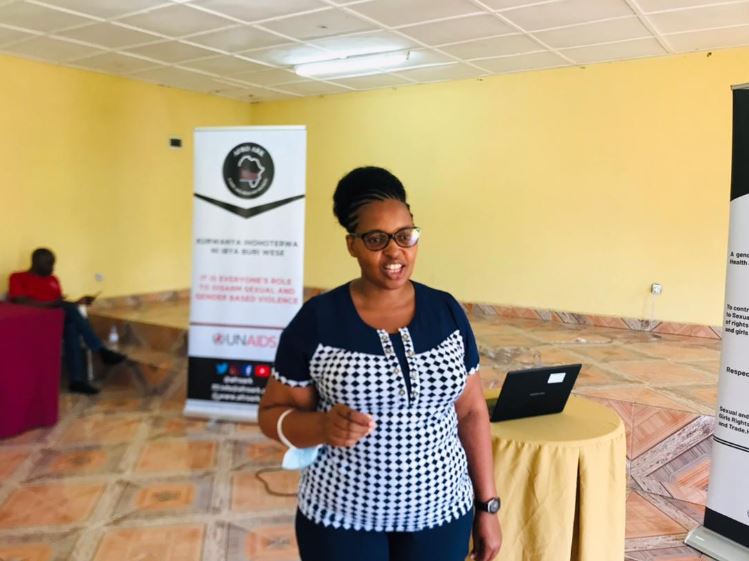
Rwanda’s National Strategy for Transformation (NST1) 2018-2024, in its social transformation pillar priority area 3/60, aims at scaling up efforts to raise awareness on reproductive health and family planning and increase contraceptive prevalence from 48% (2013/14) to 60% by 2024.
NST1 emphasizes on ‘ensuring universal access to contraceptive information and services to avoid unplanned pregnancies and prevention of sexually transmitted diseases with a particular focus on the youth’ as key to the realization of the target.
Trends in HIV & Early pregnancies
The Rwanda Population based HIV impact assessment (RPHIA 2019) shows that HIV prevalence among women is at 3.7% compared to 2.2 % among men. Unwanted pregnancies among teenagers is often done through rape or deception based on material things. They undergo sexual and emotional violence. Sexual violence among Women aged 15-49 account for 22.4% and 27% emotional violence (DHS 2015).
RDHS 2019/2020) show that the proportion of teenagers who have started child bearing rises rapidly from less than 1% at 15 years to 15% at 19 years of age. This is basically due to lack of or insufficient use of family planning services and safe sex practices.
The same survey noted that teenagers in Eastern province, where Nyagatare and Gatsibo districts are found, who began child bearing were higher at 6.4%.The situation is even worse with COVID 19 that has affected both the supply and adolescent’s demand for the SRH services including use of contraceptives.
theinspirerpublications@gmail.com



Leave a Reply