
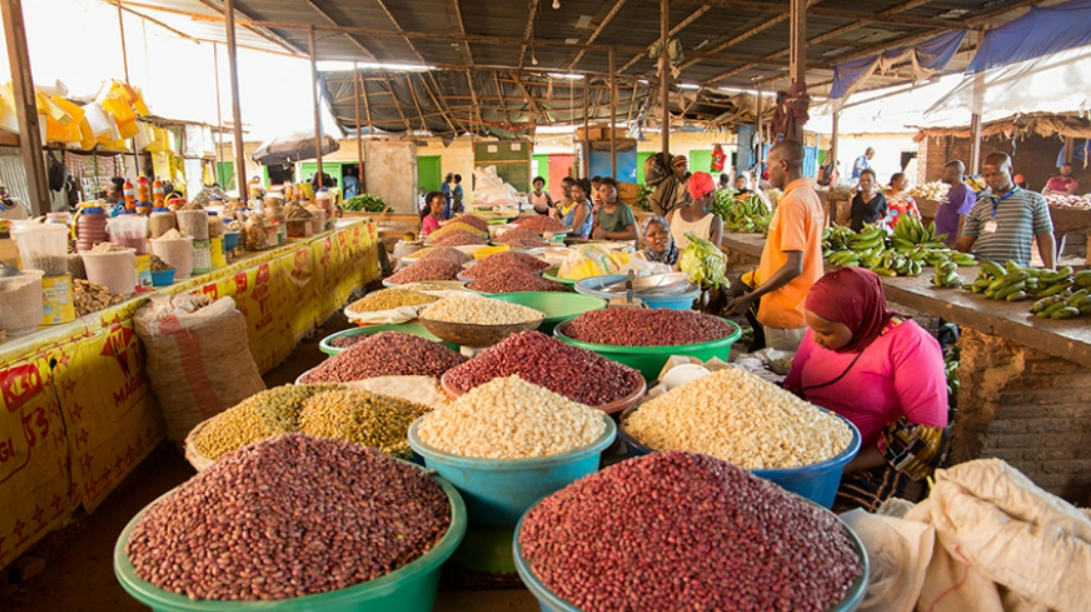
Civil society calls for special joint interventions to reduce food commodity prices
By Elias Hakizimana.
Rwanda Civil Society Platform (RCSP) has called for collaborative efforts to address the issue of the rise in food commodity prices which continues to be a burden.
The call was made on Friday, October 28, 2022, in Kigali during an official presentation of the research findings on the impact of an increase of commodity prices in Rwanda: its effects in general and on gender and women in particular.
Women and men cross-border traders from Rubavu district and small business operators in Kigali city were also involved in the research.
Angelique Kabeza, Executive Secretary of Rwanda Civil Society Platform said that their research that referred to other previous researches by other entities including key ministries that regulate commodity prices found out that food price fluctuation affected not only people with low living standards or famers, but also city dwellers who depend on monthly salary earning.
“Apart from needy communities who suffer a lot, we also Kigali dwellers and leaders are suffering from the impacts, it is the reason why we are here to see what we can do to eradicate the issue, being the government, civil society, development partners as well as the private sector, we all need to learn from what have been done so far and plan what to add on to bring solutions to this burden,” Kabeza said.
Some of the recommendations look at the role of everyone in advocating for commodity availability so that the prices come down.
“As civil society, we have committed to continue educating families to well manage available commodities and to work with to government to preserve social protection measures in place.” She said,
Why women are the most vulnerable?
Kabeza said that women are the ones to provide children with food at home because they spend much time together.
“In case of food scarcity, they suffer a lot as they fail to get food to the children,” She noted.
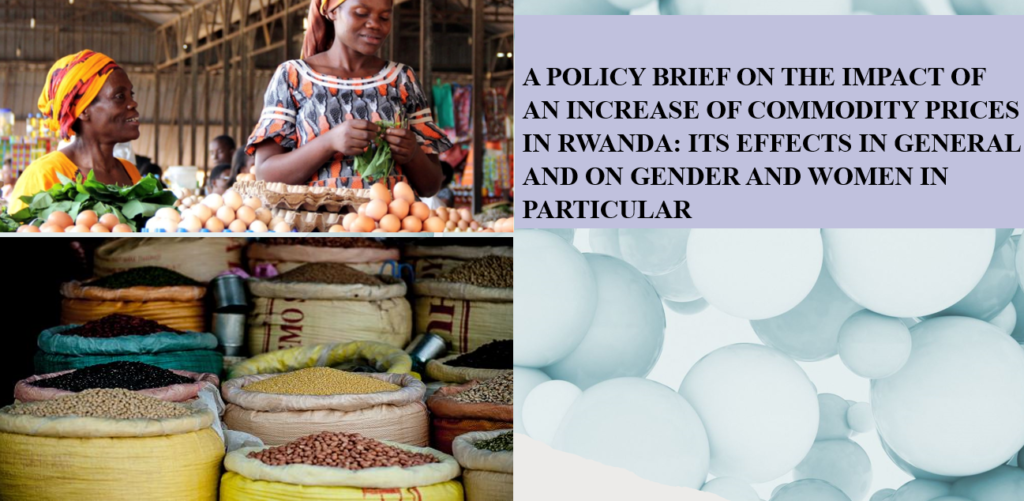
Crescence Mukantabana, Executive Director of ‘Reseaux de Developement des Femmes Pauvres’, a local organization that advocates for the rights and welfare of poor women and girls said that stunting among the children that was at 3 percent can undoubtedly double as the price for major food commodities continues to rise.
“Prices have gone up for all the key commodities including beans, small fish, meat of the third category, sweet potatoes, if it continues like that, undoubtedly, stunting rate will double.” She said.
Government should fix prices
Mukantabana said that one of the solutions to price fluctuation is that the Government should fix the prices for food commodities.
“One morning you get up and see prices are at a certain high amount in local food shops and the next day you get every trader has set prices as he/she wants, let take an example of cooking oil, you find it with the cost of Rwf4,000 per 1Litter in one shop, another at Rwf4,500 and Rwf5,000 in the next shop. For beans, the prices also vary between Rwf1600, Rwf1800 and Rwf2,000, why? The Government should set the fixed prices on food commodities and make them public,” she said.

“They mention Russia-Ukraine war and Covid-19 as the root causes, but why beans that are locally grown can have such a highest price? It is not easy for a poor citizen to pay even Rwf1,200 per a kilogram of beans, the government needs to regulate the prices and set a strategy for the public to report whoever can contradict the standards prices through a toll-free number,” she added.
World Food Day 2022 Highlights
World Food Day is observed annually on 16 October to highlight the millions of people worldwide who cannot afford a healthy diet and the need for regular access to nutritious food.
The theme for 2022 is Leave NO ONE behind. This year, the day is being marked in a year with multiple global challenges, including the COVID-19 pandemic, conflict, climate change, rising prices and international tensions. And all of this is affecting global food security.
According to the Central Bank’s (BNR) Monetary Policy Report of August 2022, the agriculture sector recorded poor performance, growing by 0.6 percent, mainly due to unfavorable weather conditions that led to bad harvest for 2022 agricultural season A. Food crop production that represents 64 percent of agriculture sector declined by 1.2 percent in 2022Q1 from a growth of 7.0 percent in 2021Q1.
Fuel shocks drive most of the decline in national GDP
Data from the global Crisis study 2022 indicates that higher fuel prices account for more than 1.3% of the total fall in real GDP, compared to fertilizer and food price shocks at 0.6% points respectively.
On the other hand, the study shows that agricultural GDP losses are mainly driven by fertilizer shocks, which directly affect primary agricultural production by mainly women and women cooperatives, but also disruptions in downstream supply chains.
“However, GDP losses in off-farm agri-food system are mainly led by higher food prices, at 2.8 % points, because higher grain and edible oil prices, increase the cost of food processing and lower its production and demand for related agri-food services.” Quotes the study.
RCSP study embarks on Rwanda, where prices have risen rapidly in recent months for major commodities especially food, fuel, wheat, housing, transport and fertilizer and other farm inputs, driven largely by the ongoing war in Ukraine and the sanctions imposed on Russia.
Between June 2021 and April 2022, the global prices of palm oil and wheat increased by 56% and 100% in real terms, respectively. The price of fertilizer doubled, while crude oil and natural gas prices also rose substantially.
However, wide variation also exists across commodities, with real maize prices increasing by only 11%, and rice prices declining by 13%.
theinspirerpublications@gmail.com



Leave a Reply