
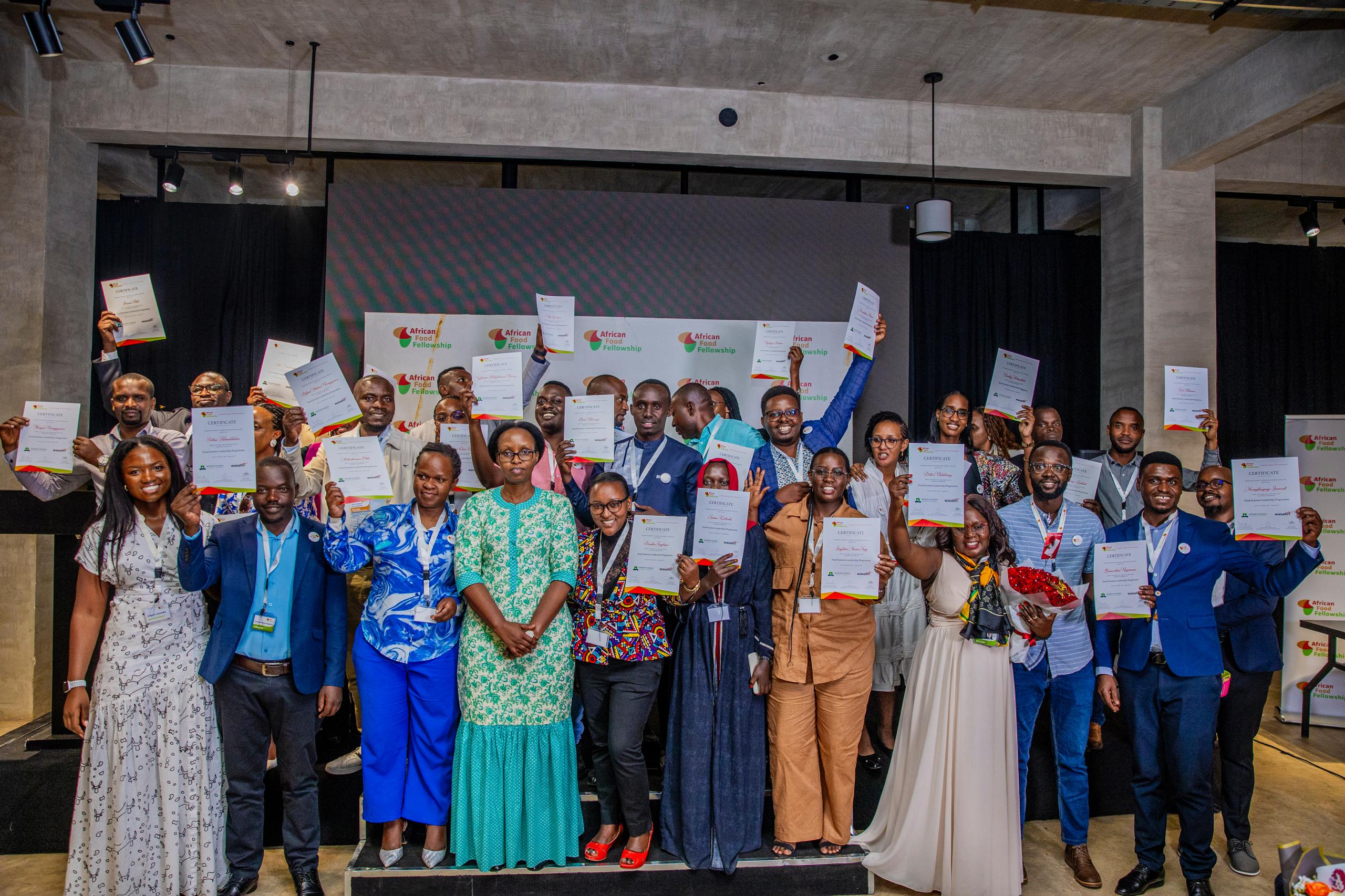
African Food Fellowship graduates fourth cohort, fellows unveil innovative food system solutions
By Elias HAKIZIMANA.
KIGALI, Rwanda – August 9, 2025 – The African Food Fellowship yesterday celebrated the graduation of its fourth cohort in Rwanda, with Fellows showcasing bold, practical solutions aimed at transforming the country’s food systems.
The ceremony, held at Norrsken House in Kigali, marked the end of a 10-month Food Systems Leadership Program that equips participants with skills, knowledge, and networks to address pressing agricultural challenges.
One of the graduating Fellows, Protais Habanabakize, highlighted alarming nutrition statistics in Rwanda, noting that 32.4 percent of children are stunted, while the average daily fruit intake per person is just 91.3 grams—far below the World Health Organization’s recommended 400 grams.
He pointed out that 40 percent of planted fruit trees die due to poor maintenance and that only 35 percent of farmers receive agricultural training.

Habanabakize’s Food Systems Action will establish hubs to train communities on fruit cultivation for both nutrition and income, starting with yellow bananas, avocados, papayas, and mangoes grown under climate-smart, organic practices.
“Most smallholder farmers grow for markets, not nutrition, leaving their children vulnerable to malnutrition,” he said. “We want to change that while boosting farmer incomes. My goal is to raise the average fruit consumption in Rwanda to at least 250 grams per person per day within five years and cut post-harvest fruit losses from 40 percent to 15 percent.”
Another Fellow, Jean Pierre Dusabimana, presented his project to prevent crop diseases through traditional, chemical-free pest control.
Using techniques like the “push and pull” system—intercropping plants to repel pests—and organic sprays made from natural plant extracts, Dusabimana aims to help farmers increase yields while protecting soil health.
“This approach reduces reliance on chemical pesticides, improves food quality, and supports sustainable agriculture,” he said.
Anysie Ishimwe, Country Lead of the African Food Fellowship in Rwanda, described the program’s broader mission as building capacity and fostering collaboration across sectors to strengthen food systems.
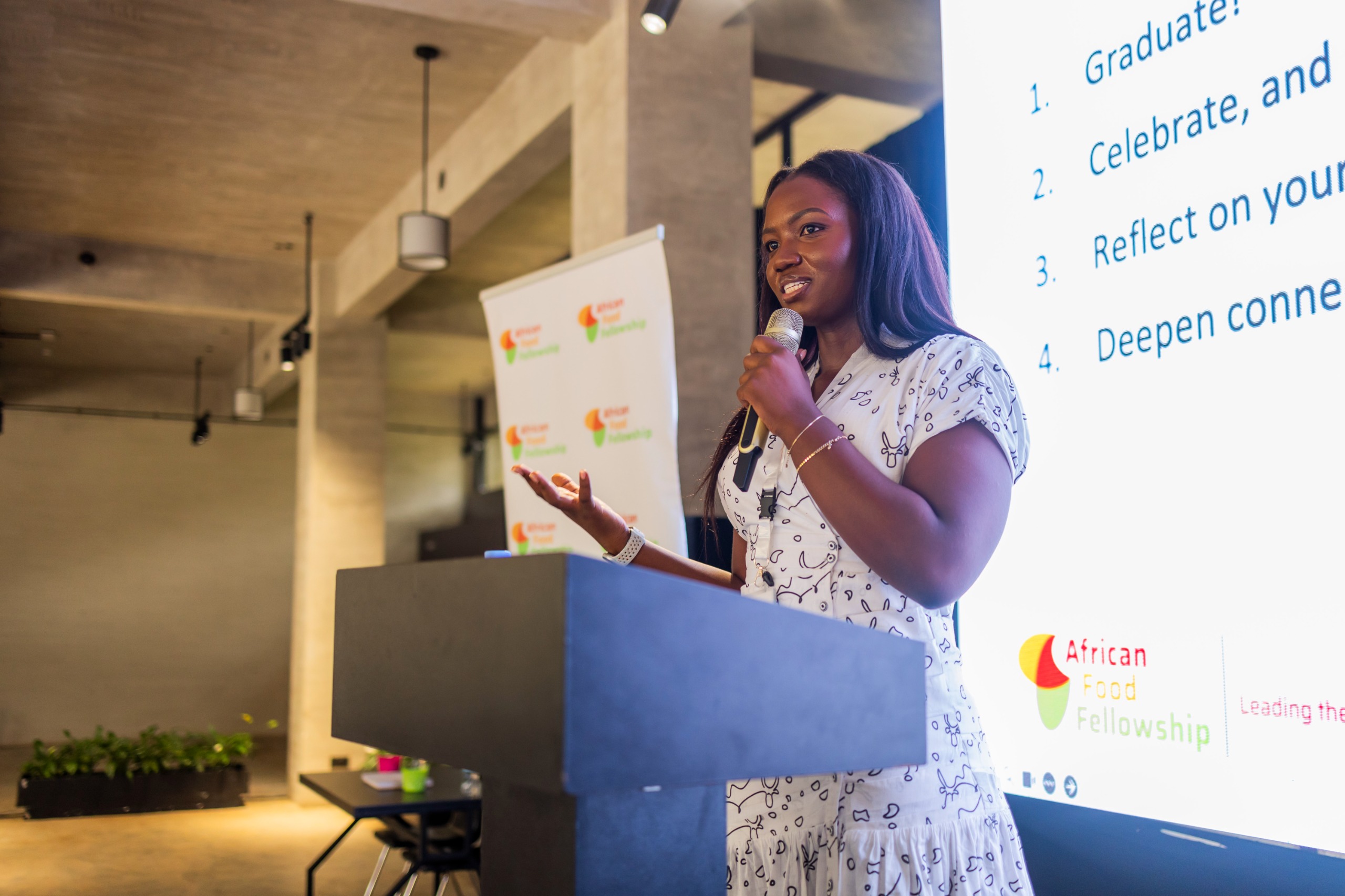
“People are the ones who implement policies and strategies, so we focus on capacity building and mindset change,” Ishimwe said. “Rwanda faces land degradation and soil acidity that could become critical within a decade if we do nothing. We need both immediate solutions and long-term strategies to increase production while protecting our resources.”
Since its launch in Rwanda in 2021, the African Food Fellowship has supported local leaders in developing initiatives that address malnutrition, climate change, post-harvest losses, and market inefficiencies.
Fellows receive technical mentorship from global experts, small seed grants of up to €2,500 (about RWF 3.5 million), and ongoing support through the Rwanda Food Fellowship network. The fifth cohort, expected to begin in September, will include 42 new Fellows.
The program is delivered primarily online, with one in-person module, and emphasizes gender inclusivity, ensuring equal representation of men and women. By bringing together leaders from government, civil society, and the private sector, the Fellowship seeks to build a resilient, equitable food system capable of meeting Rwanda’s needs by 2050.
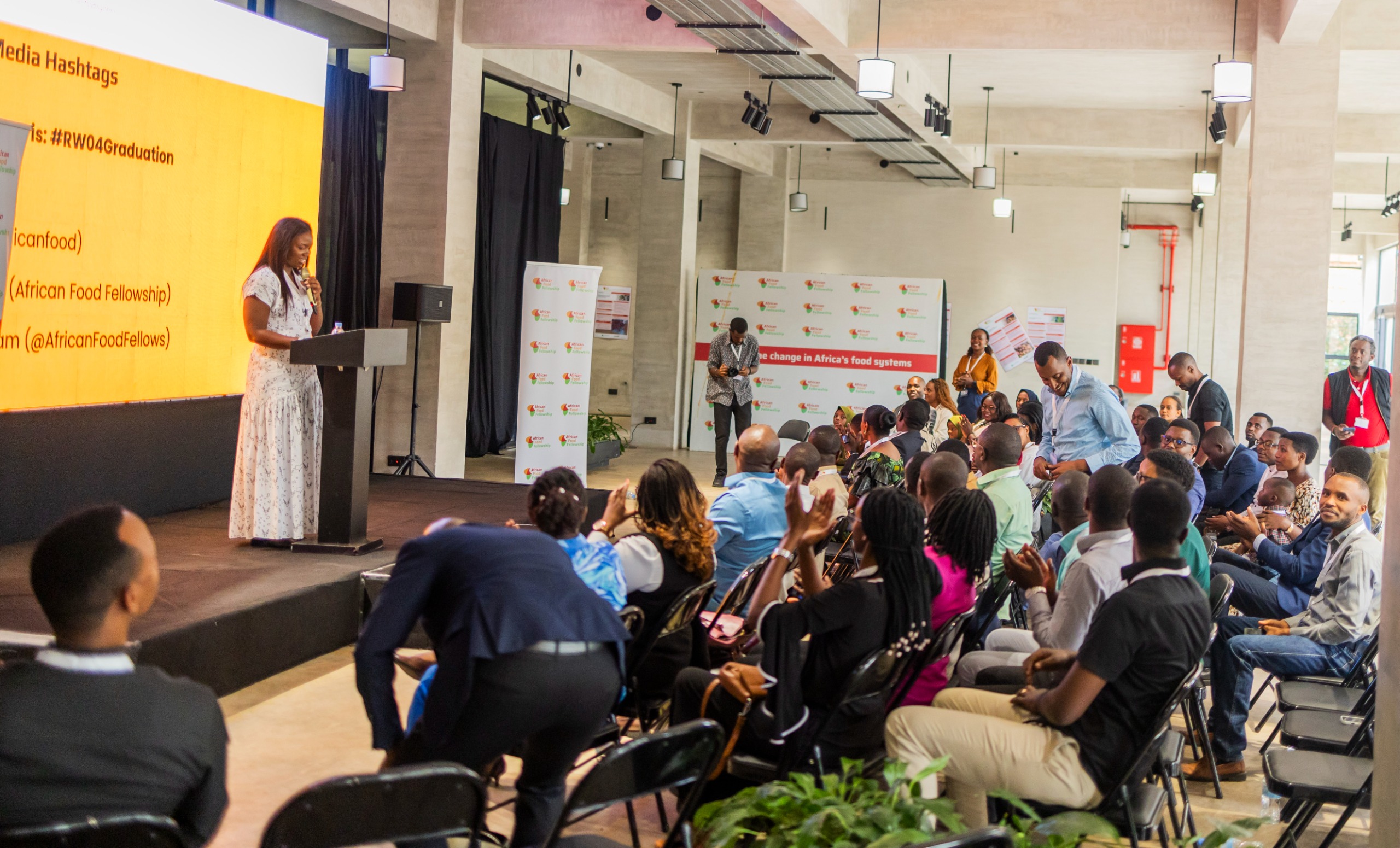

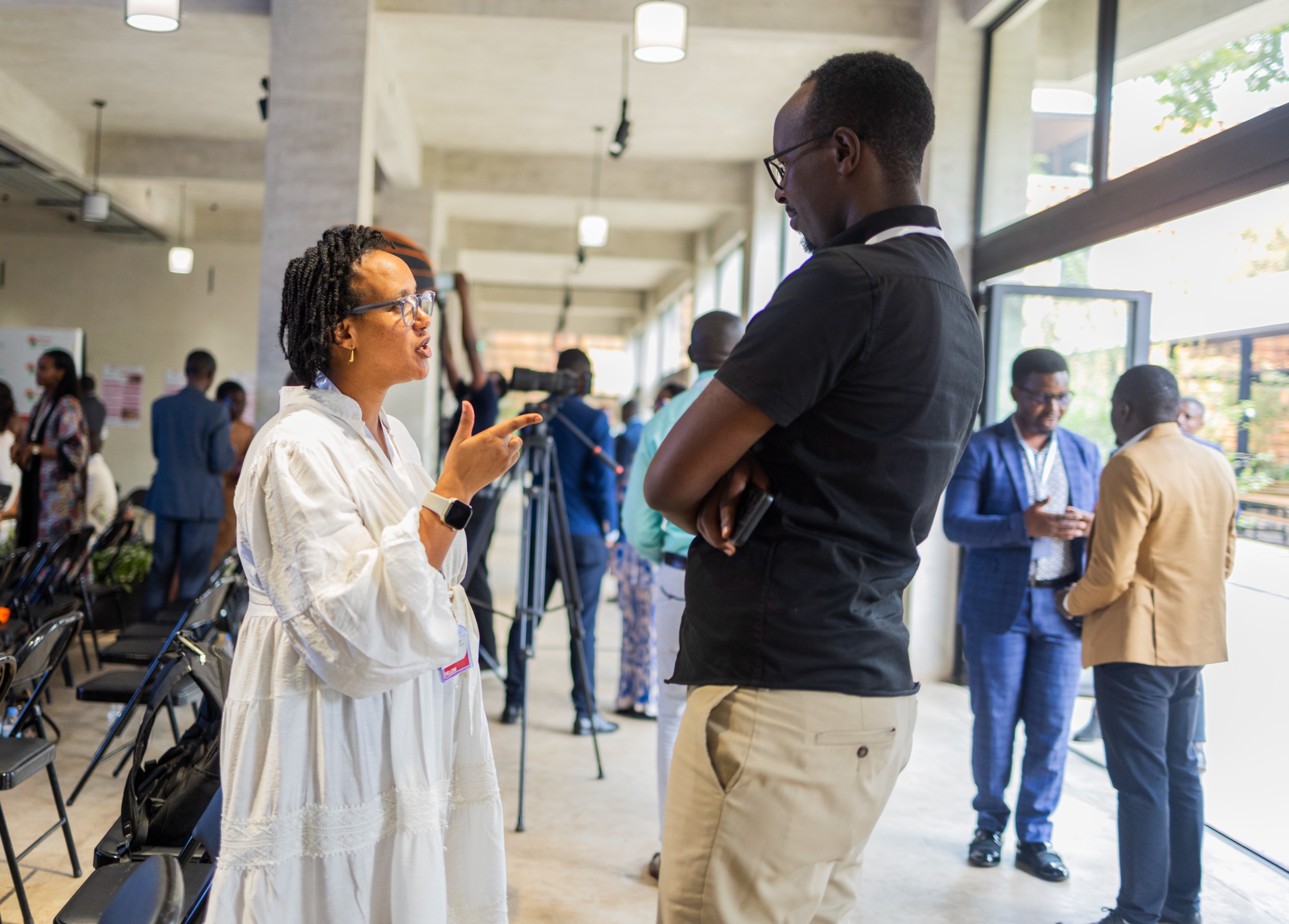
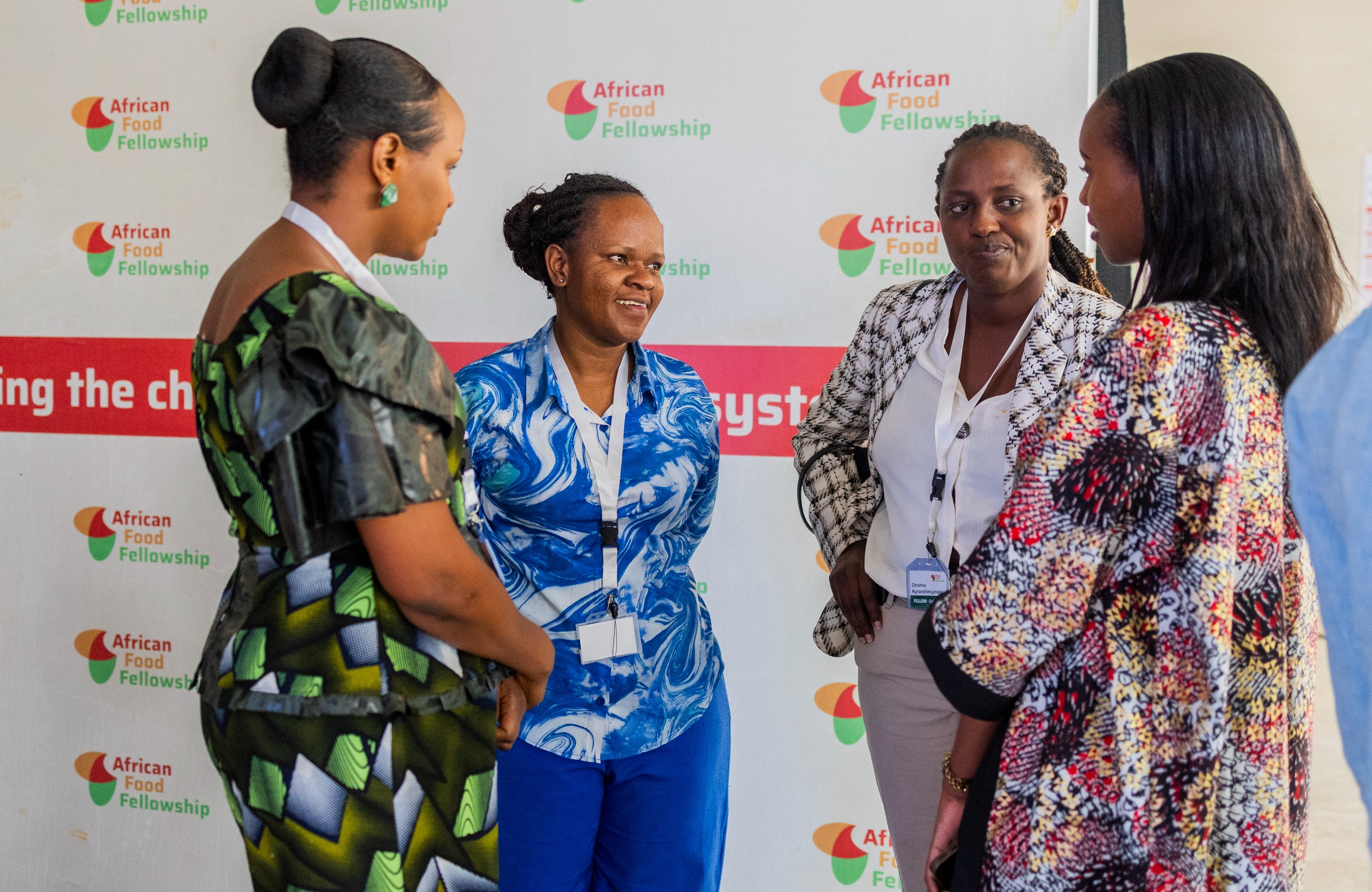 Fellows interact during the African Food Fellowship 4th cohort graduation ceremony at Norrsken House, Kigali, on August 8, 2025.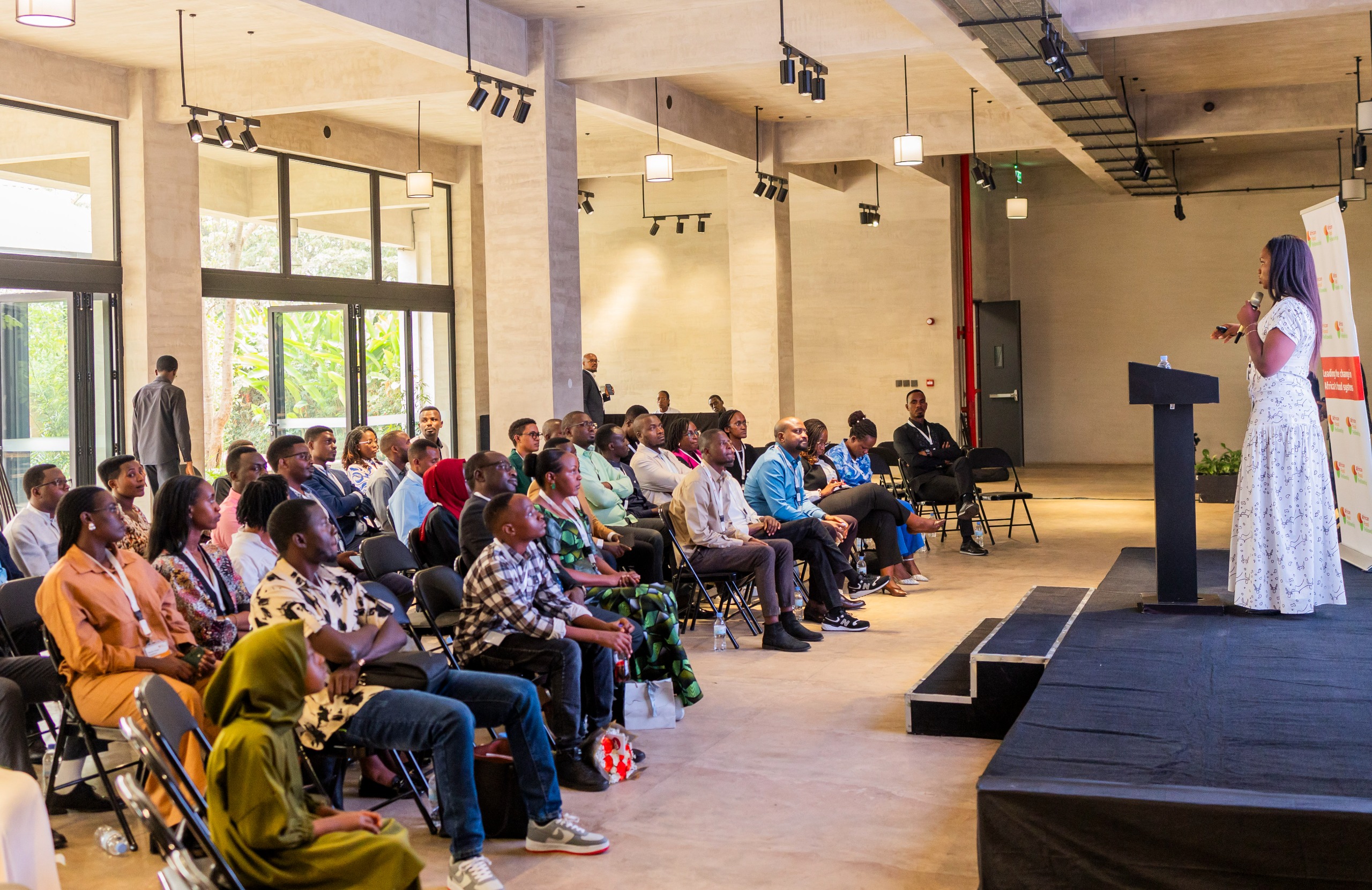
theinspirerpublications@gmail.com




Leave a Reply