
Stakeholders trained on Rotterdam Convention
By The Inspirer Writer.
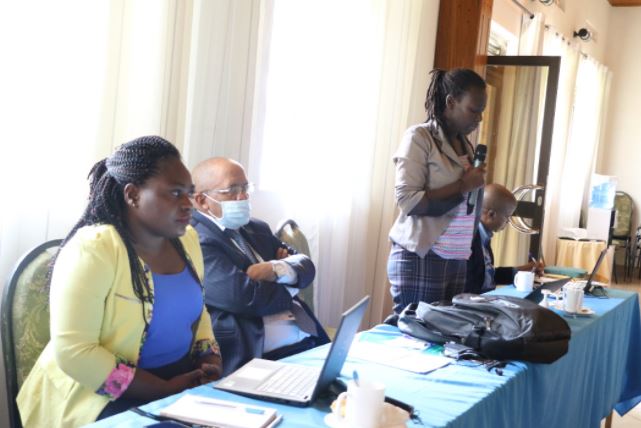
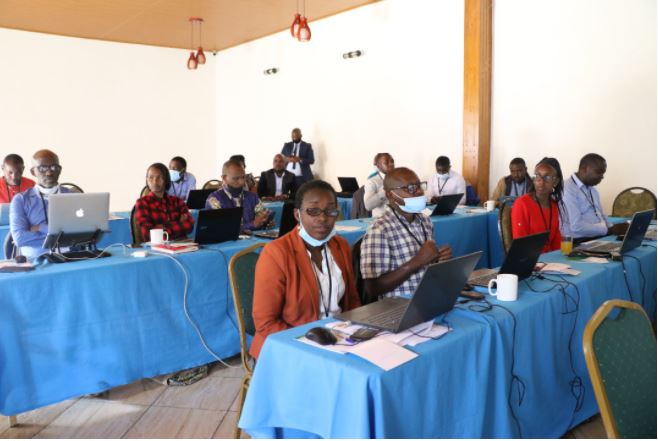
Members of Chemical Based Conventions National Steering Committee from government institutions, private sector and non-governmental organizations, that have role in the implementation of Rotterdam Convention trained in the National follow-up workshop for the Lifecyle management of chemicals and Notifications of Final Regulatory Actions (FRAs) under Rotterdam Convention.
The workshop running from November 9 to November 12 was co organized REMA and Rotterdam convention secretariat in partnership with UN Environment Programme, UN Food and Agriculture Organization, and European Union.
The workshop which was financed by European Union is a follow-up to the “Sub-Regional workshop on the lifecycle management of industrial chemicals under the Rotterdam Convention” that took place in Nairobi, Kenya 2019.
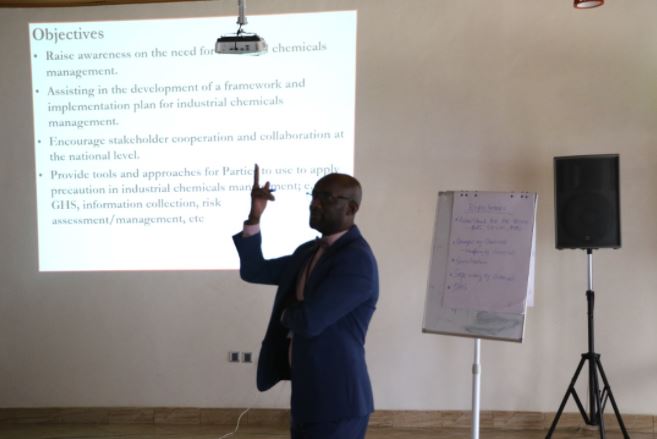
The key objectives of the follow-up workshop were to facilitate the strengthening of the capacity of Parties to assess and manage risks, prepare and communicate import responses and take decisions on final regulatory actions for chemicals that are listed under the Rotterdam Convention in accordance with the prior informed consent procedure.
It also aimed to raise awareness on hazardous chemicals through use of GHS and also facilitate the development of frameworks and implementation plans for chemicals management, provide tools and approaches for Parties to use to apply precaution in industrial and pesticide chemicals management.
Opening the training on behalf of REMA Director General, Racheal TUSHABE, the Director of Advocacy and Multilateral Environmental Agreements Monitoring said:
“Environment has no borders, but, it also has no voice. We are the one to advocate for the planet and enable nature to be heard and direct the conflict in particular ways. Hence, this is assignment for all countries arounds the world. We can make it by joining hands as global community throughout the ratification, accession of Multilateral Environmental Agreements (MEAs) and put emphasis on their implementation as it is the core solution to save our lives and biodiversity from diverse impacts resulting from the poor management of pesticide and industrial chemicals”.
Led by the trainers James Mulolo and Thabo Moroba from the Africa Institute for the Environmentally Sound Management of Hazardous, the training is looking at main provisions of Rotterdam convention, status regarding submissions, key obligations under the convention with focus on the role of National Coordination and Cooperation for sound chemicals management, hazard, risk assessment and management and framework development for sound management of chemicals. Trainees were also explained the distinction between Rotterdam Convention, Basel Convention and Stockholm Convention.
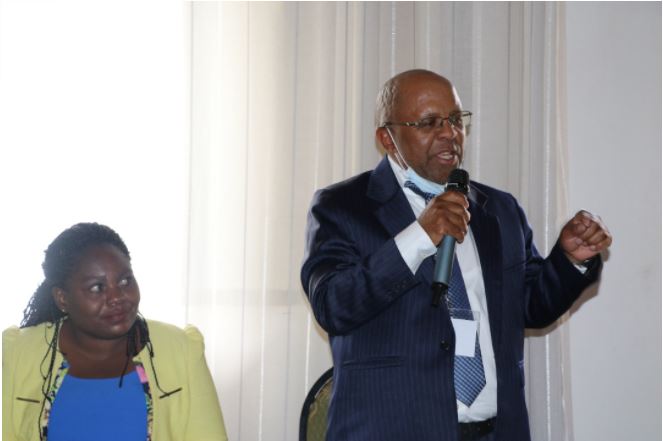
Up today, Rwanda is party to 18 MEAs, among them include the Rotterdam convention on prior informed consent. For effective implementation of Rotterdam convention, Rwanda synergized it with Strategic Approach to the International Chemicals Management, Basel, Stockholm and Minamata Conventions
Since the date of Ratification, Rwanda informed the secretariat final decision taken against the transboundary movement of different pesticide and industrial chemical under annex III. In addition to the import responses submitted, during this year, Rwanda adopted ministerial order banning eighty-seven (87) pesticide and industrial chemical. Henceforth, 30 of them were submitted to the Rotterdam Secretariat through import responses as provided for by the article 10 of the convention.
The Rotterdam Convention adopted in 1998 and became effective in 2004 is a multilateral treaty to promote shared responsibilities in relation to importation of hazardous chemicals.
The convention promotes open exchange of information and calls on exporters of hazardous chemicals to use proper labelling, include directions on safe handling, and inform purchasers of any known restrictions or bans.
Signatory nations can decide whether to allow or ban the importation of chemicals listed in the treaty, and exporting countries are obliged to make sure that producers within their jurisdiction comply.
Basel Convention, adopted in 1989 and entered into force in 1992, is an international treaty that was designed to reduce the movements of hazardous waste between nations.
The Basel Convention regulates the transboundary movements of hazardous wastes and other wastes.
Stockholm Convention on Persistent Organic Pollutants is an international environmental treaty, signed on 22 May 2001 in Stockholm and effective from 17 May 2004.
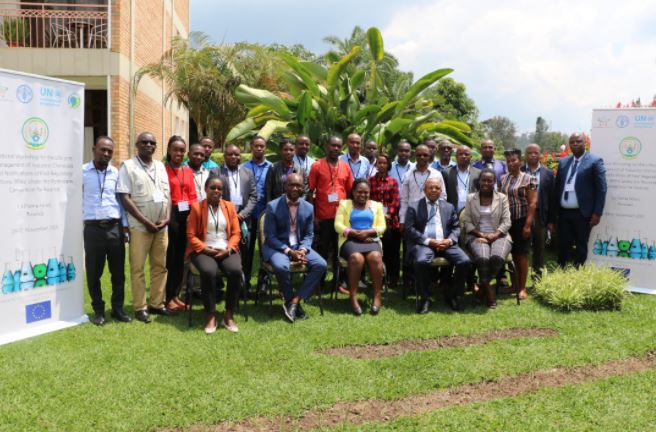 Participants to the workshop posing for a group photo.





Leave a Reply