
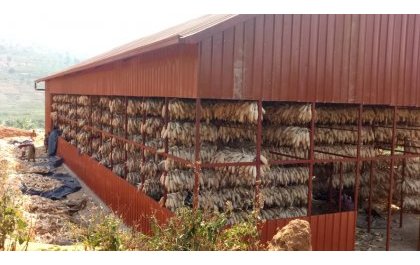
Seeds worth Rwf 128 million were damaged from the RAB’s warehouses
By The Inspirer writer.
The auditor general’s office recently in June revealed that RAB incurred a loss of Rwf128.6 million due to poor management of seeds acquired and stored at RUBILIZI station.
This loss was associated with stored seeds which lost their germination capacity and are sold for consumption at a price lower than acquisition cost.
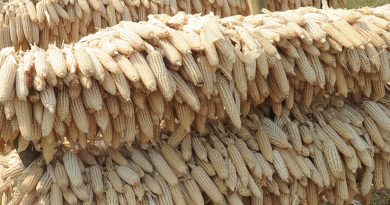
The Rwanda Agriculture and Animal Resources Board, (RAB) has allowed MPs to have a loss of RWF 128 million of maize seeds damaged in its Rubirizi warehouse.
This week, the RAB appeared before the Parliamentary Committee on Public Finance and Resources, commenting on the mistakes presented by the Auditor General in the 2018/2019 report.
The report states that the RAB lost Frw 128 million for damaged seeds in the Rubirizi warehouse. The seeds were sold at a lower price than the purchased price, and were consumed unless they were not dedicated for food.
RAB CEO, Dr. Karangwa Patrick, admitted that the seeds sold to be eaten had lost their ability to germinate, after a long period of storage in the RAB store.
He said the seeds were of maize that was already in use, but there were more modern ones known as ‘hybrids’, which prevented people from continuing to buy them, as they were less productive.
“In the study, more than eight hybrids were harvested, three times as much as the other OPVs, where the traditional seed farmer who used to harvest two, three, and six, seven even eight tones in Hybrids, but RAB the other seeds RAB started with immediately lost the value. Farmers did not agree to take the seeds again because they also target benefits, so, damaged seeds grew in quantity.”
He said that they later decided to use the seeds without rejecting them all.
“We could not distribute seeds which lost ability to be germinated to farmers to saw them, we give them to people to eat, even if they are maize seeds; otherwise they remain maize, which was the reason to to be sold to be eaten because they could no longer grow.”
“Some were sold for food, but others were rejected because they could not be eaten. Those ones were damaged through legal procedures and Rwanda Environmental Management Authority (REMA) played a role in that activity.”
Dr Karangwa also said that the seeds that still had the ability to grow were given to farmers who could not afford to buy hybrids, and gave them for free because they were more productive than other traditional crops that people have at home.
He apologized for the inconvenience, acknowledging that there had been problems and that it would never happen again.
Source: IGIHE


Leave a Reply