
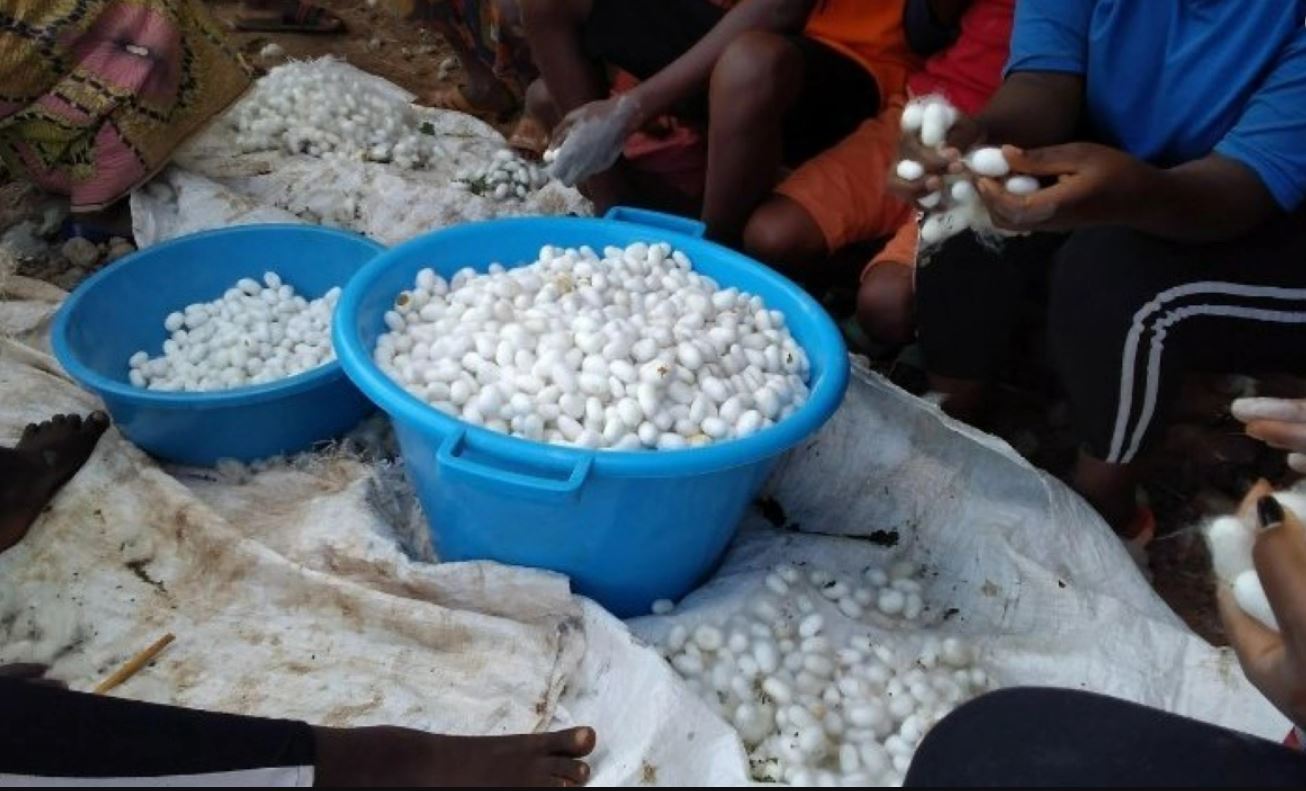
Sericulture: Lack of investor led to 43 percent decline in silk cocoons production
The New Times.
Lack of an investor led to a 43 per cent decline in the production of silk cocoons in the 2021-2022 fiscal year, compared to the previous year— The New Times has learnt.
Silk cocoons are coverings of threads that are produced by silkworms after feeding on mulberry trees, and are used in the textile industry.
As per the 2021-2022 annual report by the Ministry of Agriculture and Animal Resources, the National Agricultural Exports Development Board (NAEB) supported farmers and Cocoon Production Centers (CPCs) to rear 1159 boxes of silkworms, and the production of cocoons which was 15.4 tonnes in that fiscal year ended on June 30 last year.
The report showed that the decrease observed in silk sheath production was “particularly due to farmers discouraged by the departure of the previous investor in the sector.”
It showed that some sericulture, or silk farming, agriculturalists did not resume production after termination of contract with HeWorks Rwanda Silk Ltd.
“They were discouraged by reduction in farm gate cocoon price that followed the fluctuation of value on the international market caused by Covid-19 pandemic effect on different economies,” the report indicated.
Speaking to The New Times, Jean de Dieu Rukemwa, the president of Musereko Sericulture Cooperative in Gatsibo District, said that some farmers seem to have been demotivated because of lower price at which their cocoon produce was being bought since the departure of the Korean firm, yet, breeding silkworms requires intensive care.

Lack of an investor led to a 43 per cent decline in the production of silk cocoons in the 2021-2022 fiscal year, compared to the previous year, it has emerged.
Silk cocoons are coverings of threads that are produced by silkworms after feeding on mulberry trees, and are used in the textile industry.
As per the 2021-2022 annual report by the Ministry of Agriculture and Animal Resources, the National Agricultural Exports Development Board (NAEB) supported farmers and Cocoon Production Centers (CPCs) to rear 1159 boxes of silkworms, and the production of cocoons which was 15.4 tonnes in that fiscal year ended on June 30 last year.
The report showed that the decrease observed in silk sheath production was “particularly due to farmers discouraged by the departure of the previous investor in the sector.”
It showed that some sericulture, or silk farming, agriculturalists did not resume production after termination of contract with HeWorks Rwanda Silk Ltd.
“They were discouraged by reduction in farm gate cocoon price that followed the fluctuation of value on the international market caused by Covid-19 pandemic effect on different economies,” the report indicated.
Speaking to The New Times, Jean de Dieu Rukemwa, the president of Musereko Sericulture Cooperative in Gatsibo District, said that some farmers seem to have been demotivated because of lower price at which their cocoon produce was being bought since the departure of the Korean firm, yet, breeding silkworms requires intensive care.
The New Times.



Leave a Reply