
World Food Day: Call for concerted effort to make Africa food secure
The New Times.

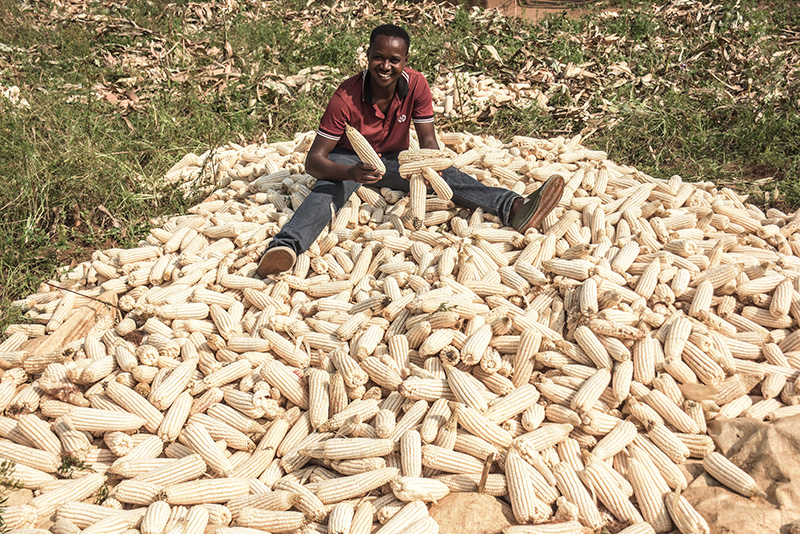
Marie Gorethi Murorunkwere, a resident of Ngoma District is a beneficiary of One Acre Fund-Tubura. Photo: Courtesy
Specifically in Rwanda, an estimated 467,000 households, or 18.7 percent of all Rwandan households are food insecure, according to the Comprehensive Food Security and Vulnerability Analysis (CFSVA) report of 2018.
This analysis is a joint initiative of the National Institute of Statistics Rwanda (NISR), the Ministry of Agriculture and Animal Resources (MINAGRI), and the World Food Programme (WFP).
Given the problem, One Acre Fund-Tubura, an agricultural development organization serving more than 600, 000 farmers– has been supporting farmers to increase their farm productivity, earn more income, and contribute to the achievement of food security for all. One Acre Fund-TUBURA supplies financing and training to help smallholders grow their way out of hunger and build lasting pathways to prosperity.
According to WFP, 38.2 per cent of Rwandans continue to live below the poverty line and almost one fifth is food insecure. Levels of stunting among young children remain very high, at 35 percent.
One Acre Fund – Tubura’s interventions
WPF says that Agriculture is the backbone of the economy, with 89 per cent of rural households practicing small-scale farming.
However, poor rainfall, drought, floods and the limited amount of land that is suitable for agriculture, alongside pests and diseases, continue to pose risks to food security.
In line with addressing such issues, One Acre Fund-Tubura has been training farmers on erosion prevention and control.
“In partnership with the Rwanda Agriculture Board, we delivered trees to farmers for free. Trees are so important to deal with climate change and to protect our soil,” indicated Evariste Bagambiki, Communications Specialist at One Acre Fund-Tubura.
As an agricultural development organisation, One Acre Fund – Tubura supplies farmers with various quality inputs they need to grow more food and earn money.
It provides such farm inputs for voluntary purchase to farmers, delivered within walking distance of farmers’ homes.
Because access to quality seeds and fertilisers has been a constraint for smallholder farmers, One Acre Fund – Tubura developed a system whereby farmers get the fertilisers and seeds on credit, and they repay over the entire growing season.
“As farmers repay, we re-invest those funds back into Rwanda and into serving more farmers,” Bagambiki said.
In line with ensuring a healthy diet, the Bagambiki observed that “at One Acre Fund, we believe that farmers also need to be healthy. Among the agricultural products, we provide farmers with vegetable seeds. We also provide fruit trees to ensure a healthy diet.”
It also trains farmers on the latest agricultural practices and how to sell any surplus harvest.
In addition, it offers other products on credit, like solar lights, which improve quality of life.
Tackling the issue of low fertilizer use, access
Although it is not the only input, low use of fertiliser is a key impediment to increased agricultural productivity and hence farm income in Africa, reiterated a 2018 study by African Fertilizer Financing Mechanism called “Promotion of Fertilizer Production, Cross-Border Trade and Consumption in Africa”.
From the 2018 estimates by Alliance for a Green Revolution in Africa, the average fertiliser use in Sub-Sahara Africa is17 kilogrammes per hectare of cropland, which is far less than a world average of 135 kilogrammes per hectare.
Although fertiliser use in Rwanda averages 45 kilogrammes per hectare, according to figures from the Rwandan Agriculture Board, it is also low – less than half of the global average – and some farmers cannot afford them when it comes to paying at once before growing their crops.
This problem underscores the significance of One Acre Fund-Tubura’s fertiliser support to farmers whereby they get crop nutrients on credit, and repay upon selling their harvests.

Theogene Murwanashyaka, Nyabikiri cell, Gatsibo district.

Appolinarie Nyiratabaro, Mbyo cell, Bugesera district





Leave a Reply