
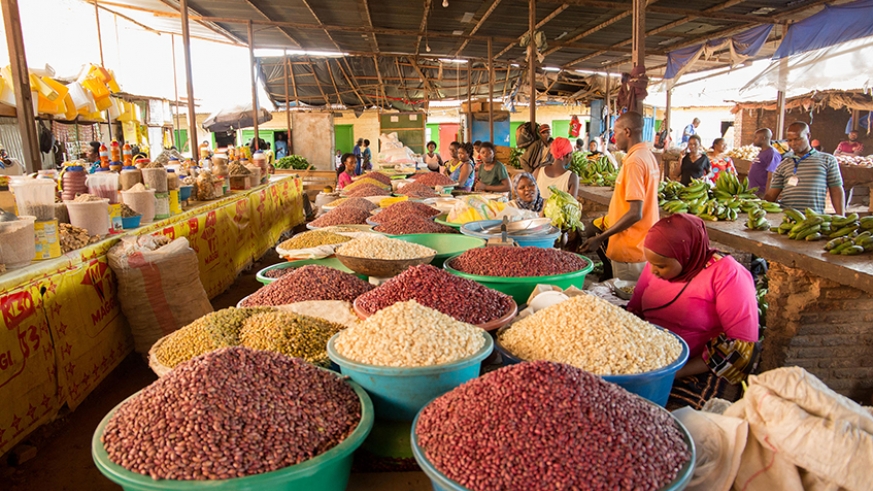
MINICOM explains recent fluctuations in food prices
The prices for most food items that have been on the rise in recent weeks are expected to subside in a few days to come, as farmers commence harvesting. —The New Times reports.
The prices of some food items such as potatoes, rice, peas, beans and tomatoes have been going up leading to concerns on food security and affordability in the country.
The Ministry of Trade and Industry has however said that it is not out of challenges of production but a seasonal trend following the depletion of stocks from the previous harvest.
Speaking to The New Times, Trade and Industry Minister, Soraya Hakuziyaremye, said that for some produce, farmers are set to commence harvesting in coming weeks which will see the prices adjust downwards and remain stable for some time.
The government often comes in to regulate food prices to ensure affordability and curb artificial shortages by speculators to drive up prices.
Hakuziyaremye said that for instance, wholesale prices for potatoes have started going down (ranging between Rwf330-Rwf400 a kilogramme) with retail prices expected to follow suit.
For rice, the harvest period is expected to commence in January and February.
New dawn for dairy farmers
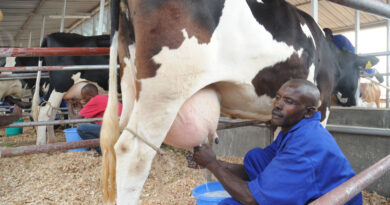
On the other hand, dairy farmers have grappled with low incomes largely due to instability in milk prices and at times higher supply than demand.
There have also been instances where firms buying milk from farmers have reduced the amounts they buy without prior notice, leaving them with surplus of milk they had not planned for.
The challenges will soon be addressed, according to Hakuziyaremye, there are plans by a company that is set to produce powdered milk beginning next year, which the minister said will provide a stable market for milk.
Meanwhile, while commenting on the cement shortages and price hikes experienced in recent months due to high demand occasioned by major government infrastructure projects, the minister said that the entrance of a second producer into the sector will bring to an end the re-emergence of such challenges.
In the previous years, whenever there has been a major construction project, there have been supply shortages and consequent price hike.
The minister said that the debut of Prime Cement, which has a capacity of 600,000 tonnes annually, will stabilize supply. The firm is starting out with about 50 per cent capacity as they enter the market.
Cimerwa has a capacity of about 600,000 tonnes annually but has been operating at about 80 per cent capacity. The two firms at full capacity can meet Rwanda’s annual demand which is estimated at around 1.2 million tonnes annually.
This will allow for stability in pricing even during projects that necessitate imports.
There are a number of major infrastructure projects lined up including a new airport in Bugesera.
Hakuziyaremye said that the government will continue to support local traders and exporters access market disrupted by the pandemic. This will be through ways such as consolidation of exports for cross border trade in Congo, export growth fund as well as access to market support for horticulture exporters.
The support is aimed at driving recovery of exports which suffered following the Covid-19.
The pandemic saw a drop in nontraditional exports in the first half of the year by 41 per cent for nontraditional exports (compared to 2019 first half).
However exports in merchandise such as gold went up responding to trends of demand and a rise in price of the commodity on the international market.
Source: The New Times.



Leave a Reply