

Women Deliver 2023: Stakeholders discuss women rights realization in Africa under the strategic litigation
By Elias Hakizimana.
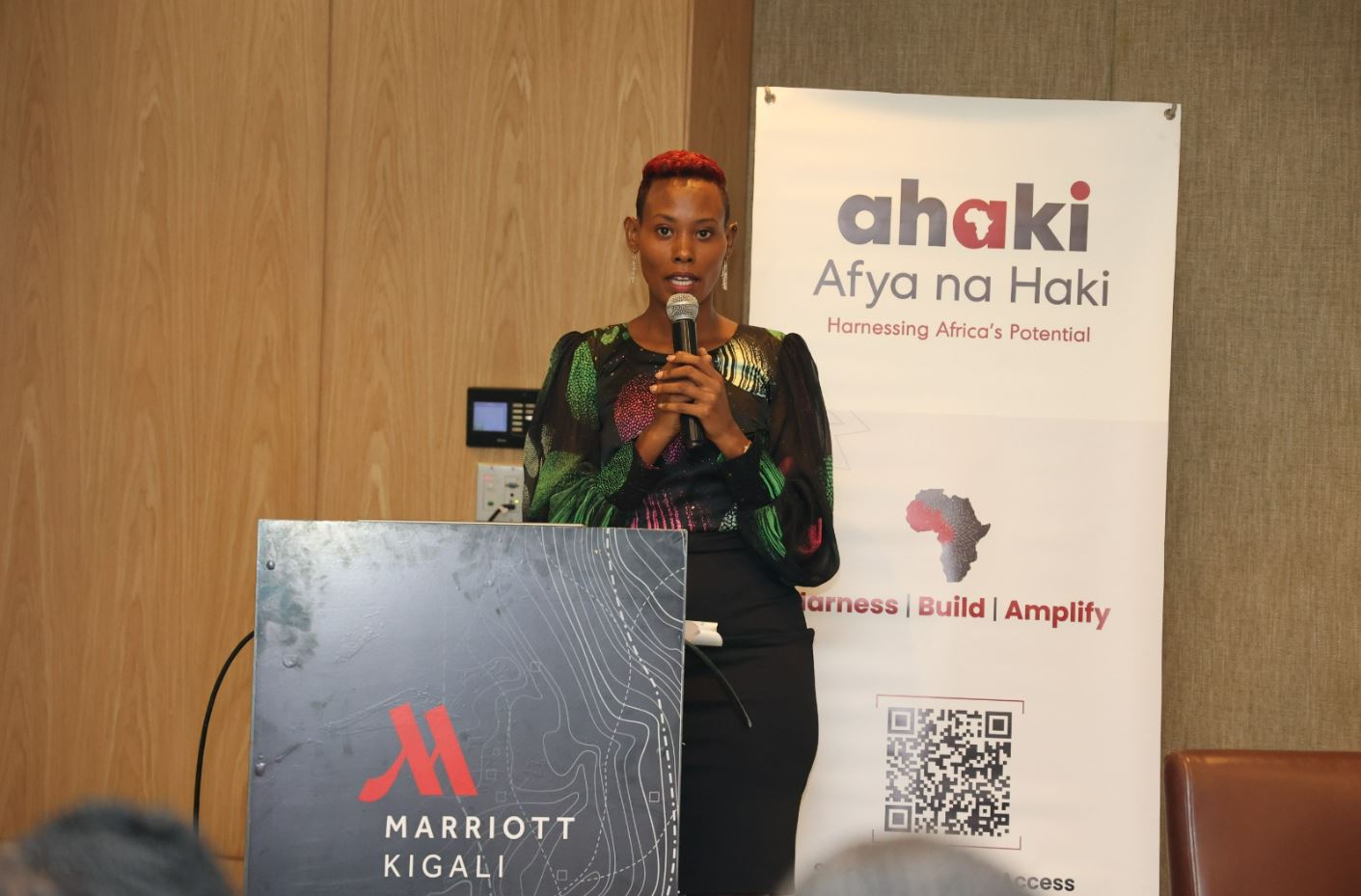
Different players around the rights of women and girls across the world are in Kigali during the Women Deliver (WD2023) conference to discuss how the rights of women should be realized.
One of the subjects under discussions is “Litigating Sexual and Reproductive Health and Rights in Africa with a call for Regional Africentric Approach.
Parts of the objectives of this year’s event include catalyzing collective action to advance gender equality, holding leaders accountable, empowering the feminist movement, reframing who leads, as well as creating an accessible and inclusive space for everyone.
Rwanda holds the 1st time the Women Deliver Conference with significant achievements to celebrate through a long journey by stakeholders’ advocacy towards ensuring women and girls’ rights to sexual and reproductive health.

While sharing experience of Rwanda, Tom Mulisa, Executive Director of the Great Lakes Initiative for Human Rights and Development (GLIHD) said that GLIHD has litigates around five cases on sexual and reproductive health rights, which should serve a good example for other countries in the African region.
“Since 2012, our law allowed civil society organizations and individuals to take up public cases. Lawyers, judges and CSOs raised the issues around SRHR justice, one of the cases is of a13-year-old girl who was denied abortion because there was a requisite of court order by the high court, and due to the advocacy conducted, the high court referred to Maputo protocol and removed the order, which is something we are celebrating through that journey,” Mulisa said.
Mulisa added that there is no court order and parental consent today, as a minor goes directly to the medical doctor, who considers her decision to have safer abortion.

He adds that two years ago they challenged a law that provided that safe abortion can be conducted by medical doctors only, and with the efforts of advocacy, rwanda’s Ministry of health begun a project of telemedicine to train more nurses and midwives to perform safe abortion with the supervision of medical doctors, while they were before allowed to conduct only post-abortion care.
“By centring African philosophy and reality, we can develop a holistic framework that addresses the multifaceted aspects of reproductive justice. This framework considers the political, socioeconomic, cultural, and religious contexts that shape a woman’s or girl’s decision to have or not to have children, without confining it to the limitations of reproductive rights and choice alone.” Said Izere Mugeni Vedastine, SRHR Coordinator at GLIHD.
“Litigation, as an intervention, plays a vital role in improving the SRHR landscape on the continent. However, our approach thus far has primarily focused on individual rights and choice, overlooking the broader societal impact. We must broaden our perspective and consider the collective obligations of society to ensure reproductive justice for all.” Mugeni added.
A continental burden
Prof. Hon Justice Lillian Tibatemwa-Ekirikubinza representing the Justice of the Supreme Court of Uganda commended an incredible work that activists are doing to hold governments accountable by using the judicial system and how courts are responding.
She said that African states are increasingly being taken to court to compel them to take positive steps in the area of reproductive justice, noting that it is imperative for litigation strategies to be alive to the continent’s socio-economic and cultural realities.
“This would mean adopting an African-centred approach, a paradigm which requires an understanding of the ‘African situation’ through an indigenous theoretical lens. Caution should be taken to avoid a generalised view of the continent- typical of western academics or those who invoke ‘African culture’ to oppress women.” She said.

Why Africentric approach?
Prof. Hon Tibatemwa said that an Africentric approach guarantees the health of the individual through the lens of the community.
“Healthy individuals can only emerge from healthy communities. It is not enough for the rights of the individual to be vindicated in constitutions or courts if communities still struggle,” she added.
Commenting on continental burden, Prof. Hon Tibatemwa said that minors and adolescents constitute a significant number of those who experience problems resulting from unsafe abortions on the continent.

“Minors face challenges besides the lack of financial resources. In most countries, they can only legally access SRHR services with the consent of their legal guardians. Courts in some countries have held that subjecting a minor’s SRHR to a third-party consent and possible veto is unconstitutional. We must interrogate the effect of legal restrictions on the ability of minors to access the needed services.” Prof. Hon Justice Lillian Tibatemwa-Ekirikubinza.
The Women Deliver 2023 conference is expected to leave a clearer understanding of the difference between reproductive justice and other frameworks of litigating SRHR among activists and stakeholders and to increase awareness and understanding of the intersection between reproductive justice and African culture and values.
theinspirerpublications@gmail.com
Follow us @theinspirerpubl




Leave a Reply