

UNESCO, Key Partners Discuss Implementation of Recommended Artificial Intelligence Ethics
By Elias Hakizimana.
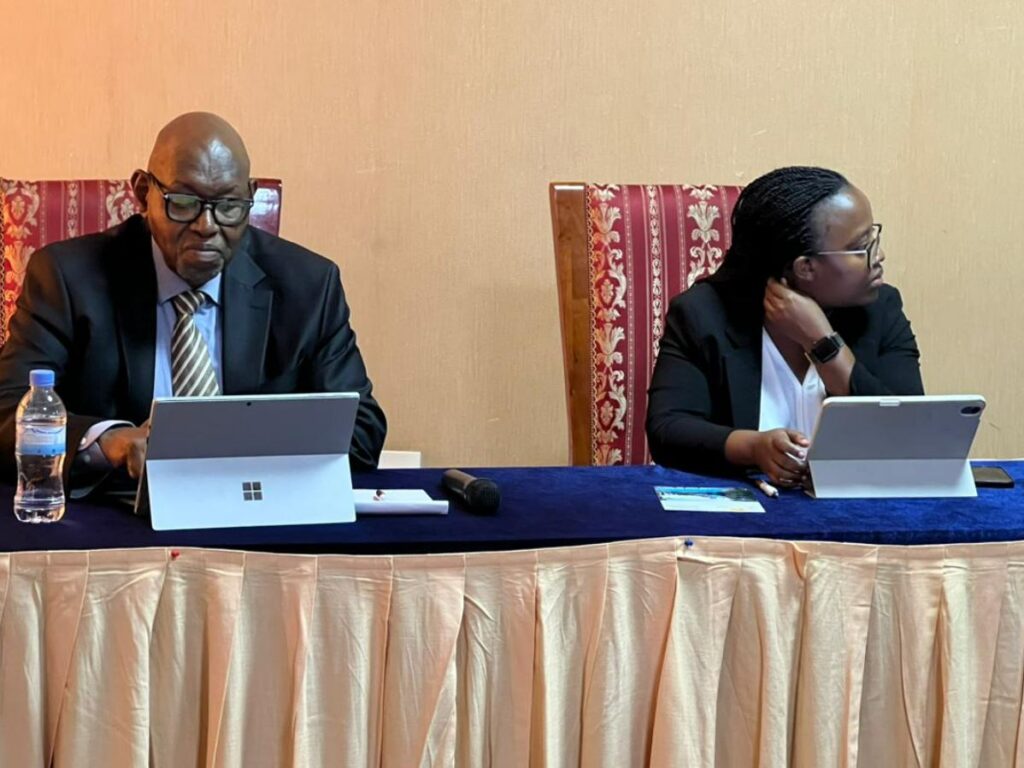
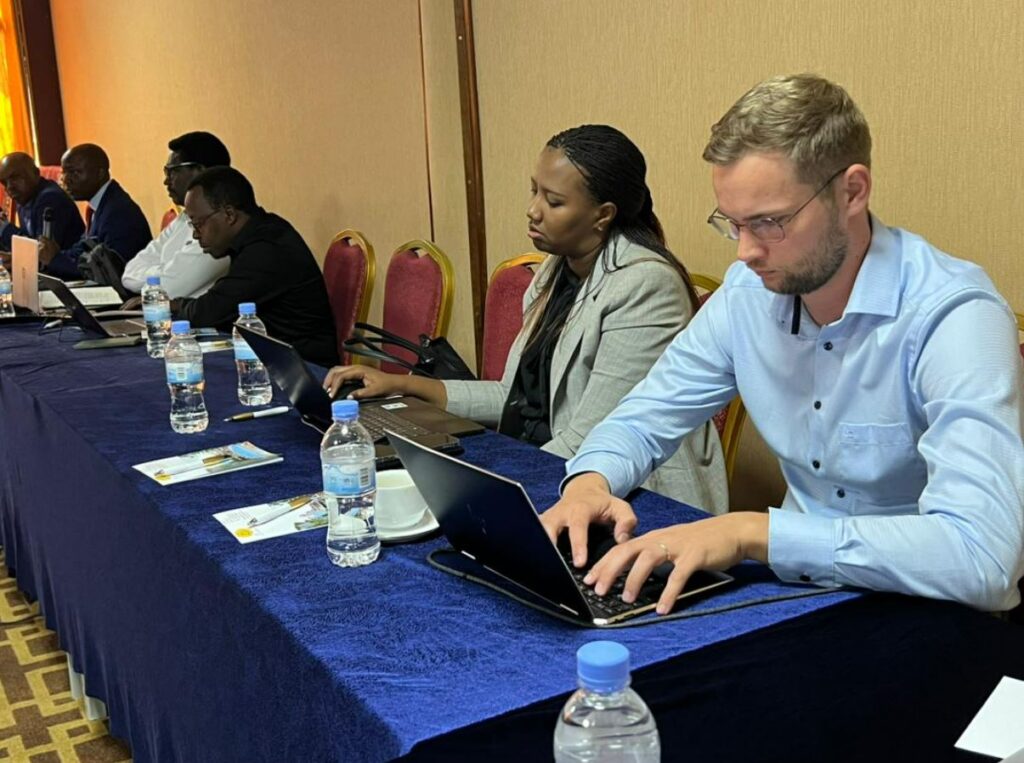
Rwanda National Commission for UNESCO (CNRU) in partnership with the German Commission for UNESCO (DUK) and other government institutions are in Kigali in a two-day workshop to discuss the implementation of recommended Artificial Intelligence (AI) ethics.
Respective concerned government institutions namely Ministry of ICT and Innovation (MINICT), Ministry of Education (MINEDUC), Rwanda Development Board (RDB) Skills Office, Rwanda Information Society Authority (RISA), Rwanda Utilities Regulatory Authority (RURA), National Council of Science and Technology (NCST), University of Rwanda’ College of Science and Technology (UR-CST), and UNESCO Multisectoral Regional Office for Eastern Africa are participating to the National workshop on UNESCO’s Recommendation on the Ethics of Artificial Intelligence (AI) in Rwanda
The workshop aims at bringing together key stakeholders in academia, public & private sector ecosystem in Rwanda to raise awareness and discuss the implementation of UNESCO’s Recommendation on the Ethics of Artificial Intelligence.
Rwanda approved the National Artificial Intelligence Policy in April 2023, and this policy serves as a roadmap to enable Rwanda to harness the benefits of AI and mitigate its risks.

Speaking to the press, Albert MUTESA, Secretary General of Rwanda National Commission for UNESCO (CNRU), he explains that the recommendations follow the recent study that has been conducted before to establish the guidelines for different people and countries for the betterment of proper way to use of Artificial Intelligence as new technology that is leading the world.
“Artificial Intelligence is useful in Education, in Agriculture, in Healthcare in Human and Goods Transportation, and this technology will be leading the globe, it is the reason why UNESCO has established the recommendation on the Ethics of Artificial Intelligence,” Mutesa says.
Mutesa explains that these recommendations open the eyes of the people to know how to behave, to value AI and to jointly work together and complement each other while making this intelligence more profitable.
He said that when AI is not well monitored can result into negative consequences. He reiterates that the workshop is an important tool to explain the recommendations and refine the way of working together.
“People are here to learn and to share ideas on how to use AI, individuals and institutions have got a good moment to set a vision of improving the way they use Artificial Intelligence,” Mutesa added.
These recommendations were approved during the 2021 UNESCO General Conference as one of the responsibilities of UNESCO to set safety measures for the development of Education, Science, Information and Culture that prevent conflicts.
Ms. Esther Kunda, Director General, Innovation and Emerging Technologies in the Ministry of ICT and Innovation (MINICT) says that significant strides have been made to foster the use of AI among private and public institutions in Rwanda.
She gives an example of how Artificial Intelligence provided some solutions during COVID-19 pandemic, and that a lot are being planned to improve how this intelligence can be widely implemented.
“AI has played a vital role whether in assisting with COVID-19, and other different huge cases, and we are exploring a foundation in other sectors what else we can do and what is a practical in those sectors, whether private or public,” Kunda says.
She adds that MINICT has developed with the regulator, RURA, the airline guidelines that try to put in place what is ethic and what kind of materials to help AI solutions developers in regard with the policy.

Trainings
“Since earlier this year, we have started working with our partners to look at training and policy makers to understand what AI means in different sectors.” Kunda says.
“With our implementing partner, Centre for the Fourth Industrial Revolution (C4IR) we started airline guidelines that really try to put in place what is ethic,” she adds, noting that they also started mapping what does that look like, how it could be used in Rwanda, and what could be the benefits.
At the international level, Rwanda is currently leading a coalition of small states in the commonwealth to understand what is AI, and how it can help especially small nations and small states.
The present workshop will help Rwandans to reflect on recent activities and to emphasize on priority areas like how AI revolution can support talents under the national school curriculum.
Ms. Kunda recommends UNESCO to think on how to engage and make sure that international partners are supporting AI under one voice for simpler implementation of the initiative and to boost AI Government.
UNESCO is the United Nations Educational, Scientific and Cultural Organization. It seeks to build peace through international cooperation in Education, the Sciences and Culture. UNESCO’s Constitution was adopted in London in 1945 after the World War two, and entered into force in 1946.
Rwanda became a member of UNESCO on the 7th of November 1962. The Rwanda National Commission for UNESCO (CNRU) was established on the 9th June of 1975 by the presidential decree n° 120/10 with the vision to contribute to building a peaceful society in accordance with universal values promoted by UNESCO.
CNRU’s mission is to promote ideas for peace and mutual understanding in the country, to advise Government on UNESCO activities and to encourage initiatives for intellectual and moral solidarity by making the public opinion interested in UNESCO objectives, programme and work.
theinspirerpublications@gmail.com
Follow us @theinspirerpubl



Leave a Reply