
The woes of teen mothers raising children without their fathers
By Elias Hakizimana.
When she was impregnated at the age of 17 while she was in senior three in ordinary level, the life of Fosée Mushimiyimana from Rwamagana District, started to plunge into darkness.
The man who impregnated her has since vanished and the young girl failed to feel the motherhood at such a young age.
“It is very difficult to start an early motherhood struggle; raising my child without his father hurts a lot.” She said.
Shadia Icyimpaye was impregnated at such young age while she was in senior six of secondary school. she said, the kid is now 3 years old and the father of the kid has never given her any support.
“He refuted all claims that he impregnated me. He has married another girl. It hurts me a lot because when the incidence happened, the family didn’t feel well about it. I was facing stigma from all sides. I immediately dropped out of school. It was a bad life to give birth at such an age without any job to help me cater for my kid,” she narrated.
“Even though the father of the kid has never provided me with any support, I am optimistic about a bright future. I have got moral and physical support. It will be my remarkable achievement when I am able to generate income and pay school fees for my kid, she added.
The teen mothers in Rwamagana District are among thousands of teenagers who were impregnated over the past five years and facing many consequences, including dropping out of school across the country.
Activists say the numbers could have surged following the Covid-19 pandemic impacts that left many girls vulnerable.
In Rwamagana District, 300 teenagers were impregnated from July 2019 to June 2020, of whom 150 teenagers were impregnated during the pandemic.
Reports show that in only eight months when Covid-19 broke out, 424 girls under the age of 18 were impregnated in Northern Province.
At least 17,849 teenagers were impregnated across the country in 2016, 17,337 teenagers were impregnated in 2017 while 19, 832 teenagers were impregnated in 2018 — and from January to August 2019 alone, 15,656 teenagers were impregnated.
The recent Rwanda Demographic and Health Survey, sixth of its kind, shows that reproductive health education and teen pregnancies are still an issue among the youth.
The survey published by the Rwanda National Institute of Statistics (NISR) found that the rate of teenage pregnancies and births in Rwanda is at 5.2 per cent, having decreased from 7.3 per cent in 2014 to 2015.
In need of justice
Many girls across the country have been made teen mothers during the Covid-19 period as a result of closing schools to curb the pandemic with defilers still at large.
As if defiling these girls was not bad enough, there has not been any legal action against many perpetrators with many disappearing or victims keeping silent as well as reluctance from local leaders.
Beata Uwimana (names have been changed to protect victims-Ed) was impregnated at the age of 17 last year when the country was severely hit by coronavirus.
The young girl now has a newborn baby and struggling to make ends meet through strict measures put in place to curb the virus including partial lockdowns in Rubavu district where she stays alone.
“I can’t take him to court or to any authority because I still have hope that he will give me some support. Now it is a problem to find money to meet my daily needs. He only gave me Rwf3,000 since the child was born and I pray he starts taking care of us” Beata said.
Alone and jobless, she now survives through handouts and donations from friends as well as doing menial jobs in her neighborhood with little hope of going back to school.
Prepetua Mukarugyema’s (names have been changed to protect victims-Ed) daughter and grandchild were impregnated at 16 and 17 years old. This grandmother who also lives in Rwamagana district helps both teen mothers to cope with a tough life of early motherhood.
She said that the perpetrators disappeared after impregnating these girls. She said that it is not easy to support these children especially during these COVID-19 times because they do not have any other support.
Victims also claim that perpetrators evade justice by complicating matters when they tell the young mothers that they should go for a DNA test to prove paternity which is almost impossible.
However, last year, members of the Lower chamber of Parliament expressed concern over the high cost of DNA tests at the Kigali-based National Forensic Laboratory, urging the Government to consider ways to bring it down.
The National Forensic Laboratory unveiled in 2018 DNA tests at the cost of Rwf270,000, a price that is nearly half what it would cost to conduct one test abroad.
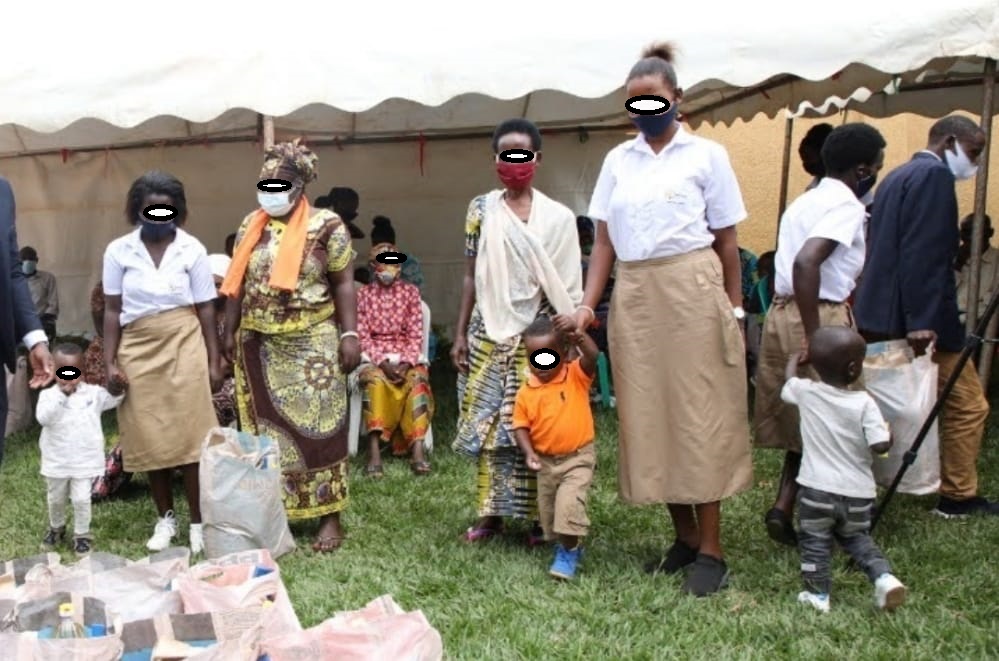
Marie Clarisse Mfurayabo, Founder and Country Director of MFURA Foundation said that these teen mothers are among the most vulnerable people who need much attention, care and support.
“Since we started our humanitarian activities in 2019 in Kigabiro Sector, Rwamagana district, we managed to support 40 teen mothers with a couple of services including free training in Tailoring, Gender and Sexual Education besides hearing and counseling them through the programme dubbed “NGANIRIZA NKUGANIRIZE” Or “Talk to Me I talk to You.” as many of them have mental and psychological challenges. Teen mothers are indeed the most vulnerable people and we all need to help them especially during this period of COVID-19 crisis.” Mfurayabo told The Inspirer.
Yvette Nyinawumuntu, the Executive Director of Save Generation Organization, a local non-government organisation dedicated to promoting and advocating for children and women’s rights said that the numbers of teen mothers could surge following the Covid-19 pandemic impacts that left many girls vulnerable to unprotected sexual intercourse.” Nyinawumuntu said.
Call for quick intervention
Most of these girls never go back to school, therefore, activists call for quick intervention.
“We conducted an assessment in Kamonyi and Gasabo districts. Testimonies show that there are many girls who were impregnated during the peak of Covid-19. Other young girls moved from rural areas for domestic work in Kigali.” she
She says that others went to work in some factories and mining sites, while some teenagers who were impregnated ended up aborting, and this affected them.
“Others are facing extreme poverty and hunger due to Covid-19 that impacted their families. Parents could not afford school fees,” she said.
According to health researcher and reproductive health expert, Dr. Aniceth Nzabonimpa, family poverty, child labour, early marriages, delinquency, domestic work, teen pregnancy and unsafe abortion that escalated during the pandemic might prevent many youth from going back to school if quick intervention isn’t done.
elias.theinspirer@gmail.com



Leave a Reply