

SMEs in Rwanda’s Southern Province Urged to Adhere to New Gender Equality Standards
By Elias HAKIZIMANA.
Employers in the Small and Medium Enterprises (SMEs) in the Southern Province of Rwanda are advised to adopt new gender equality standards to enhance productivity and contribute to national development, particularly in promoting gender equality in the workplace.
An awareness campaign promoting quality standards related to gender equality in the workplace has launched in the Southern Province, targeting various sectors, including government, private, and non-governmental organizations, to embrace the journey of the Gender Equality Seal (GES) program. This initiative educates business owners on these regulations and their developmental benefits.
Supporting women’s participation in national development activities has been a cornerstone of Rwanda’s policies for the past 30 years. To further this agenda, the United Nations Development Programme (UNDP), in collaboration with the Gender Monitoring Office (GMO), the Ministry of Gender and Family Promotion (MIGEPROF), and the Rwanda Standards Board (RSB), along with other partners, have established quality standards guidelines to promote gender equality in the workplace.
These standards ensure equal opportunities for men and women to engage in activities that foster both individual and national development.
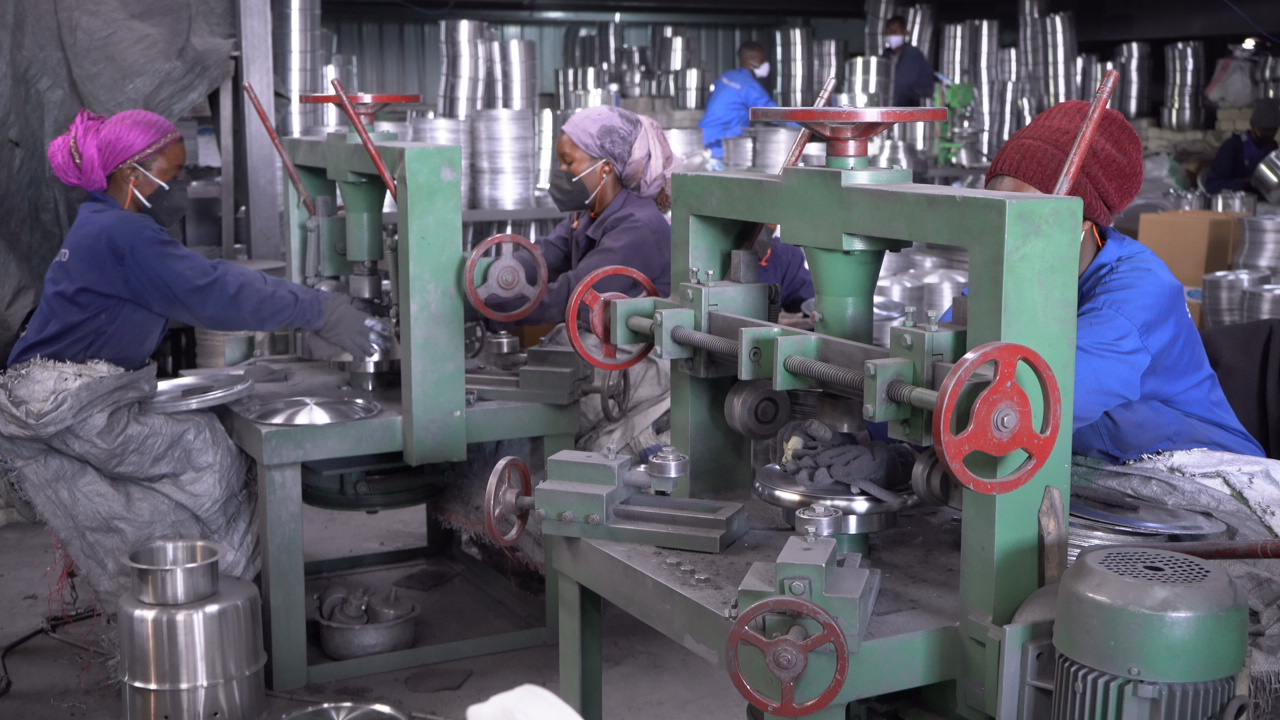
The second phase of this awareness campaign commenced in the Southern Province on May 26, 2024, covering the districts of Huye, Nyamagabe, Nyanza, and Muhanga, focusing on small and medium enterprises (SMEs) and other private sector entities.
In Nyamagabe District, Kitabi Tea Company Ltd was highlighted, where 56% of the workforce are women, and 44% are men. Local business owners observed that providing a daycare facility increases productivity by offering a place for employees to leave their children.
Domina Niyibikora, a 19-year-old tea picker, shared that her life has improved since joining the factory, especially due to support during her menstrual cycle and other personal needs.

“When you get your period, you can request sanitary pads, there is a designated place to wash up, and after washing, you can return to work feeling good. This helps us maintain good health, work well without stress or embarrassment, and ensures we don’t miss work, leading to better productivity,” she said.
Women at this factory hold various roles, including tea picking, grinding, packing, and management.
Rita Masengesho, the Human Resources Manager at Kitabi Tea Factory, noted that they started adhering to gender equality and inclusiveness policies in 2019. “It used to be that men did all the work, but the number of women has increased by encouraging them that they are capable, which has yielded significant results,” Masengesho said.

Meanwhile, Zipline Muhanga, a company delivering blood, vaccines, pig semen, and other essential items to remote areas using drones, celebrates having 48% female employees. Currently, the company employs over 170 people, up from 12% when it started in 2016. Women hold 60% of decision-making positions.
Prosper Uruvugundi, who works at Zipline, said their goal is to continue providing equal opportunities to women and girls as they do for their male counterparts, ensuring everyone benefits the company and the country.
“We give everyone their fair chance, without discriminating based on whether they are a girl, a woman, or a man,” he said.


Zipline, headquartered in Muhanga District, uses drone technology to deliver blood and other essential items to specific locations via air routes.
Employees at Zirakamwa Meza Dairy Nyanza Dairy Limited in Nyanza District also appreciate that milk processing involves gender inclusiveness, with no preference for one gender over the other.
Moza Ufitinema, 23, a female employee at the dairy, noted that girls are equally capable and work alongside their male counterparts in all tasks, which speeds up the work. She emphasized that women’s rights are respected, with breastfeeding mothers given time to care for their babies and girls on their periods assigned tasks suitable for their strength.

Jean Baptiste Izerimana, Production Manager, and HACCP team leader at Zirakamwa, said that they complement each other in their work, whether male or female, which ensures smooth operations.
“Both girls and boys, men and women, can do the same jobs because we all have strength, ideas, and skills. Gender equality is necessary because no one should be excluded if we are to achieve national development,” he said.
Immaculee Kayitesi, the Managing Director of Zirakamwa Meza Nyanza Dairy Limited, shared her journey of overcoming challenges and encouraged young people to be confident, regardless of whether tasks were traditionally seen as for men or women.
She advised young people at her factory to believe in themselves and work together, leveraging each other’s knowledge and physical strength to achieve their goals. She stressed that young people understand gender equality better than older generations, as she observed that tasks she thought were only for boys are also done by girls without any loopholes.

Jean Pierre Bajeneza, National Certification Division Manager at RSB, said that establishing the gender equality guidelines was meant to give private sector companies a starting point to implement this principle.
He added that employers should help employees work peacefully, as providing daycare services allows employees to be more productive and ensure quality work.

Clement Kirenga, UNDP Rwanda’s National Coordinator for Inclusive Governance, stated that no job is gender-specific as everyone can learn and perform any task.
“Gender equality is not about being male or female; it’s about the responsibilities one can learn and carry out. Making a bed is not just for women; it’s cultural. A man making a bed does not make him less of a man because manhood means something else,” he said.
The establishment of Gender Equality Seal (GES) standards, the first of their kind in Africa, is expected to significantly promote gender equality in the workplace and help those implementing them receive a quality mark, enhancing their work’s value and reliability as employers supporting gender equality.

RSB, GMO, and UNDP have organized a campaign to raise awareness of these quality standards among businesses such as factories, service providers, and government agencies, explaining their benefits and the requirements for obtaining the quality mark for promoting gender equality.
This campaign also highlights the achievements of various companies in promoting gender equality in the workplace and their impact on community and company development across the country.
Currently, 27 companies and private institutions especially hotels in Rwanda have obtained the GES certification, showcasing a growing commitment to fostering gender equality in the workplace and contributing to a more inclusive and productive society.
theinspirerpublications@gmail.com




Leave a Reply