
Rwanda targets 135% surge in daily milk production by 2029
By The Inspirer.
Rwanda plans to increase daily milk production by about 135 percent, from 2.9 million litres to 8.8 million litres by 2029, through a package of targeted interventions spanning genetics, animal health, feed systems, water access and milk handling infrastructure, the Minister of Agriculture and Animal Resources, Telesphore Ndabamenye said.
Speaking at a workshop on enhancing food security and nutrition, Ndabamenye said the government is tackling long-standing bottlenecks that have kept productivity in the dairy subsector below potential.
“The dairy subsector faces low productivity due to limited access to improved genetics, weak artificial insemination services, poor nutrition from costly and scarce quality feeds, as well as inadequate animal health and water shortages,” he said.
At the centre of the reform agenda is the Songa Centre, a flagship facility expected to anchor Rwanda’s genetic improvement drive. According to the minister, the centre will produce 972,000 semen doses, while 1,500 new artificial insemination technicians will be trained nationwide by 2029 to expand service delivery to farmers.
High-genetic-merit bulls boost breeding programme
As part of efforts to fast-track genetic gains, the Rwanda Agriculture and Animal Resources Development Board (RAB) has received the first batch of 10 high-genetic-merit Holstein-Friesian bulls, reinforcing the national artificial insemination programme.
The bulls were sourced from leading cattle breeders in Germany. RAB said an additional 20 high-genetic-merit bulls will be delivered in April, including Holstein-Friesian, Jersey and Brown Swiss breeds for dairy production, alongside Angus and Charolais for beef.
The investment supports the establishment of a Centre of Excellence in Bovine Genetic Improvement at Songa, Huye District. The facility is expected to provide improved dairy and beef genetics, promote advanced reproductive technologies such as artificial insemination and embryo transfer, and serve as a national hub for training, research and innovation.
Climate-resilient feed and water access
Beyond genetics, the government is scaling up climate-resilient fodder production to stabilise feed availability and reduce costs, while supporting youth-led animal feed projects to stimulate local supply.
Ndabamenye said access to water for livestock will also be significantly expanded, with the number of boreholes increasing from 49 to 550. In addition, the rehabilitation of valley dams is expected to support more than 300,000 cows and 25,000 farmers across the country.
“These interventions are designed to cushion farmers against climate shocks while improving productivity per animal,” he noted.
Strengthening veterinary services
To address animal health constraints, the ministry plans to establish new veterinary clinics, roll out digital disease surveillance, and strengthen private-led veterinary services and drug management systems.
From 2025/2026 to 2028/2029, the agriculture ministry will work with private veterinarians through the Rwanda Council of Veterinary Doctors (RCVD) programme, while equipping Community Animal Health Workers (CAHWs) with tools and logistical support to reach more farmers, particularly in remote areas.
Milk handling and cold chain expansion
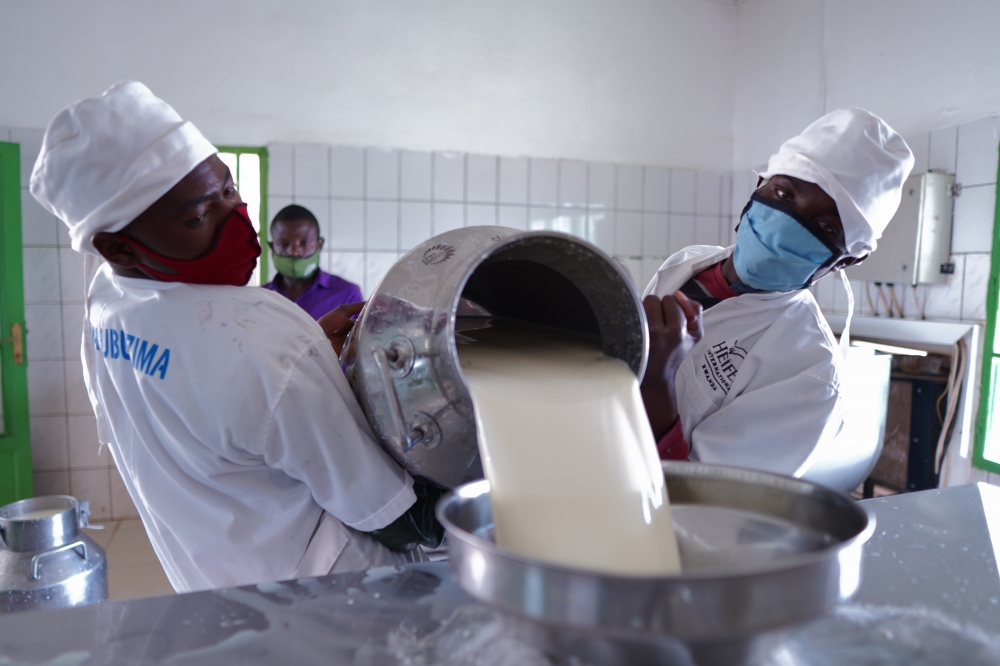
Improving post-production handling is another pillar of the strategy. During the same period, and with support from FASPOL, a Polish manufacturer specialising in dairy equipment, the government will renovate 130 milk collection centres (MCCs) and build 47 new ones.
The upgrades are expected to increase milk cooling coverage to 82 percent, equivalent to about 1.32 million litres per day, reducing post-harvest losses and improving milk quality for processors and consumers.
MP Théogène Munyangego said increasing both the quantity and quality of animal feed remains critical to sustaining higher milk output. However, Senator Alphonse Nkubana cautioned that rising feed costs could translate into higher milk and meat prices if not carefully managed.
Nutrition gains
Beyond income and market gains, officials say higher milk production will also deliver nutrition dividends.
Assumpta Ingabire, Director General of the National Child Development Agency (NCDA), said increased availability of milk would help reduce malnutrition and stunting among children.
Rwanda has already recorded progress, with child stunting declining from 33 percent in 2020 to 27 percent in 2025, according to the 2021–2025 Demographic and Health Survey (DHS).
With coordinated investments across genetics, feed, water, animal health and infrastructure, authorities say the dairy subsector is poised to play a bigger role in food security, rural incomes and child nutrition as Rwanda works toward its 2029 production targets.
Source: The New Times



Leave a Reply