
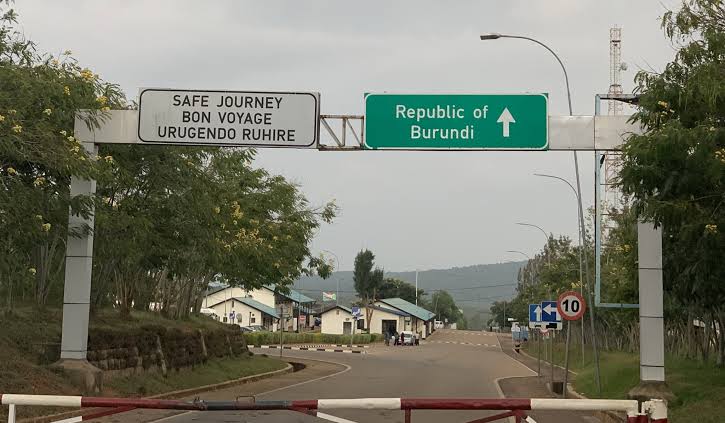
Rwanda-Burundi relations face fresh strain as talks stall
By The Inspirer.
Relations between Rwanda and Burundi are facing renewed strain, with efforts to ease tensions between the two neighbouring countries having stalled after a series of attempts to restore dialogue failed to produce lasting progress.
Rwanda’s Foreign Affairs and International Cooperation Minister, Ambassador Olivier Nduhungirehe, said the two countries have not held new bilateral talks for several months, despite previous efforts to address their differences.
Nduhungirehe made the remarks in an interview with The New Times while discussing Rwanda’s relations with neighbouring countries and the wider security situation in the Great Lakes region.
He said Rwanda and Burundi had made several attempts to reduce tensions, including a meeting between their security and intelligence officials in March 2025.
The officials agreed on measures intended to ease tensions, but the process later stalled following public statements by Burundian President Évariste Ndayishimiye.
“After that, the President of Burundi, Évariste Ndayishimiye, told international media that Rwanda wanted to attack Burundi,” Nduhungirehe said.
He said further meetings were held between Rwandan and Burundian officials on December 14 and 28, 2025, following the capture of Uvira in eastern Democratic Republic of Congo.
The discussions focused on ways of restoring normal relations between the two countries, but Nduhungirehe said the process did not continue following subsequent statements by the Burundian president.
Disagreements over eastern DRC
The strained bilateral relationship is also linked to differences over the security situation in eastern DR Congo.
Nduhungirehe criticised Burundi’s military involvement in eastern DR Congo, saying Burundian troops were deployed at the request of Congolese President Félix Tshisekedi and operate alongside the Congolese army, FARDC, and the FDLR.
Rwanda considers the FDLR a security threat and has repeatedly linked the group to individuals involved in the 1994 Genocide against the Tutsi.
Nduhungirehe also raised allegations concerning Burundi’s involvement in abuses against Banyamulenge communities in the Minembwe area and the High Plateaus of South Kivu.
He said Rwanda has repeatedly raised concerns with mediators over what it considers Burundi’s role in fuelling instability in eastern DR Congo and affecting security across the wider region.
Dispute over 2015 coup suspects
Nduhungirehe also rejected recent claims concerning people Burundi accuses of involvement in the 2015 attempted overthrow of the government.
He said Rwanda and Burundi had not held new negotiations on the issue this year, despite recent remarks by President Ndayishimiye in an interview with the BBC suggesting that Rwanda had agreed to hand over the suspects within five months.
“In a recent interview with the BBC, he said that Rwanda had agreed to hand over people accused of attempting to overthrow the Burundian government within five months. We were surprised because there have been no such talks this year,” Nduhungirehe said.
He said discussions on the matter had last taken place about three years ago but ended without an agreement because some conditions raised by Burundi had not been implemented.
According to Nduhungirehe, the December 2025 meetings were the most recent bilateral discussions between Rwanda and Burundi and focused primarily on the security implications of the capture of Uvira.
He maintained that no further bilateral talks had taken place this year.
Relations remain fragile
Relations between Rwanda and Burundi deteriorated sharply following the failed 2015 coup attempt against then-President Pierre Nkurunziza. Some Burundians who fled the country at the time sought refuge in Rwanda, contributing to the deterioration of relations and the closure of the shared border.
The two countries began rebuilding ties in 2022 and reopened their border crossings.
Relations deteriorated again in late 2023 following an attack by the RED-Tabara armed group in Gatumba, near Bujumbura. Burundi accused Rwanda of supporting the group, an allegation Kigali has denied.
Burundi subsequently closed its border with Rwanda again in January 2024.
Despite previous efforts to rebuild relations, the latest developments show that political and security disagreements continue to complicate efforts by the two neighbours to restore sustained dialogue and normalise their relationship.




Leave a Reply