
Relief for farmers as insurance moves to cover new crops, livestock animals
By The Inspirer
The National Agriculture Insurance Scheme (NAIS) which started with dairy cattle for livestock and maize and rice for crops last year has moved to cover some other crops and farm animals.
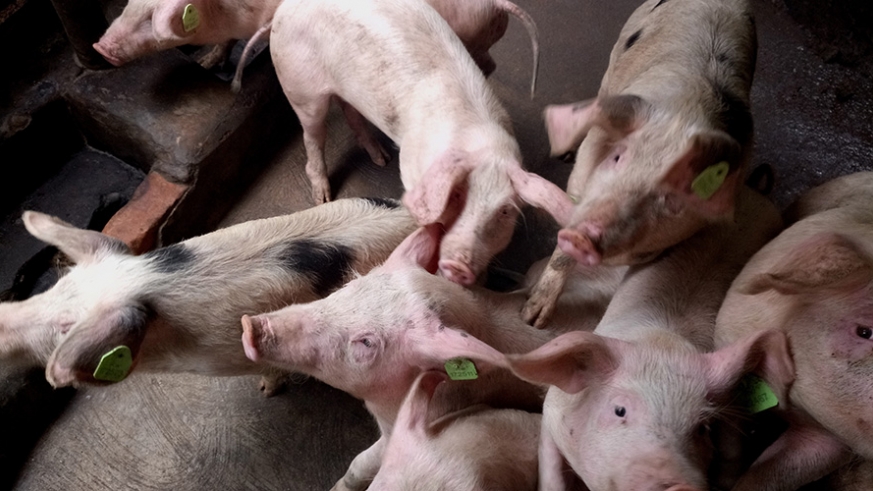
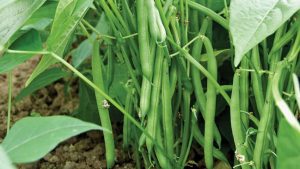
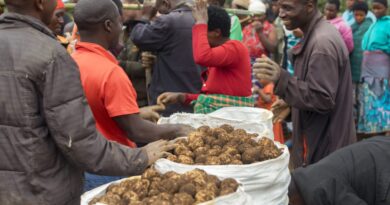
Those added to the scheme in this financial year, 2020/2021 are chili, French beans (also known as green beans or imiteja in Kinyarwanda) and [Irish] potatoes for crops, and pigs and poultry for livestock.
The insurance — NAIS — is a joint initiative between the Government of Rwanda and the private sector – insurance companies – in which farmers pay 60 per cent of the premiums, while the government support them by covering the remaining 40 per cent through subsidy.
Joseph Museruka, the Manager of NAIS at the Ministry of Agriculture and Animal Resources (MINAGRI) said that the inclusion of new crops and livestock animals was done to respond to farmers’ needs and de-risking the agriculture sector.
He said that it is the direction of Government for commercialisation of the agriculture sector so that it moves from being just food security-based sector.
“The crops we included such as French beans and chilli are products for export. This [insurance] is a way of encouraging people who are investing in these crops by protecting them from the risks,” he said, indicating that the investments are huge for high-value crops citing French beans where the venture per hectare is estimated at Rwf2 million.
The circumstances covered for crops
Regarding crops, the insurance coverage applies to heavy rains, drought, pests and diseases that set up resistance against farmers’ fight, floods, snow (hail), lightning and wind, as well as fire.
Circumstances covered for livestock
For livestock, conditions eligible for the insurance coverage include livestock accidents such as those caused by thunder, snake bites, floods and landslides.
Others are epidemics, fatal diseases which were treated in vain, animals removed from the farm upon an order from a competent veterinarian, and livestock animals that died while giving birth.
Premiums paid and compensations
For maize, premiums account for 8.25 to 10 percent of the Rwf429,250 investment per hectare, while it is 7.08 percent of Rwf590,320 per hectare for rice, according to information from MINAGRI.
In case a farmer incurs losses on these two crops (maize and rice) resulting from eligible circumstances, they get compensated 85 percent of their investment.
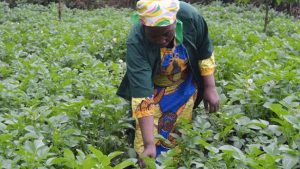
Insurance premiums for potatoes is 8 percent of the investment per hectare which is estimated at Rwf2,394,500, show information from MINAGRI.
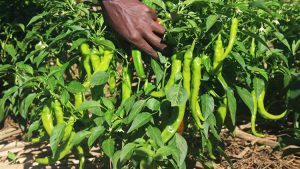
For chilli and French beans, the insurance premium is also 8 percent of Rwf2,151,860 and Rwf2,018,250 investments respectively.
Compensations for damages inflicted on farmers is 80 percent of investment for chilli, French beans and potatoes.
Talking about livestock, the insurance premiums are 6 percent of the monetary value of a pig, and 5.5 percent for a chicken (a chicken is valued at Rwf5,000), while it is 4.5 percent for a cow.

A farmer is indemnified with the money equivalent to the worth of their insured livestock animal in case of loss.
Emmanuel Ndagijimana, the president of KOABIGA — ‘a cooperative of farmers with a converging goal’ in Gasabo District said that they have been waiting for loss cover.
The cooperative with 980 members separately grows different crops including French beans, tomatoes, and maize among other crops on 163 hectares in different marshlands in the District.
The cooperative, he said, has been growing French beans on 12 hectares — during the dry season – pointing out that such beans are prone to disease attacks during rainy season, which leaves farmers counting losses especially in case they cannot afford expensive and fungicides.
He said that the cooperative plans to expand the cultivated area as they envisage increasing production and supplies thanks to insurance coverage that can protect them against future losses resulting from rainy season.
“Pesticides are expensive, and they are sometimes ineffective. The insurance will help us address that issue as well as tackle losses induced by climate change,” he said.
Andrew Butare, Chairperson of Rwanda Poultry Industry Association said that insurance is needed as it covers risks and cushions farmers including poultry ones from probable losses.
However, he said that there is a need for education and building awareness of the poultry farmers about it so that they understand its significance.
He said that the Government is committed to increasing the budget allocation to the scheme depending on the appetite and needs of the farmers who seek the insurance service.
Figures from MINAGRI show that in this financial year, Rwf298 million has been allocated to the scheme.
In the last fiscal year (2019/2020) 9,477 hectares of rice, and 357 hectares of maize were insured, while, in total, farmers who took insurance policy were more than 67,000.
In the same fiscal year, 17,373 cows were insured.




Leave a Reply