

Powering Progress: World Bank’s Vision for Achieving Universal Energy Access in Africa
By Elias Hakizimana.
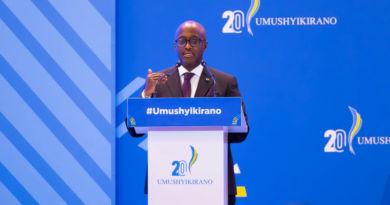
Kigali, Rwanda — As Africa strives to achieve universal electricity access, experts convened at the Kigali Convention Center for a pivotal discussion led by Herald Bonnici, Founder and Managing Consultant at HB Advisory, and Laurencia K. Njagi, Senior Energy Specialist from the World Bank.
The panel, part of the ongoing Africa Energy Expo Summit on November 5, 2024, examined critical pathways to electrify the continent and highlighted the World Bank’s ambitious “Mission 300” initiative, aiming to electrify 300 million African households by 2030.
During the discussion, Laurencia Njagi outlined the fundamental role that access to clean and affordable energy plays in advancing economic growth, education, healthcare, and overall community well-being across Africa.
Yet, the challenge remains substantial: roughly 600 million Africans still live without electricity. “Access to energy is a lifeline, not a luxury. For Africa’s development, clean energy access is essential,” Njagi remarked, highlighting the urgency of the issue.
In the continent’s eastern and southern regions alone, only about 18% of people are projected to have electricity access by 2030 if trends persist.

The World Bank, in partnership with the African Development Bank, has made significant strides through the Mission 300 initiative. Njagi shared that the World Bank has committed to electrifying 250 million households, focusing on creating a large-scale impact that prioritizes long-term change over temporary solutions.
This goal represents a shift from past efforts, reflecting a growing recognition that electrification is critical for Africa’s sustainable development.
Addressing Barriers and Financial Challenges
When asked about the barriers to universal access, Njagi highlighted two primary obstacles: political commitment and financing.
“Many African governments have only recently started viewing electricity as a public good,” she noted.
The financial requirements are enormous—over $100 billion is needed to electrify just the eastern and southern regions alone, an amount that exceeds what utilities and households can fund independently. Here, government involvement is crucial.
Institutions like the World Bank are stepping in to bridge these financial gaps. Njagi explained that in the past four years, the World Bank has invested nearly $15 billion in electricity access, yet more funding is needed. To attract private sector engagement, the Mission 300 initiative aims to de-risk investments and offer concessional financing to encourage long-term commitments.
The Path to Sustainable Energy Access
One key strategy discussed was the importance of sustainable energy policies that ensure operational efficiency and financial viability for utilities.
Njagi pointed out that only 40% of African utilities are currently financially sustainable, an issue that threatens long-term energy access across the continent.
“Countries must expand energy access while also focusing on the sector’s operational efficiency and financial health,” Njagi advised.
Effective policies, she suggested, should encourage cost recovery for utilities without compromising affordability for households, balancing immediate access needs with future viability.

Beyond financing and policy, Njagi emphasized the need to increase generation capacity and promote renewable energy solutions. In addition to large-scale projects, she noted that distributed renewable energy options, such as solar installations, are critical for reaching remote areas.
Highlighting regional initiatives like the Rwanda-Tanzania-Burundi Rusumo project, she illustrated how partnerships can help lower energy costs and make electricity more accessible.
A Future Powered by Clean Energy
As the panel discussion opened to the audience, questions focused on strategies to address electricity shortages in regions yet to benefit from solar energy.
Laurencia Njagi reiterated the World Bank’s commitment to supporting African nations in expanding their renewable energy infrastructure and called for continued collaboration between governments, private sectors, and development partners.
With the stakes high and the challenges complex, the World Bank’s Mission 300 initiative exemplifies a bold, multi-faceted approach to transform energy access in Africa. If realized, this goal would not only drive sustainable growth but also secure a brighter, more connected future for millions across the continent.
theinspirerpublications@gmail.com



Leave a Reply