
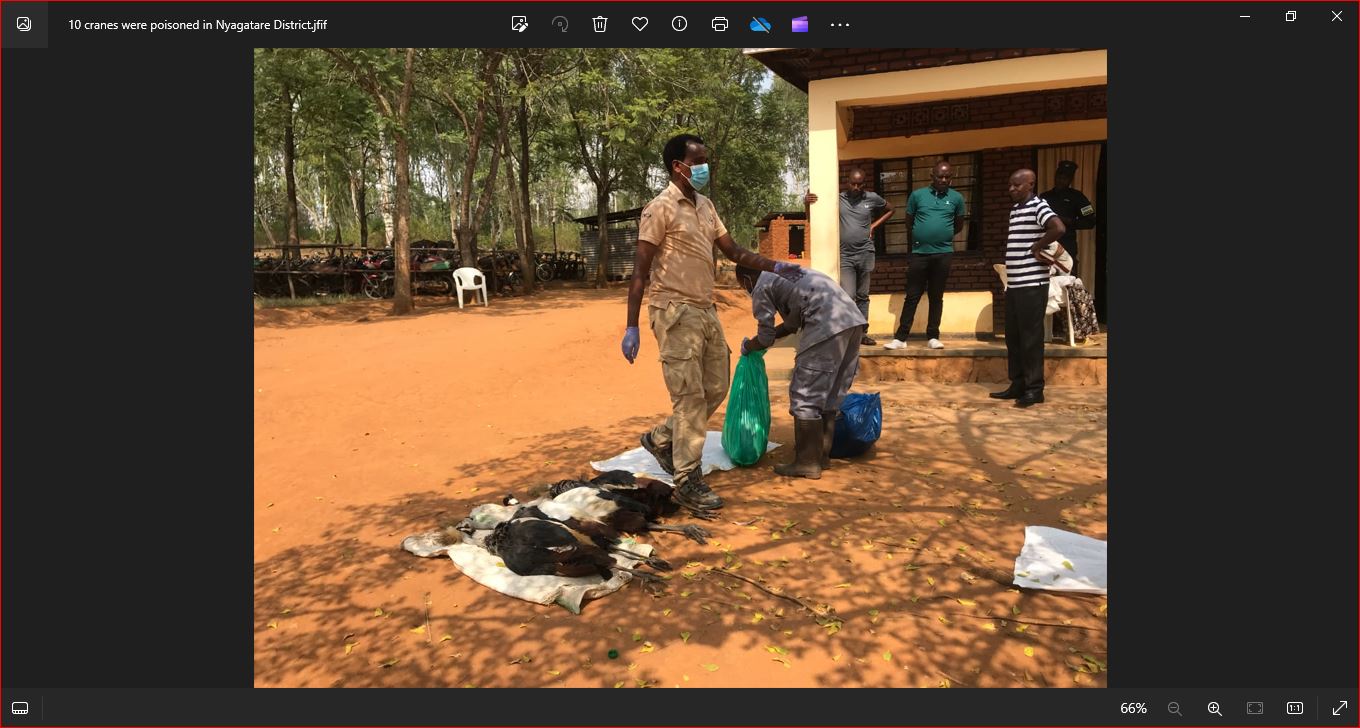
Crane poachers on the spot as 10 cranes are poisoned in Nyagatare
By Michel Nkurunziza.
After a poacher killed 10 cranes using chemicals, on Saturday June 15, Rwanda Development Board (RDB) and Rwanda Wildlife Conservation Association (RWCA) have urged Nyagatare District residents to report poachers that might cause decline in crane population as it mulls expanding eco-tourism.
The number of grey crowned crane population has more than doubled in Rwanda.
The crane population in Rwanda increased from 487 in 2017 to 1,066 in 2022.
The number of cranes was 748 in 2019, 881 in 2020, and 997 in 2021.
The number increased to 1,216 cranes in 2023 according to Rwanda Wildlife Conservation Association (RWCA).
The call for crane protection follows the arrest of Jean Marie Vianney Ndikubwayo, a resident, who poison 10 cranes in Rwempasha sector, Nyagatare District.
The incident was discovered on Saturday June 15 while farmers were tilling in Muvumba wetland.
The suspect is detained at Rwempasha RIB station.
Nyagatare District accommodates around 370 cranes.
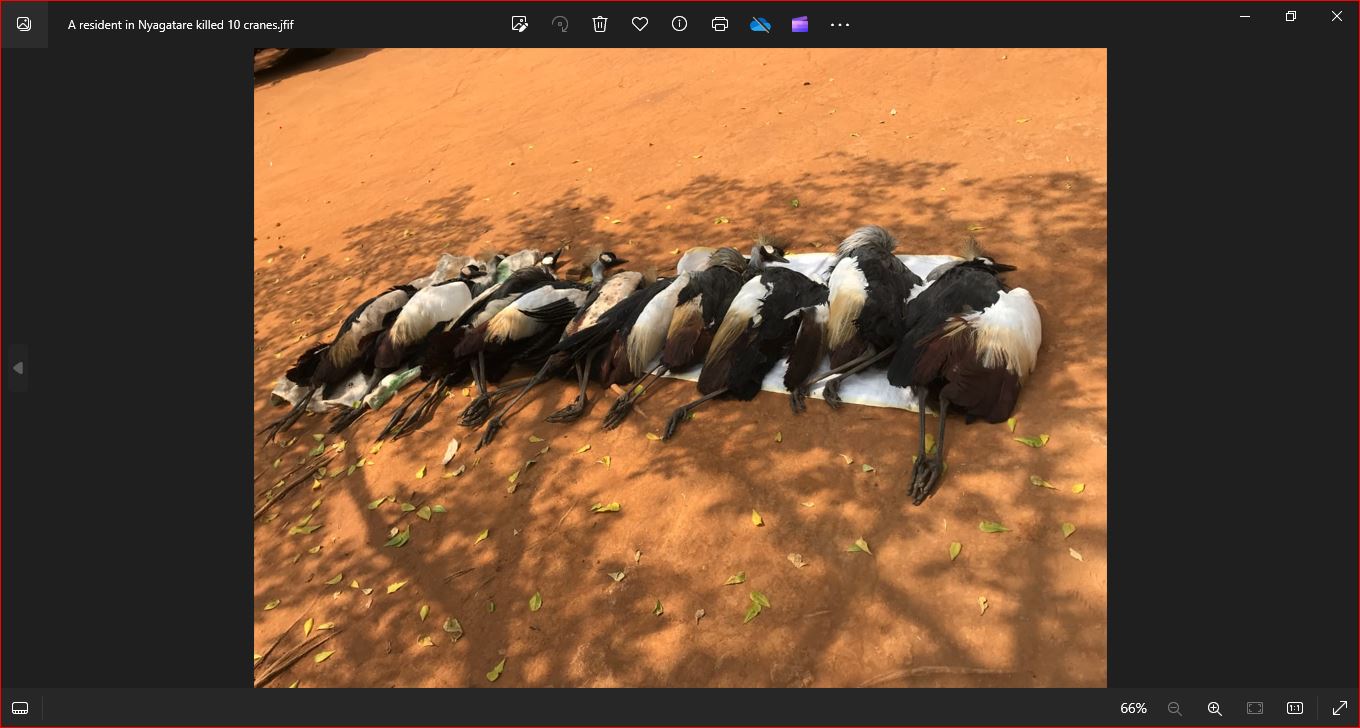
According to testimonies, Ndikubwayo also kills other bird species.
“He was arrested with six dead cranes in his pocket while four were remaining in the valley. He has been poaching bird species and selling the meat on the street. He used to sell one crane at Rwf5,000,” said Venuste Shumbusho, the head of security patrol in Uwinkiko Village in Nyagatare District.
He said that there is another crane poacher who has escaped.
Deo Ruhagazi, the Deputy Director at Rwanda Wildlife Conservation Association said that warned against crane poachers and urged residents not to eat the poisoned cranes.
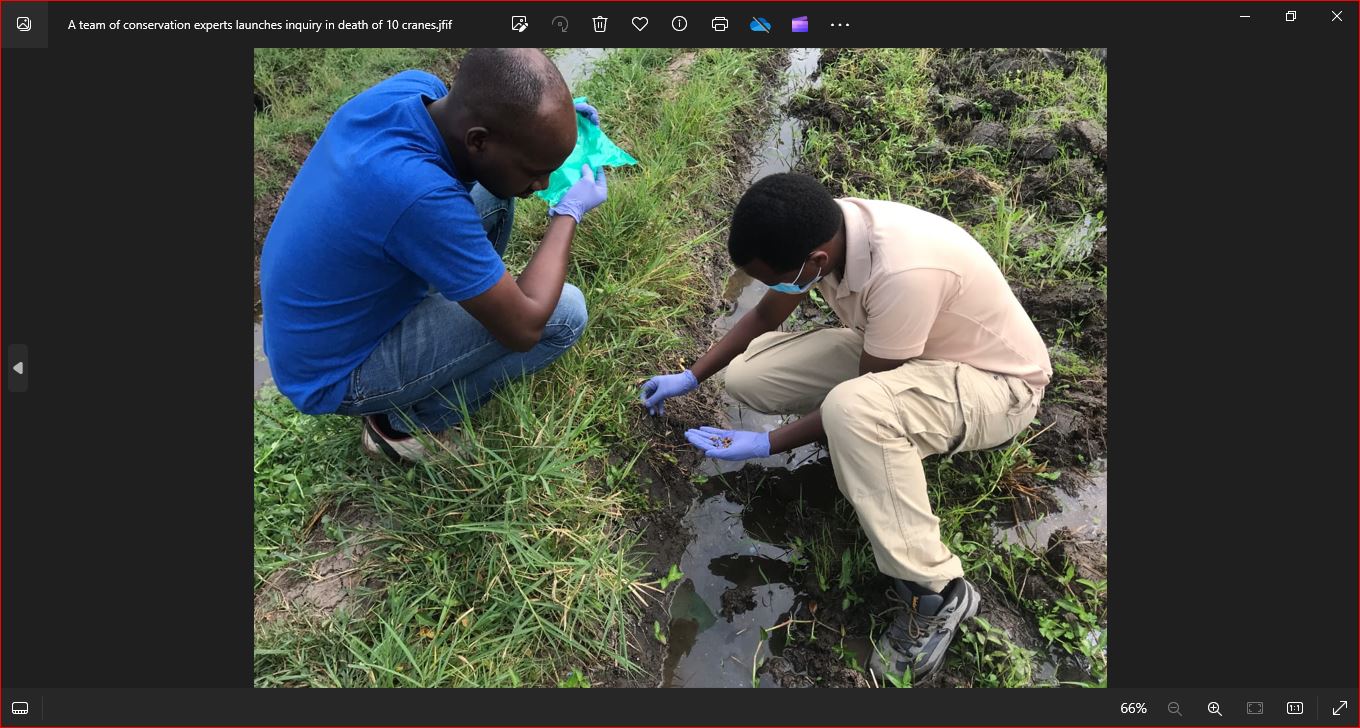
“We are going to carry out a thorough investigation to detect the exact cause of the cranes’ death. The cranes are key in biodiversity conservation, Local residents are having to play a big role in reporting the poaching cases,” he said.
Richard Muvunyi, the officer in charge of wildlife conservation in parks at Rwanda Development Board (RDB), said that there is a law that punishes wildlife poachers.
“Even though the wildlife might be aggressive to residents, they are not allowed to make decisions to kill such as animal species themselves. They have to report the case to officials for a sustainable solution,” he noted.
According to the 2021 law, article 59, the wildlife poacher faces a jail of between six months and two years with a fine of between Rwf500,000 and Rwf1 million.
Grey Crowned crane on endangered species list
The Grey Crowned Crane is listed as Endangered on the International Union for the Conservation of Nature (IUCN) Red List of Endangered Species. Between the mid-1980s and 2015, the crane population in Rwanda dropped from 2,500 to below 500.
This decline was largely due to poaching eggs for food, the illegal pet trade, as well as loss of habitat due to human development. In captivity, cranes are stressed and usually injured whilst in transport.
Some have had their wings broken whilst others have had their flight feathers cut so they couldn’t escape. The cranes were generally maltreated due to a lack of understanding and knowledge of how to properly care for them.
In addition to creating an eco-tourism park for crane conservation in Northern Province, Umusambi Village, managed by Rwandan Wildlife Conservation Association (RWCA), is a restored wetland area for crane conservation on the eastern outskirts of Rwanda’s capital Kigali.
Created as a private refuge and sanctuary for those illegally traded cranes unable to return to the wild.
It provides them with a second chance to live free in nature.
Those cranes able to fly were taken to Akagera National Park which is located in Eastern Rwanda where they could re-learn the behaviours they needed in the wild and re-grow their flight feathers. When ready they could fly away into the rest of the national park.





Leave a Reply