
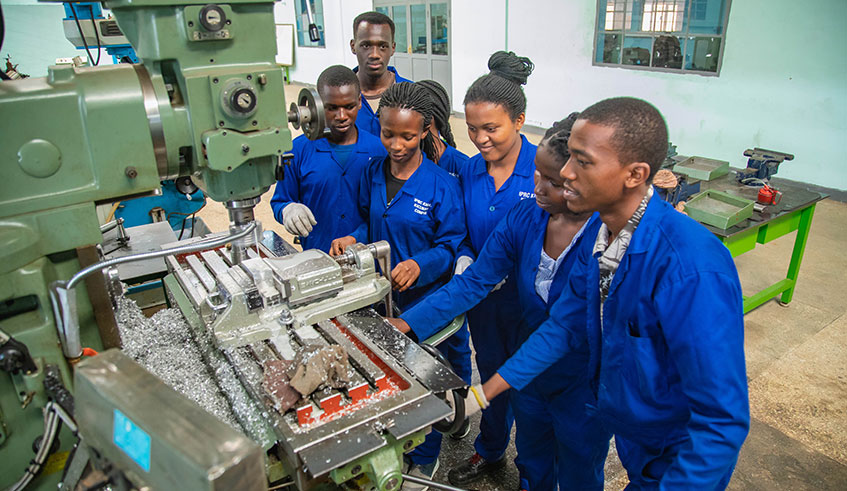
Over Rwf6 billion funding gap in TVET consumables pushes Rwanda Polytechnic to create a private company
By The Inspirer
In the next fiscal year – 2021/2022 –, training consumables for Integrated Polytechnic Regional Colleges (IPRCs) was allocated Rwf1.3 billion, but faces a gap of more than Rwf6.2 billion.
“We will use the small amount that we were allocated, then, in case of no further funding, consider how we can adjust such as through resorting to students just learning theory,” Aimable Nsabimana, Deputy Vice-Chancellor in charge of Administration and Finance at RP told lawmakers on Wednesday, May 19, 2021, referring to the insufficient funding for TVET consumables.
That was during the 2021/2022 budget hearing with the Chamber of Deputies’ Committee on National Budget and Patrimony, in which the Ministry of Education and its affiliated institutions presented on their allocated budget, planned projects as well as the challenges they face in implementing them.
Amid such inadequate funding situation that makes IPRCs lack training consumables, the Rwanda Polytechnic (RP) is mulling the establishment of a company that is expected to help address the issue.
Currently, there are eight IPRCs, across the country, which make up RP as a higher learning TVET institution.
The firm – which officials from RP refer to as RP Private Company –, will help carry out income-generating activities so as to get money to help it invest in improving hands-on skills for students.
Training consumables for TVET are important for students’ hands-on skills acquisition. However, they continue to face funding shortfall, a situation that impairs the quality of TVET.
Why RP wants the creation of the company
The management of RP said that the company will be making equipment and developing technologies needed by the community, and generate money from their sales. The money would be mainly be used to bridge the financing gap in TVET training consumables.
James Gashumba, Vice-Chancellor of RP said that in TVET, teaching and learning are done in workshops – through learning by doing method – which requires enough training consumables.
“We are mulling the establishment of RP Private Company because, in fact, we have the capacity for income generation [activities] which can complement the budget allocation from the Ministry of Finance and Economic Planning (MINECOFIN),” he said.
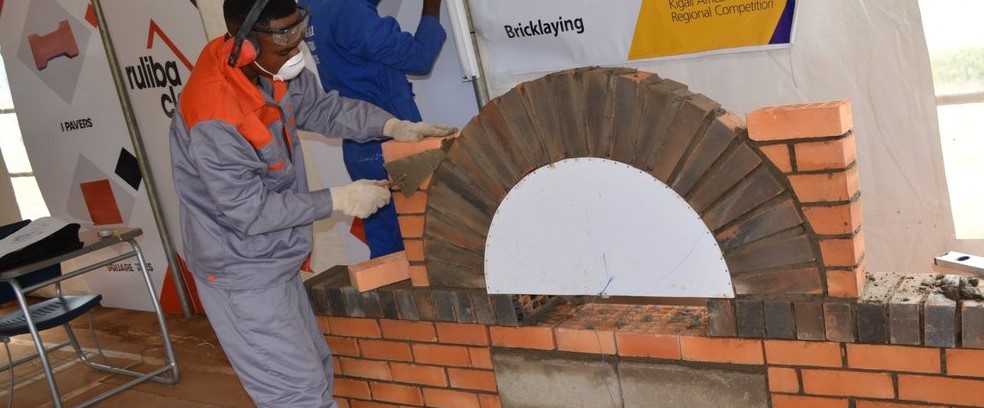
Nsabimana said that the major issue facing the institution is insufficient money to ensure that students get enough hands-on skills, requesting lawmakers’ support to approve the establishment of this company.
The income-generating activities will be made by students in partnership with their teachers, adding that the graduates can also be part of this development, he indicated.
By so doing, he said, it can further students’ skills acquisition and help address the lack of internship access that some students and graduates have been facing.
Giving an example of how engaging in money-generating production is feasible, he said that IPRCs have been making all ‘muveros’ (large cookware) that will be used in all primary schools for cooking meals for students in the school feeding programme.
“This activity will cost about Rwf10 billion, and it is about 35 percent completed, such that muveros will be distributed in over 2,600 [primary] schools,” he said, indicating that he believes they can do better through that company.
Once the company is given green light, he said, it can bid for tenders for furniture supply such as desks, and other equipment needed in schools, or environmental protection projects such as through installing tanks for rainwater harvesting in schools.
A ‘laudable idea’
MP Cecille Murumunawabo said that the idea to set up the RP Private Company to support access to TVET training consumables is laudable.
Meanwhile, she said that as long as there is a huge shortage of consumables, the TVET graduates will be having skill gaps.
“We should look for ways to get enough training consumables urgently so that we have more TVET graduates with adequate skills such that, in the future, these [TVET] institutions will be financing their budgets, or getting smaller allocations from the [national] treasury,” she said.
Emmanuel Munyandinda, Policy Analyst in charge of Government Programme Monitoring said that this company intended to help IPRCs generate their own revenues, and could eventually enable them to be self-reliant should be endorsed.
“The conceptual design of this company should be carefully made, and all concerned entities should be consulted before it probably gets funding,” he said.





Leave a Reply