

Nyarugenge: High Cost of Egg Remains A Barrier for Poor Communities to Fight Malnutrition Among Children
By Elias Hakizimana.
Various parents from Nyarugenge district especially needy citizens from remote rural areas say the cost of egg that remains high discourages them to feed this animal-source product to their children.
They say that the costs that range from Rwf150, Rwf200 to Rwf250 is not equivalent to their living capacities in terms of finance as many of them have more than three children.
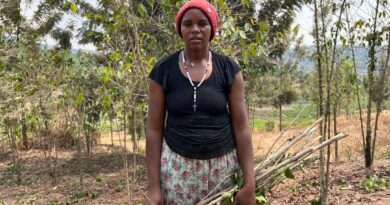
Francoise Umugwaneza, 35, is a mother of four children from Nyarufunzo cell, Mageragere sector says that she knows the role of eggs for children’s health but she cannot afford 4 eggs every day for her children.
However, she says local authorities and community health workers trained them to prepare other meals including vegetables, eggs and fruits for children in order to fight malnutrition.
“I know that eggs play a pivotal role in fighting malnutrition among children, but one problem is that I cannot manage to buy 4 eggs for my 4 children every day, it can require me to pay Rwf600 every day, and I do not have any source of income,” Umugwaneza said.
Not only this parent, the majority of parents from the rural villages of Nyarugenge who shared information to The Inspirer said the initiative of ‘One Egg per Child Every day’ is important unless they can fail to buy it.
“I always struggle to feed the family of three children, only finding food is a miracle, how comes to buy eggs using the little coins that I am supposed to use buying more food the next day?” she said.
Alice Mushimiyimana,40, is also a mother of 4 children from Maya village, Nyarufunzo cell, Mageragere sector. She said that she does not have financial capacity to buy eggs for them as it is difficult for her to get money.

“I can’t afford to buy meat or eggs, I do not have properties and small livestock, I know it is important to feed children animal-sourced products, but I do not have financial capacity to buy them, I can give an egg to this little child once in two months or once a month, and buy meat once a year,” Mushimiyimana says.
Mushimiyimana depends on part time jobs in Agriculture and she says nowadays there is no opportunity to find some. She earns Rwf1500 per day when she managed to get employed. She says this money is insufficient due to high prices of food stuffs at the market and her husband has no occupation.
Mushimiyimana requests the government and partners to help vulnerable communities to get animal-sourced diet to fight malnutrition.
Silas Hategekimana, Executive Secretary of Mageragere sector in Nyarugenge district told The Inspirer that they have a program to give one chicken per a family to ensure they produce eggs and they encourage to eat them instead of selling all.
“We have a program which we have not yet achieved at 100 percent, to give small livestock to citizens, where every citizen will have a chicken that provides eggs for eating. Some citizens who currently grow chickens used to sell eggs rather than eating them, in our campaign, we teach them to consume animal-source products so that we all together fight malnutrition.” Hategekimana said.

He added that Mageragere sector had 8 children who had had problems of malnutrition since the last year of budget, and one who had special illness case is still getting help, while 7 others have recovered.
UNICEF and NCDA have a plan to promote poultry raising at community and household level to support building resilience and potential income generation in addition to meeting the nutrition needs of children.
They plan to do this is under the UNICEF’s ongoing ‘One Egg per Child everyday’ campaign that aims to increase awareness about the nutritional benefits of eggs, to promote the affordability of eggs as a protein source and to increase egg consumption among the general population, including children and women of reproductive age.
Through this campaign, they will provide comprehensive packages of assets and inputs to promote improved access to and utilization of animal-source protein particularly eggs.

They will also provide educational materials and training to key stakeholders, including farmers, traders, and consumers, on the nutritional benefits of eggs, how to incorporate them into a balanced diet, and safe handling and storage practices.
Macyara Faustin, Nutrition Expert at NCDA, said that egg is animal-source product reach in proteins and contributes a lot to the reduction of stunting among children.
“We want that egg comes among the daily diet of a child, especially in his/her first 1000 days. We have 2 years action plan that is a multisectoral initiative to reduce stunting in 10 districts with high stunting level in Rwanda giving poultry farm to families having children aged below 2 years, we encourage parents especially men to invest in children’s nutrition, it gives fruitful results for long term,” Macyara said.
Among the key strategies of UNICEF to promote egg consumption, they plan to engage with local authorities, businesses and organizations, including schools, health clinics, and markets, to increase access to eggs and promote their consumption.
UNICEF also plans to partner with local egg producers and distributors to ensure a steady supply of eggs at affordable prices.
theinspirerpublications@gmail.com


Leave a Reply