
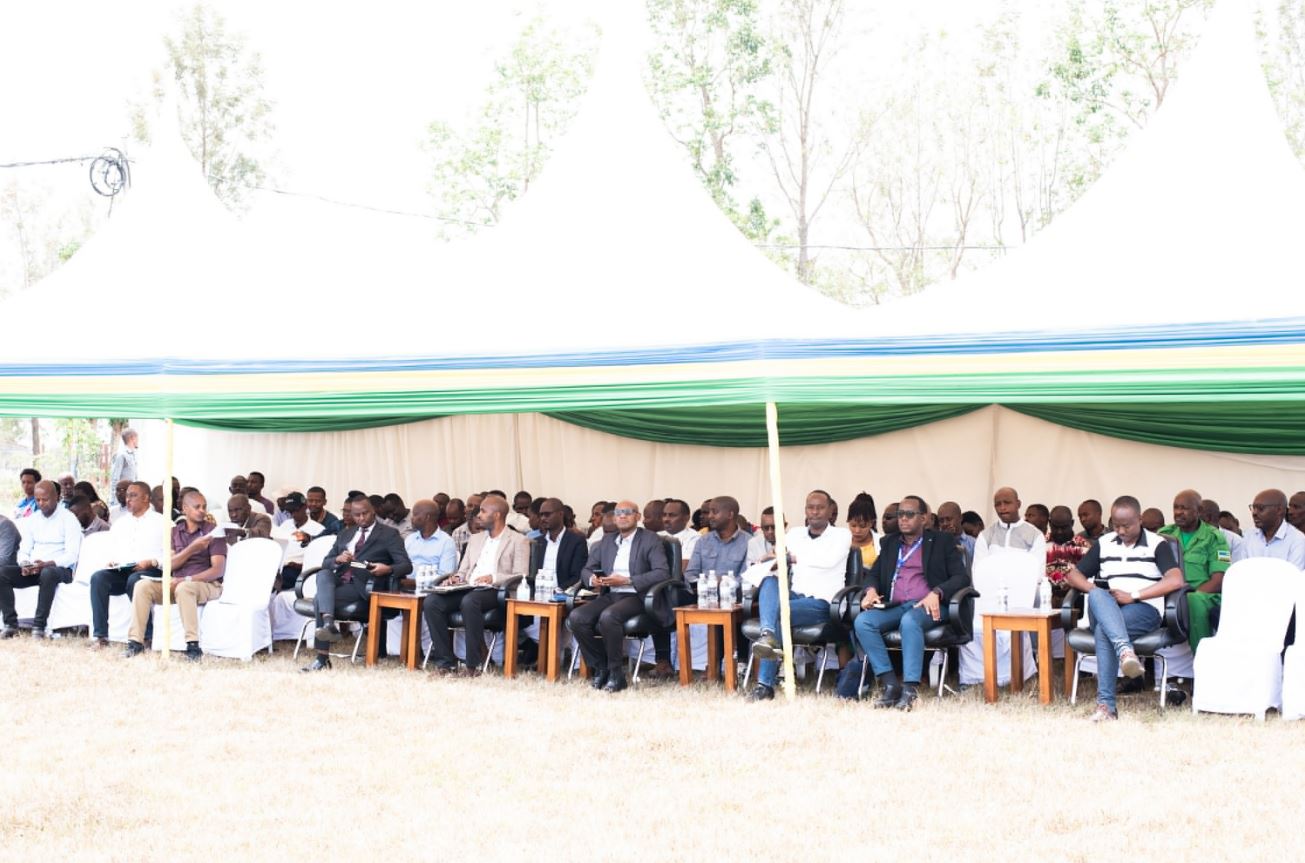
Nyagatare livestock farmers expect major boost in dairy production as RDDP2 and SAIP2 projects take effect
By Elias Hakizimana.
With the launch of the second phase of the Rwanda Dairy Development Project (RDDP2) and the Sustainable Agricultural Intensification and Food Security Project (SAIP2), livestock farmers in Nyagatare District are anticipating significant improvements in dairy production.
These two major initiatives, implemented by RAP-SPIU under World Bank funding, aim to address key challenges in the agriculture and dairy sectors across Rwanda.
SAIP2, a $20 million initiative, aims to support 65,688 farming households and will be implemented until December 31, 2026. This project builds on the successes of SAIP1 by continuing to provide affordable irrigation solutions and transforming rural livelihoods. SAIP1, a $36.3 million initiative, targeted 46,000 farming households, positively impacting 229,000 people nationwide through its focus on improving agricultural practices.
Meanwhile, RDDP1 benefitted 100,000 farmers in 14 districts, improving milk productivity and market infrastructure but leaving some challenges that RDDP2 seeks to address on a larger scale.
The second phase of the RDDP, with a budget of $124 million, will cover 27 districts, prioritizing Nyagatare due to its prominence in dairy farming. However, the specific financial allocation for Nyagatare has not been disclosed.
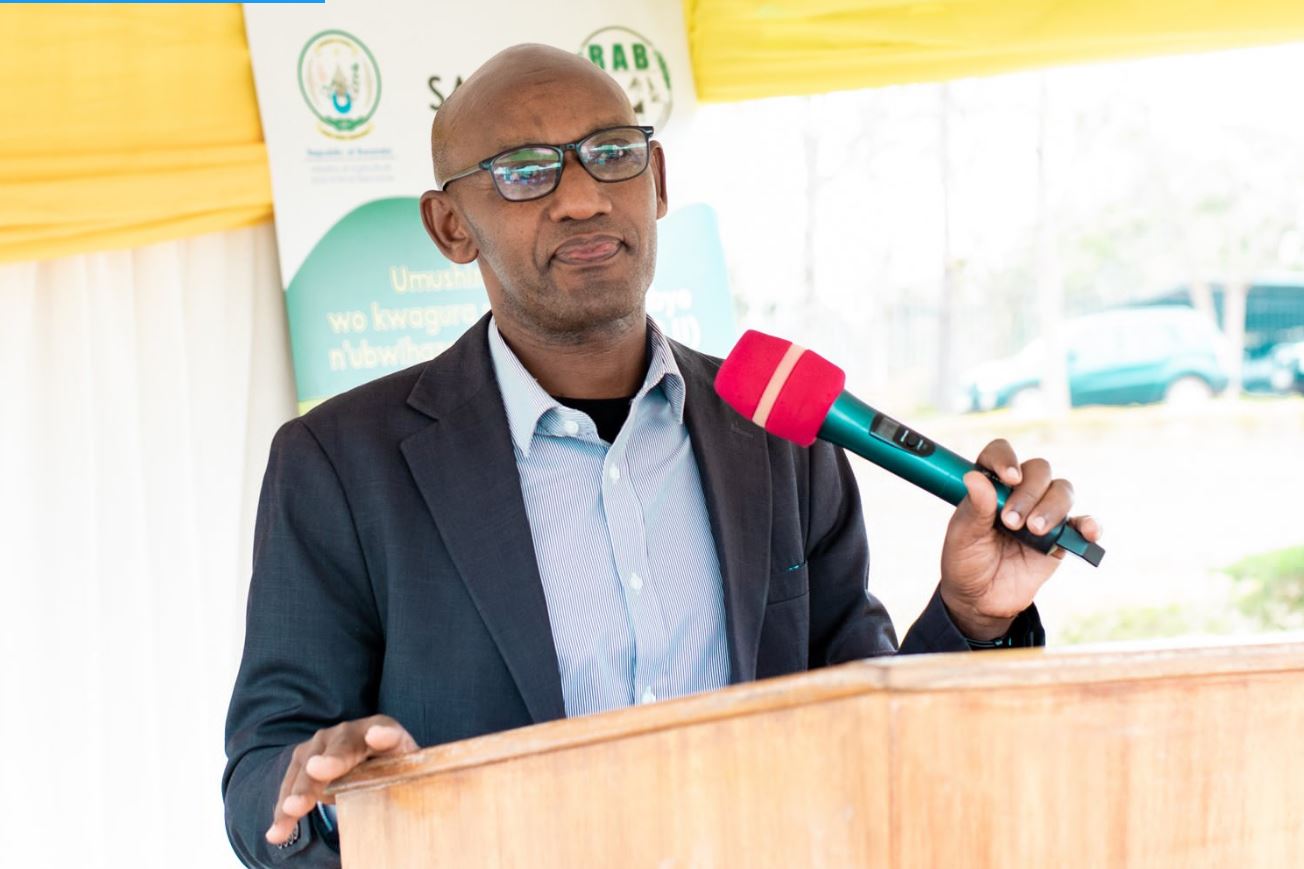
“In this phase two, our goal is to enhance dairy production by improving dairy cow genetics and advancing the entire dairy value chain,” said Gasana Ngabo Methode, RDDP Project Manager.

“We will educate farmers on proper livestock management, feeding, and veterinary services to ensure better results.” He added.
Key interventions to boost dairy productivity in Nyagatare
Nyagatare’s dairy sector is set to benefit from several key interventions aimed at boosting productivity. These include improving dairy cow genetics to enhance milk yields and providing training in livestock feeding, supported by new infrastructure such as chopper machines for fodder processing, valley dams, boreholes, and dam sheets for water access to reinforce the government’s zero-grazing policy.
The ISONGA station will be upgraded into a hub for dairy excellence, while additional Milk Collection Centers (MCCs) and Milk Collection Points (MCPs) will be established.
Additionally, the project will focus on building cow sheds and fodder storage facilities, establishing veterinary clinics to improve animal healthcare, and introducing hydroponic forage techniques to promote sustainable feeding methods.
“We are building on the successes of RDDP1 and have critical tasks ahead in RDDP2 to sustain and expand those achievements. Dairy production is crucial to both livestock and economic development,” Gasana emphasized.
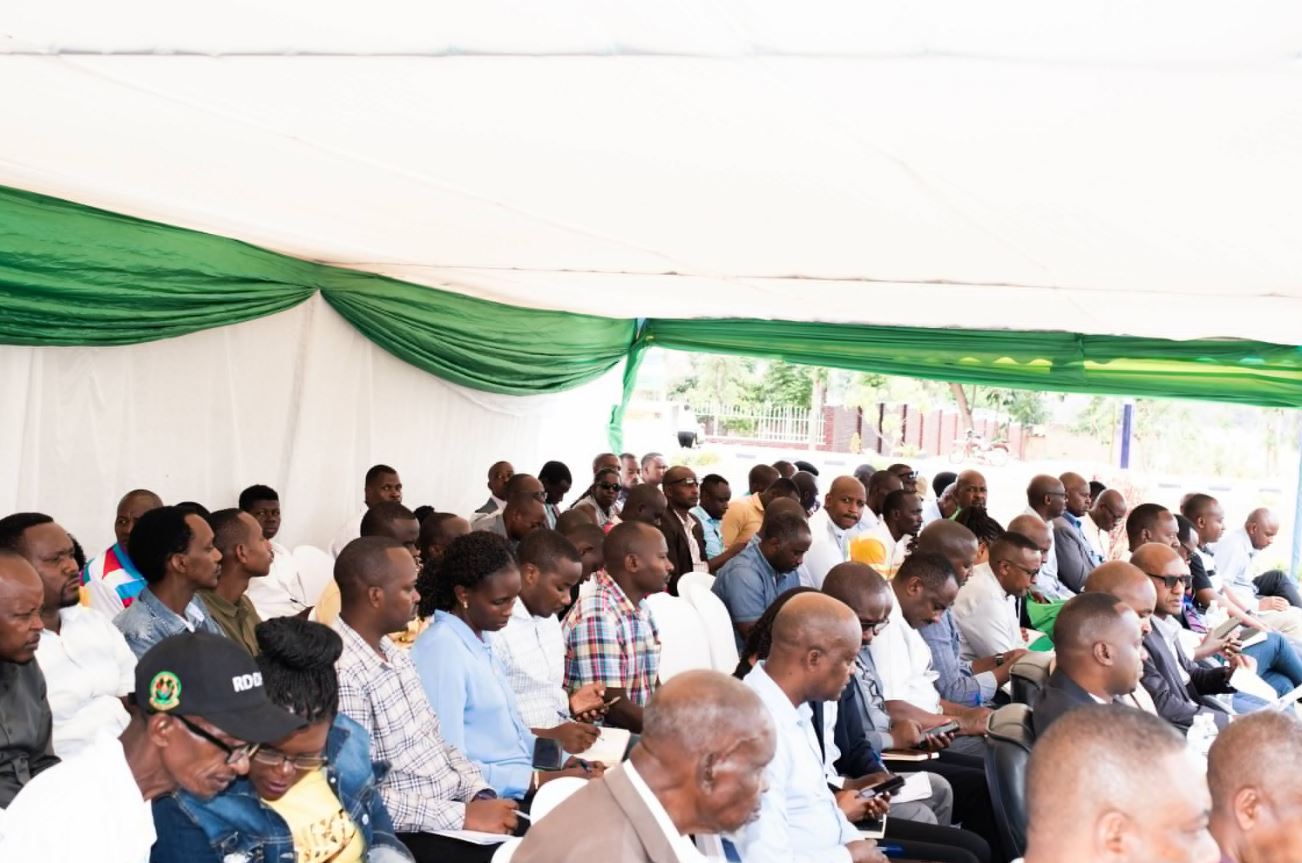 The farmer community during the launch of the RDDP project in Nyagatare, actively engaging in discussions about the upcoming dairy sector transformations.
SAIP2 expands agriculture support
Running from August 2024 to December 2026, SAIP2 will focus on 20 districts, providing agricultural extension services, agroprocessing, and marketing for key crops such as beans, maize, Irish potatoes, vegetables, and fruits.
According to Emile Rurangwa, coordinator of agriculture at RAB-SPIU, SAIP2 will offer matching grants with up to 90% government subsidies to help farmers increase production and processing capacity, with 50% contribution of beneficiaries.
Despite the ambitious goals, challenges remain, particularly regarding farmers’ ability to apply for grants. Many livestock farmers, with limited education, struggle to complete English-language forms required for funding.
“RDDP2 must help farmers by simplifying the grant application process. Most farmers have limited education, and hiring experts to assist with applications would be beneficial,” said Livingstone Abiyingoma, a farmer from Karangazi sector.
Abiyingoma, a beneficiary of RDDP1, now owns over 20 improved dairy cows, with one cow producing 20 liters of milk daily. His success has allowed him to pay for his children’s education and purchase a vehicle for transporting milk to collection centers.
Positive impact on Nyagatare’s economy
Nyagatare mayor Stephen Gasana commended the projects for their role in transforming agricultural practices in the district.
“We have overcome financial constraints to plant and store fodder, build modern cowsheds, and construct irrigation systems. These projects have been instrumental in boosting both agriculture and livestock production,” he said.
The RDDP2 and SAIP2 projects are expected to further enhance Nyagatare’s role as a leading dairy producer in Rwanda, with a focus on youth and women, who will constitute 45% and 25% of the beneficiaries, respectively.
theinspirerpublications@gmail.com


Leave a Reply