
NGOs Demand Reforms to Rwanda’s Land Law
By The Inspirer.
Representatives of Rwandan NGOs have highlighted gaps in the country’s land law, particularly in areas concerning implementation.
These gaps include issues around land transfers when citizens are relocated for public interest projects, and clauses granting the government the power to terminate land ownership agreements, limiting landholders’ freedom to use their land as they wish.
Land-related issues are among the most common concerns raised by citizens, with the Office of the Ombudsman reporting that land cases made up 29% of all complaints it received during the 2023/2024 fiscal year.
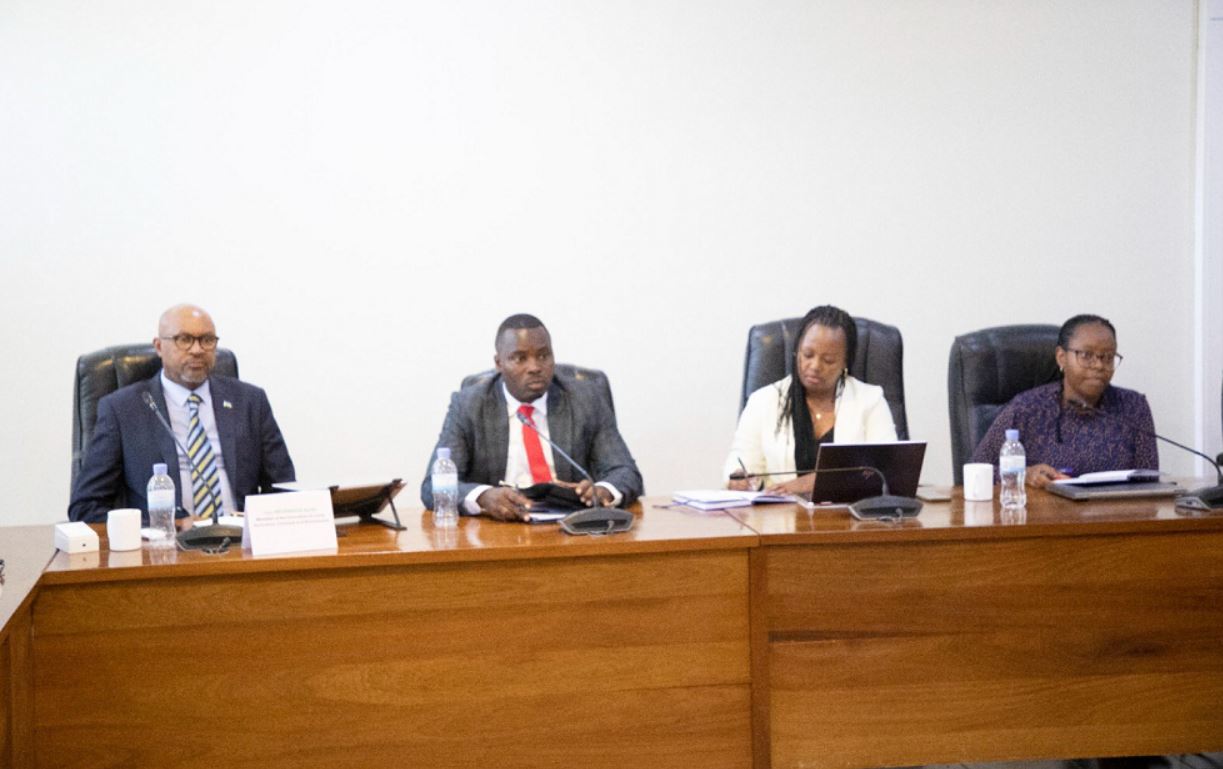
In discussions held on November 13, 2024, between the Parliamentary Committee on Land, Agriculture, Livestock, and Environment and NGO representatives, issues were raised about challenges in implementing the land law.
A ministerial order issued in July 2024 states that if someone does not utilize agricultural land productively for at least three consecutive years, the government may reassign the land to someone who will use it effectively. Before repossessing land, the minister must issue a 90-day notice to the landowner. If the landowner proposes a one-year plan for productive use or leases it to someone who will use it, repossession is halted.
This order also allows landowners to request the termination of their land ownership agreements. Additionally, if land is in an area equipped with basic infrastructure such as roads, water, and electricity, or designated for construction permits, yet the owner fails to use it productively for five consecutive years, the government can intervene.
An NGO representative told RBA (Rwanda Broadcasting Agency) that terminating land ownership agreements for failing to develop the land is unfair.
“There should be specific guidelines. What criteria are used when the government terminates a land ownership contract? Someone may buy land with plans to build on it but needs time to secure a loan. Repossessing the land under such circumstances would be unjust,” they said.
The representatives also raised concerns over challenges in transferring land rights in areas designated for public interest projects, where people continue to be taxed on land they no longer use.
Another representative said, “The law doesn’t clarify the transfer of authority over land allocated for public use, where displaced people lose their registered assets. If an asset was registered in someone’s name, it should stay that way after transfer. There should be a formal transfer process rather than repeated notifications demanding continued tax payments.”
They also called for a careful review in inheritance cases when a spouse dies, urging that land acquired after the death of a partner should be handled separately rather than as jointly owned property.
Sylvain Muyombano, Acting Director of Land Management at the National Land Authority, assured that solutions are being developed.
“Efforts are underway to integrate the systems of the Rwanda Revenue Authority and the Land Authority, so actions taken in one system will be immediately visible in the other. This will streamline processes once completed,” he said.
Muyombano confirmed that many of the land service issues will be addressed in the next fiscal year’s budget.
Statistics indicate that 515,536 land parcels are registered in Kigali, with 24,759 temporarily registered to the government due to insufficient ownership information. In the Northern Province, over 2.7 million parcels are registered, with around 292,000 temporarily registered to the government.
The Southern Province has over 3.2 million parcels, including more than 455,000 temporarily registered to the government, while the Eastern Province has over 2.1 million parcels, with over 238,000 temporarily registered to the government.
The Western Province has over 3.2 million parcels, with more than 361,000 temporarily registered to the government due to incomplete ownership information.
theinspirerpublications@gmail.com





Leave a Reply