
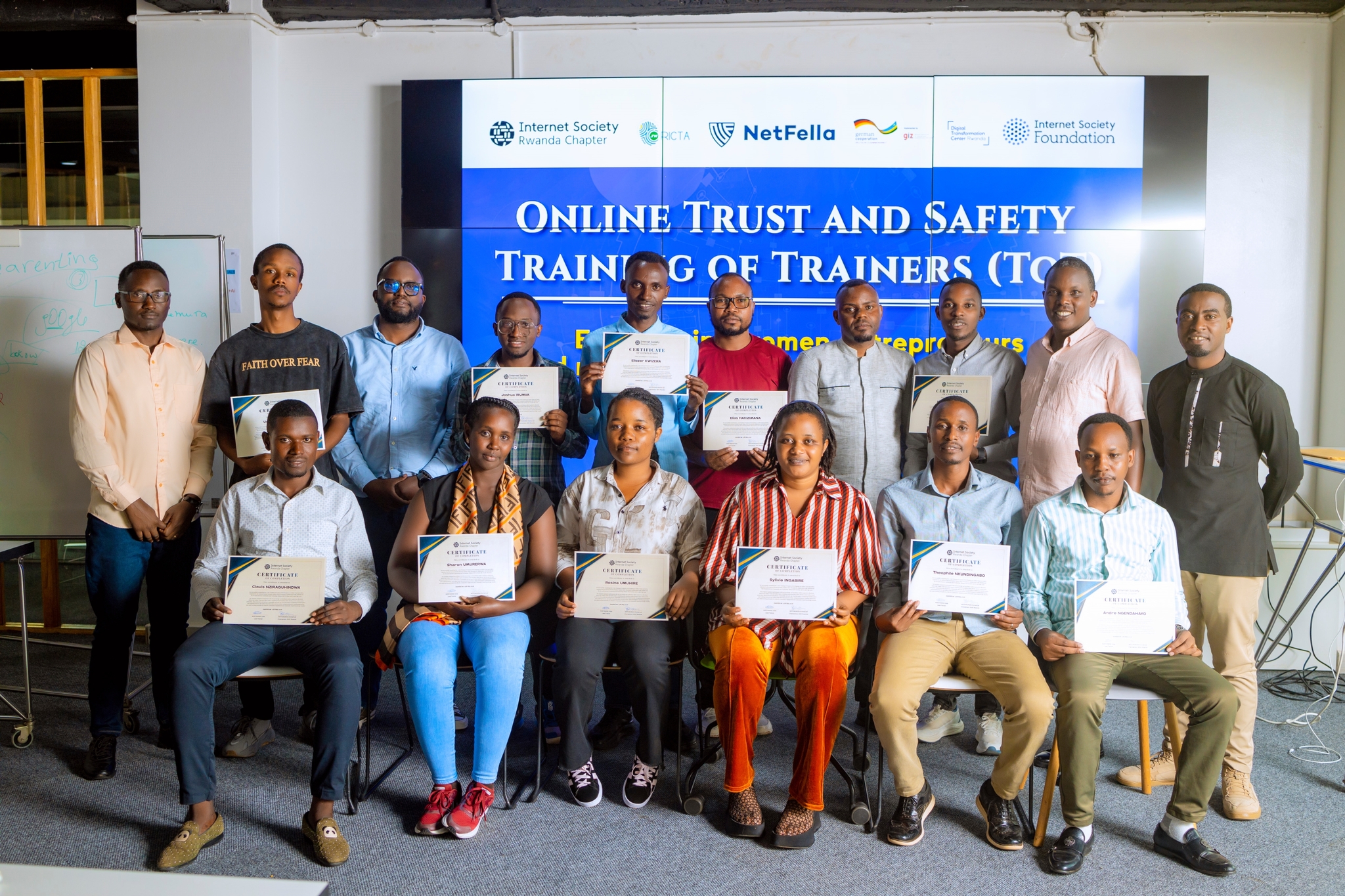
ISOC Rwanda wraps up online trust and safety training, equipping trainers to fight rising digital threats
By Elias Hakizimana.
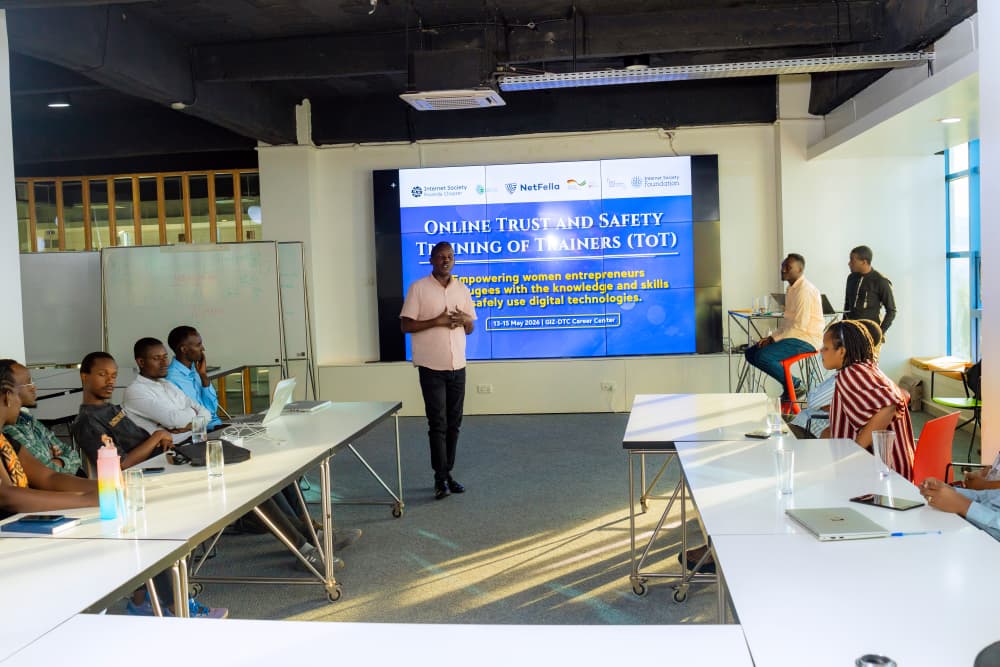
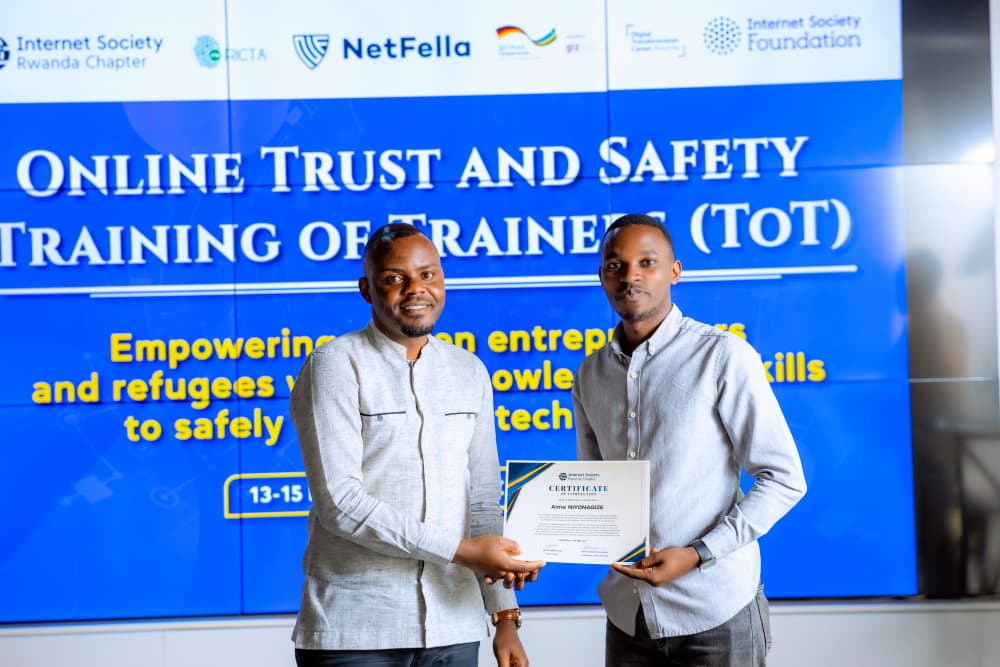
The Internet Society Rwanda Chapter (ISOC Rwanda) has concluded a three-day Training of Trainers (ToT) on Online Trust and Safety, held from May 13 to 15, 2026; aimed at strengthening digital safety and cybersecurity awareness among women entrepreneurs and refugees.
The training brought together participants who were equipped not only with practical skills to protect themselves online but also with the capacity to train others within their communities on safe internet use, data protection, and cyber threat awareness.
Speaking after the training, participants and facilitators emphasized the growing importance of digital safety in an era marked by increasing online fraud, misinformation, and privacy breaches.

Rising digital risks demand awareness
One of the trainees, Urbain Ishimwe from Kicukiro District in Kigali, said the training comes at a critical time when digital platforms are increasingly being used for both opportunity and exploitation.
“Women are more focused on using technology but are not really aware of the problems that can happen during usage,” he said, highlighting why women and refugees are particularly vulnerable to online scams.
He noted that his role as a newly trained trainer will be to help community members understand how to stay safe online, verify the credibility of websites and applications, and protect their personal data.
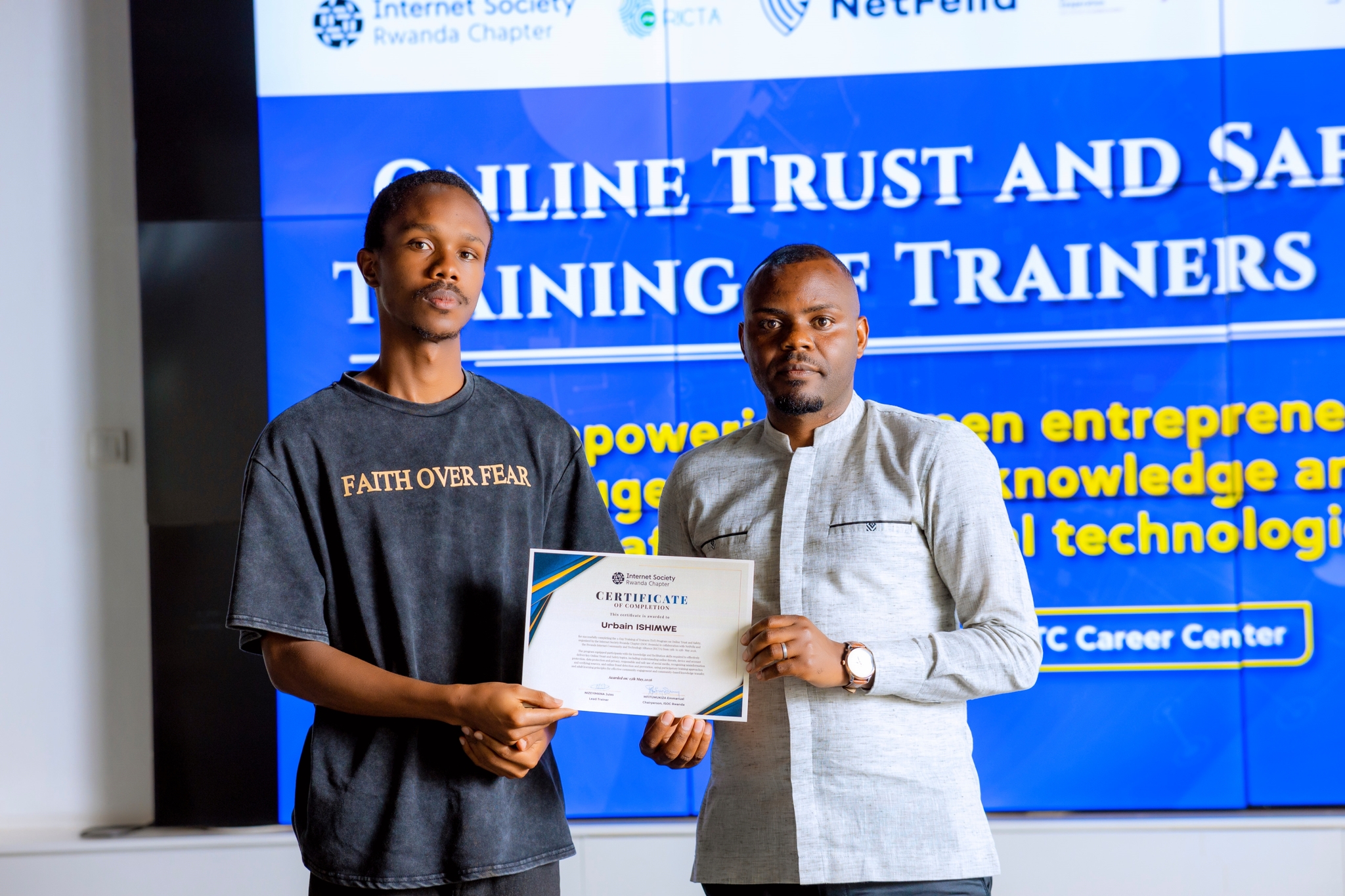
“I expect the learners to know how to protect their data, thus reducing cases of online fraud and attacks,” Ishimwe added.
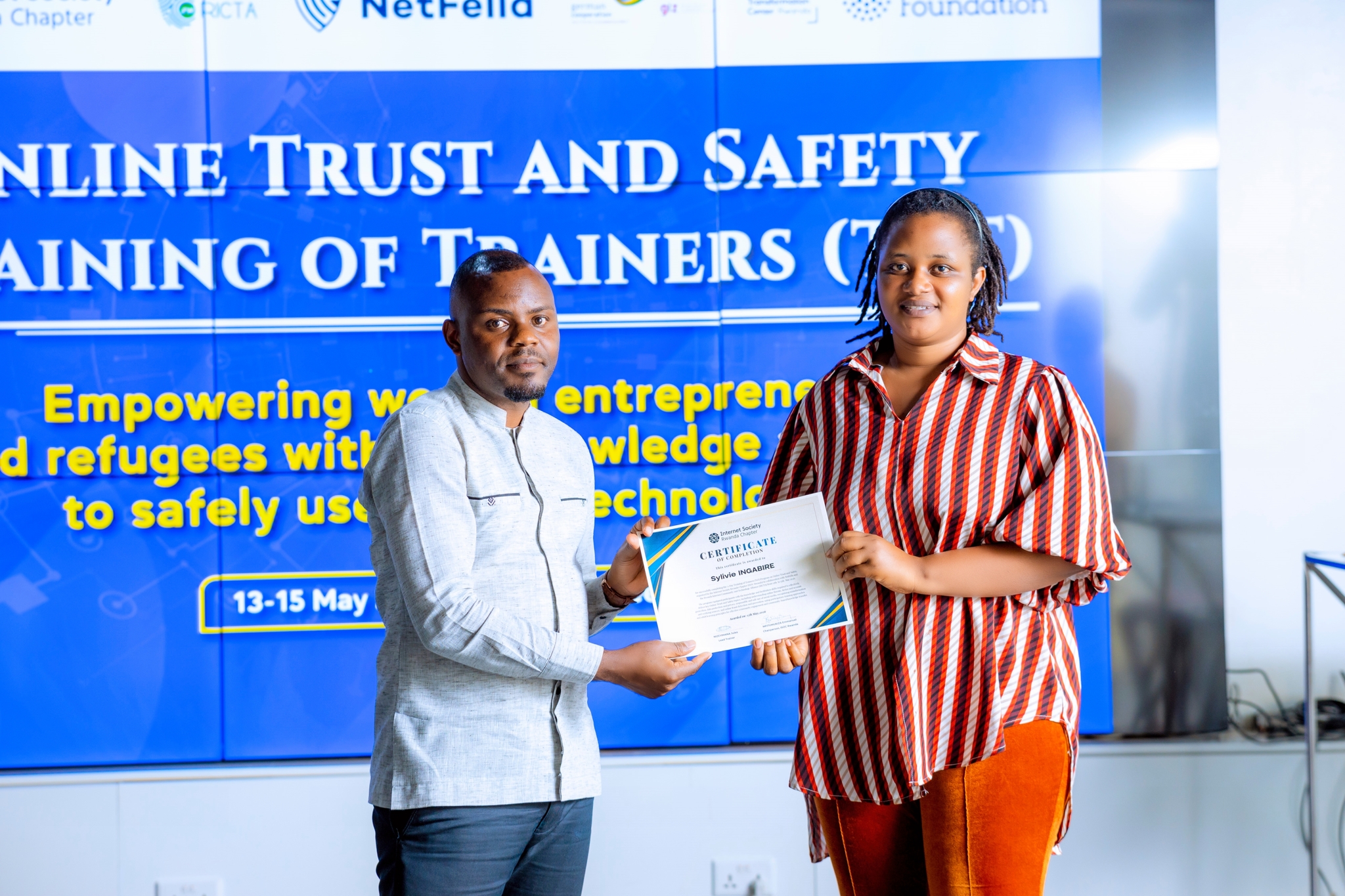
Another participant, Rosine Umuhire also from Kigali, stressed that trust and safety are now essential in everyday life, especially for people engaged in business activities online.
She pointed out that women traders and refugees are often prime targets for digital scams due to their heavy reliance on online platforms and, in some cases, urgent financial needs.
“Those who are doing business are more targeted, and refugees can easily fall for fake money-related offers without thinking twice,” she said.
Umuhire added that her role as a trainer will focus on helping communities understand what information to share online and how to protect sensitive business and personal data.

Tackling real-world cyber threats
According to trainers, the programme also addressed real-life cases of cybercrime in Rwanda and beyond, including impersonation scams, mobile money fraud, and fake institutional messages designed to steal personal information.
Sadra Irasubiza, Managing Director of Netfella and one of the lead trainers, said the training was necessary due to the growing number of scams affecting citizens.
“We have seen cases where fraudsters impersonate institutions like banks or government agencies to steal from people,” he said. “By training trainers, we ensure that this knowledge reaches communities directly and continuously.”
He emphasized that the cascading model is essential because it is impossible to reach every community directly, making trainers key agents in spreading digital safety awareness.

Women and refugees at the center of intervention
Emmanuel Mfitumukiza, Chairperson of ISOC Rwanda, explained that women entrepreneurs and refugees were prioritized due to their high exposure to digital risks and their increasing reliance on online services.
He noted that many women are actively using social media to run businesses while also managing household responsibilities, which increases their exposure to privacy risks and online manipulation.
Refugees, he added, often depend heavily on digital communication to stay connected with family members and access services, which exposes them to risks such as data misuse, fraud, and misinformation.

Mfitumukiza also highlighted the importance of aligning digital safety training with Rwanda’s cyber laws and data protection frameworks, noting that awareness remains low among many internet users.
“People need not only technical skills but also the awareness to behave responsibly online and build trust in digital environments,” he said.
He urged the newly trained participants to deliver their knowledge with purpose and empathy, stressing that effective training requires understanding the needs and realities of the communities they will serve.
Building a safer digital community
The conclusion of the training marks a step forward in ISOC Rwanda’s efforts to promote a safer and more informed digital society. With the newly trained trainers now set to reach women traders and refugee communities, the initiative is expected to strengthen grassroots awareness of online trust and safety across Rwanda.
As digital platforms continue to expand opportunities for communication and business, ISOC Rwanda says empowering citizens with cybersecurity knowledge remains key to ensuring that no one is left behind in the digital age.



 theinspirerpublications@gmail.com




Leave a Reply