
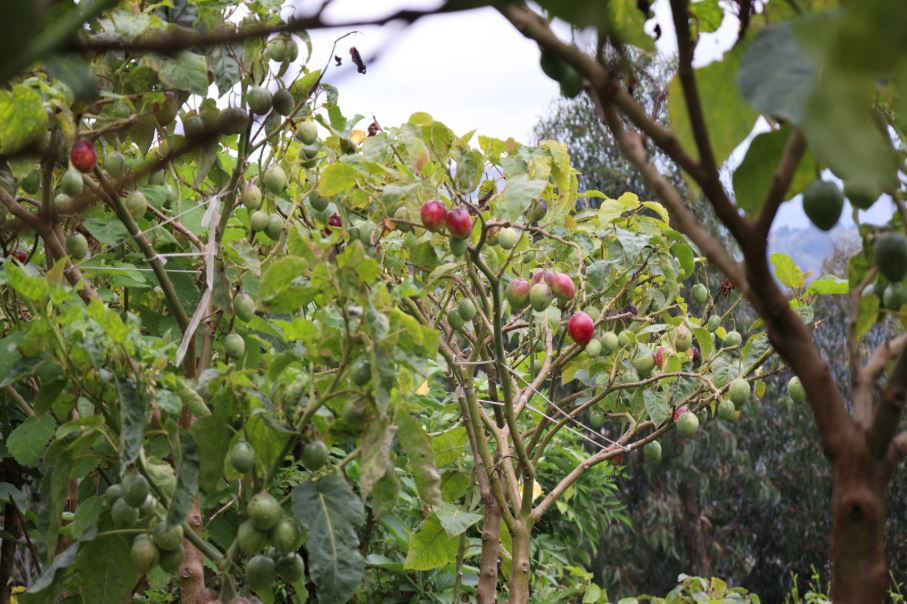
Huye knowledge-sharing sessions spotlight SAIP2’s impact as farmers turn training into millions
By Elias HAKIZIMANA.
Real impact stories took centre stage this week as farmers gathered in Huye District for knowledge and experience-sharing sessions under the Sustainable Agricultural Intensification and Food Security Project Phase II (SAIP2), showcasing how training and peer learning are translating into higher yields and rising rural incomes.
From mango orchards in Gisagara to passion fruit plantations in Huye, beneficiaries say structured trainings and farmer-to-farmer exchanges have reshaped how they farm — and how they earn.
From struggle to structured investment
On a gently sloping six-hectare farm in Musha Sector of Gisagara District, rows of mango and avocado trees stretch across land that owner Alexander Nshimiyimana now describes as his “future bank.”
A few years ago, he struggled with high irrigation costs and limited technical know-how. But speaking during the SAIP2 knowledge-sharing session in Huye, he confidently discussed tonnes, markets and projected earnings.
“Through SAIP2, we were trained on how to make quality compost and apply good agricultural practices,” he said, noting that the project also supplied mango seedlings and irrigation support.

He now owns 4,500 mango trees — after sharing 1,000 with a colleague — and more than 1,000 avocado trees, alongside vegetables grown for market.
Between July and September, he expects to harvest three to four tonnes of produce. At an average farm-gate price of Rwf800 per kilogram, he projects earning at least Rwf1.5 million per month during peak season.
When electricity tariffs rose from Rwf150 to about Rwf420 per unit, irrigation costs became unsustainable. Through SAIP2’s pilot solar-powered irrigation support, he reduced expenses and improved reliability.
Having invested more than Rwf30 million to acquire the land, he now values the farm — based on crop performance and projected yields — at over Rwf1 billion.
“I cannot accept Rwf1 billion for this farm because I know the value of what it will produce,” he said.
Farmers during the SAIP2 knowledge-sharing session in Huye District exchange experiences on irrigation, crop management and soil fertility improvement to boost productivity and incomes.
Knowledge sharing strengthens resilience
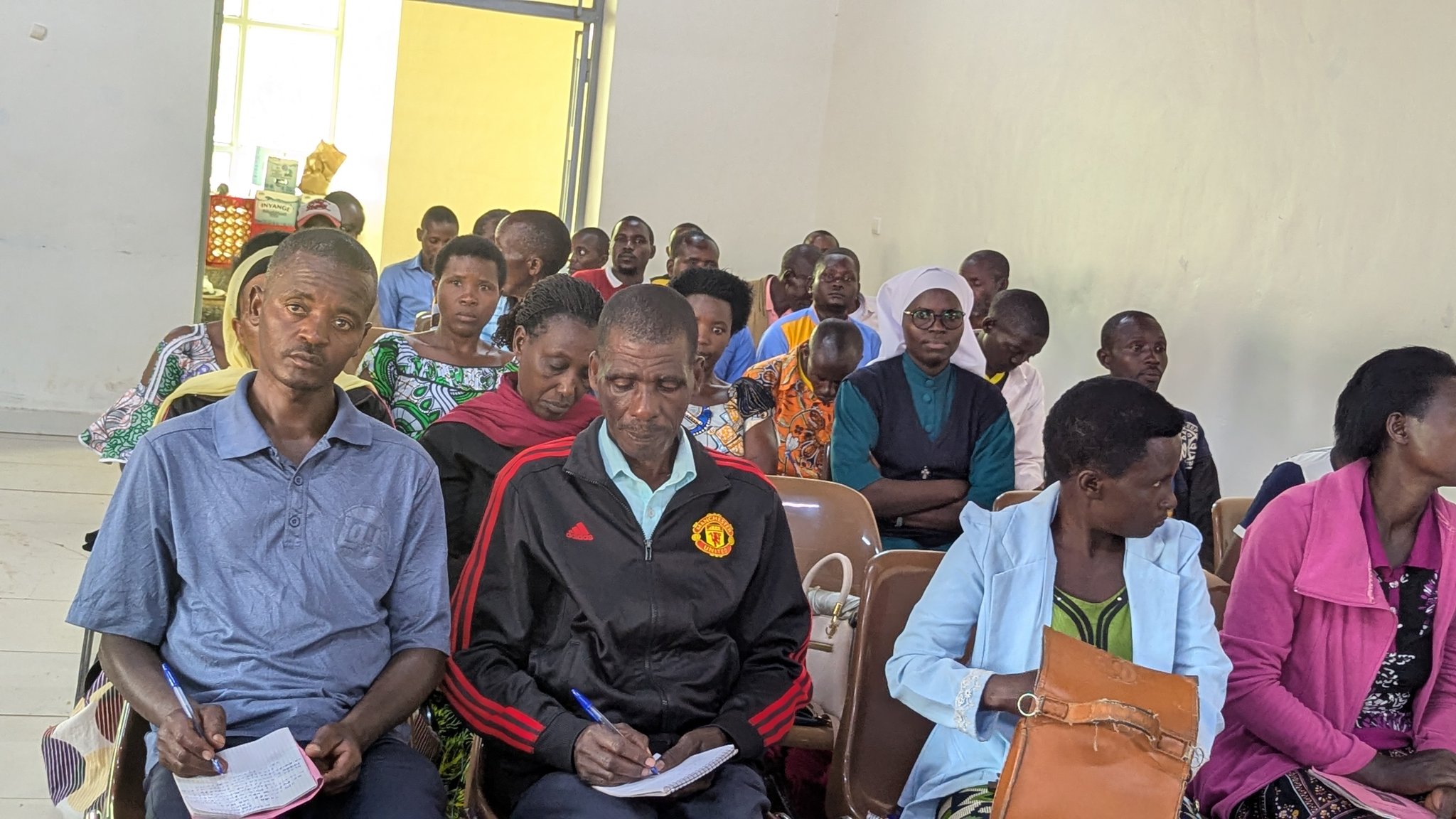
About 60 kilometres away in Rusatira Sector of Huye District, Louise Mukandayisenga’s transformation reflects the nutritional and resilience dimension of the project.
A member of KOROWA-KIMANZI Cooperative under the Dufashanye Association, she and fellow farmers cultivate maize on 50 ares, beans on 30 ares and rice on about two hectares of marshland.
Speaking after the knowledge-sharing session, Mukandayisenga said peer exchanges helped farmers internalize pest and disease control techniques introduced under SAIP2.
“SAIP2 helped farmers through trainings that increased our knowledge and skills in applying good agricultural practices,” she said.
Learning how to control fall armyworms proved critical in protecting maize harvests that had previously been devastated.
Beyond field crops, the project provided avocado seedlings and promoted kitchen gardens, improving household nutrition and reducing illness. However, she noted that limited access to irrigation equipment remains a financial challenge.

Louise Mukandayisenga during an interview after a knowledge-sharing session on improved farming practices.Weekly harvests multiply tenfold
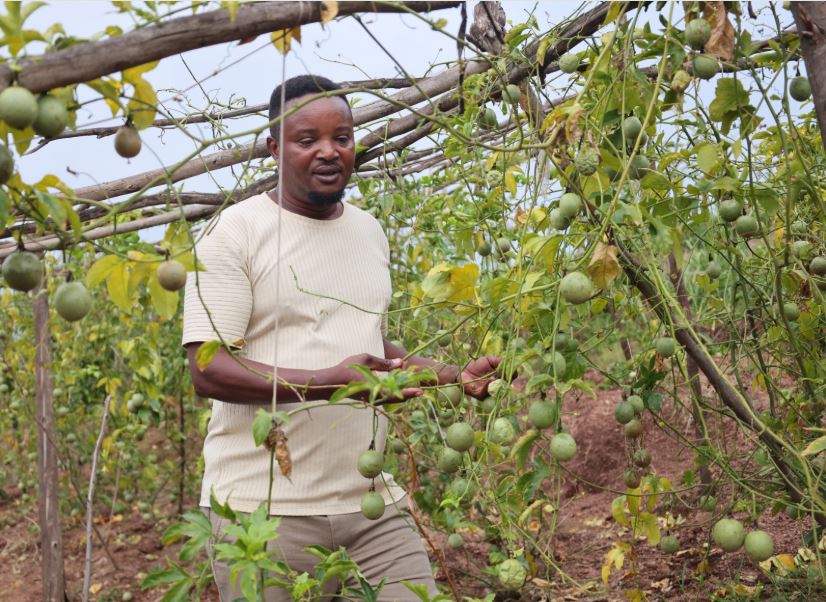
Darius Havugarurema speaks during an interview at his passion fruit (maracuja) farm, sharing how the project boosted production and income.Refining interventions through farmer feedback
Speaking during the knowledge-sharing sessions, Huye Vice-Mayor in charge of Economic Development André Kamana emphasized the urgency of intensification amid shrinking landholdings.
“With limited land, increasing productivity is no longer optional — it is a necessity,” he said, urging farmers to combat soil erosion and safeguard soil fertility.
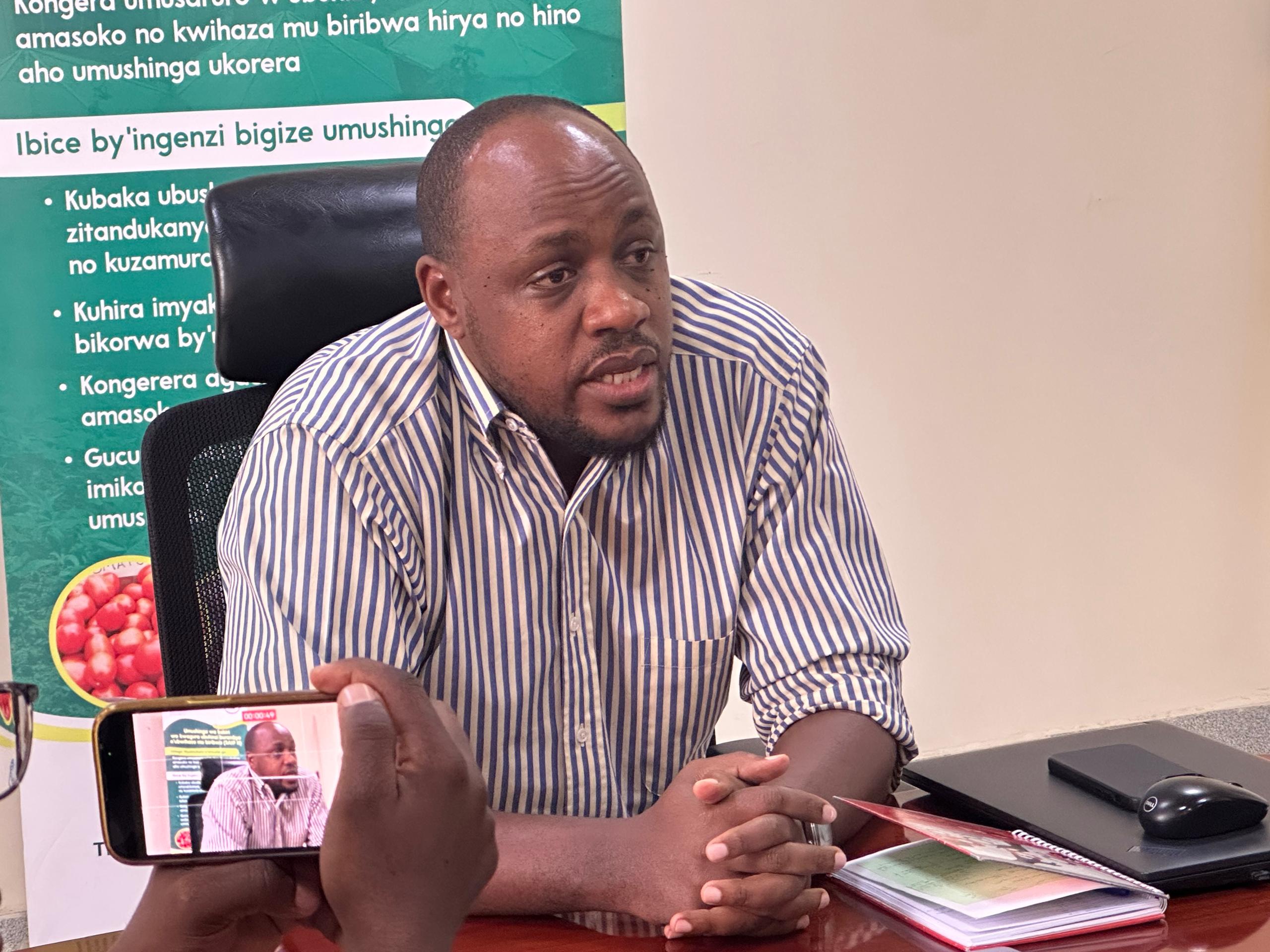
SAIP Project Manager Ezra Mutabaruka said the knowledge-sharing platform is critical for adaptive project implementation.
“All cooperatives and farmers are not on the same level,” he said. “Through these sessions, we draw lessons from beneficiaries’ experiences and refine interventions based on their ideas and realities.”
The Sustainable Agricultural Intensification and Food Security Project is a three-year, $20 million initiative implemented by the Government of Rwanda through the Rwanda Agriculture and Animal Resources Development Board (RAB/SPIU), funded by the World bank with the support from The Global Agriculture and Food Security Program (GAFSP).
In Huye alone, more than 58,000 short-term fruit tree seedlings were distributed in 2024/2025 and 53,726 in 2025/2026, alongside 27,000 long-term fruit trees — mainly avocado — benefiting over 1,200 households.
For farmers like Nshimiyimana, Mukandayisenga and Havugarurema, the sessions in Huye were more than ceremonial gatherings. They became platforms to demonstrate how structured training, peer learning and adaptive implementation are turning small plots into viable rural enterprises.
theinspirerpublications@gmail.com




Leave a Reply