
How fodder farming is creating wealth, jobs and hope for dairy farmers in Kayonza
By Elias HAKIZIMANA.
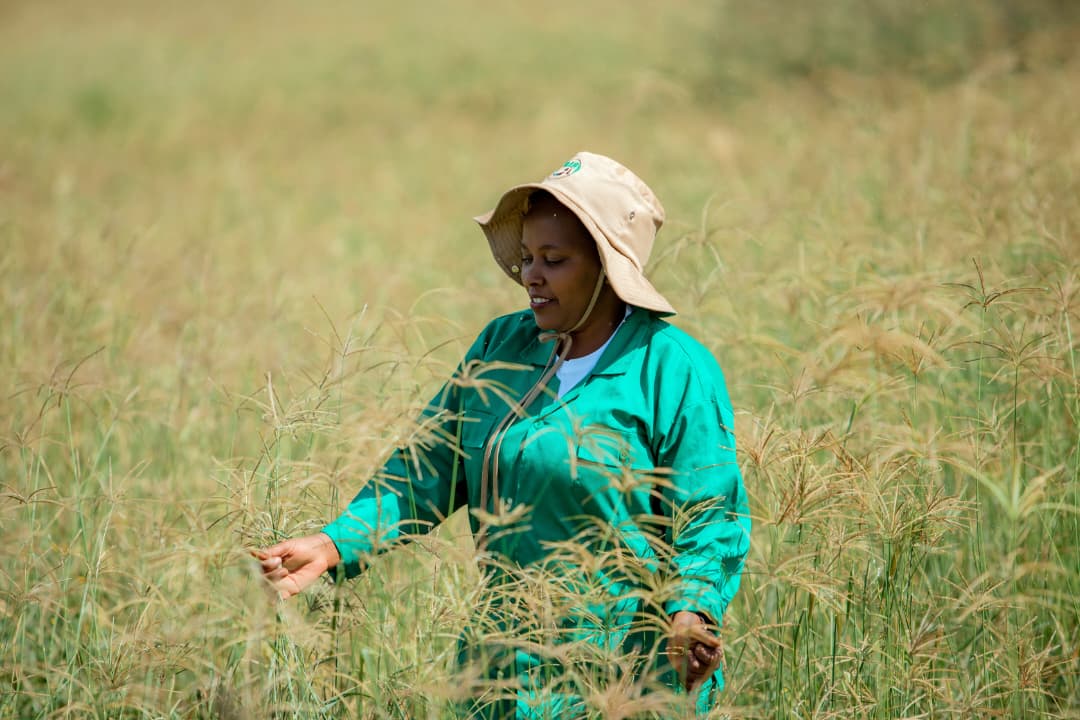
When Jacqueline Murekatete began working as a farmer field facilitator under the Rwanda Dairy Development Project (RDDP 1&2), she never imagined that fodder farming would become her main source of income.
Today, the Kayonza resident says the business has earned her more than Rwf8.5 million and enabled her to build a modern family house worth Rwf50 million.
“I do not grow beans, potatoes or sorghum. I grow only fodder, thanks to RDDP2 interventions.” she says.
The Rwanda Dairy Development Project Phase II (RDDP2), is a joint initiative between the Government of Rwanda and the International Fund for Agricultural Development (IFAD), implemented under the Rwanda Agriculture and Animal Resources Development Board (RAB).
Murekatete is among a growing number of farmers in Kayonza District who are turning fodder production into a profitable business while helping address one of the biggest challenges facing dairy farmers—access to quality livestock feed.
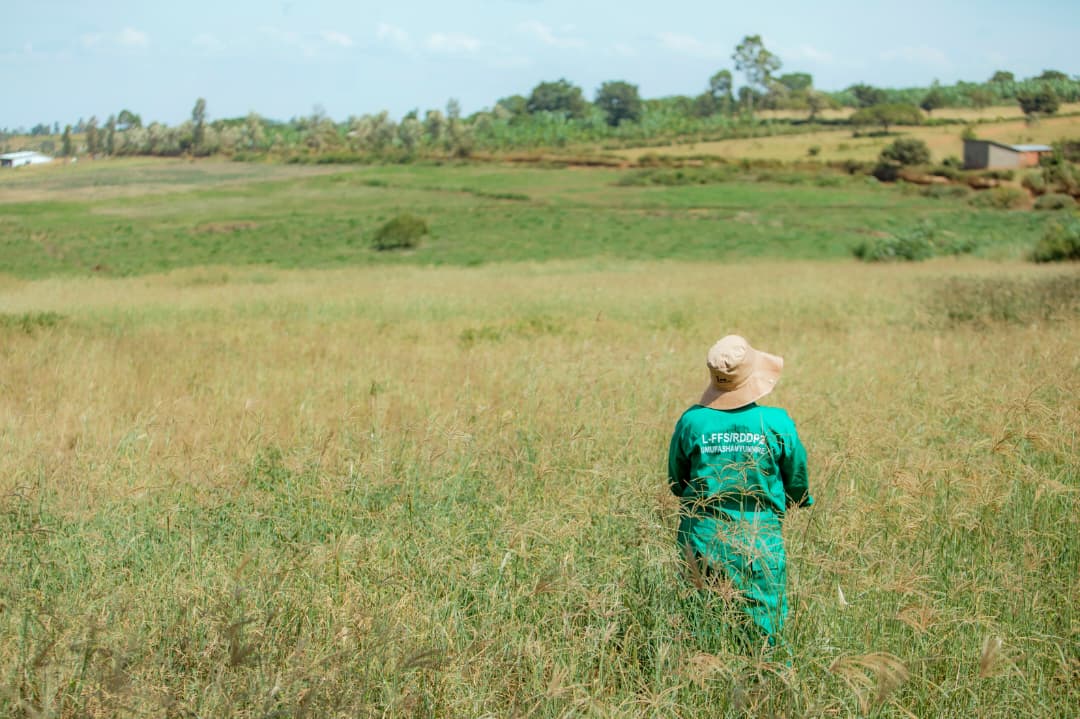 Jacqueline Murekatete in her fodder farm.
As a trained farmer field facilitator under RDDP, she supplies fodder seeds and trains fellow farmers on cultivation, harvesting and baling techniques. What started as a project intervention has evolved into a business opportunity driven by increasing demand from dairy farmers across the district.
“Many dairy farmers need this fodder, and we have not yet satisfied the demand,” she says. “There are many farmers who need it, and many others who want to start dairy farming.”
Her story reflects a broader transformation taking place in Nyawera Cell, Mwiri Sector, where fodder farming is becoming both a solution to feed shortages and a source of income for local communities.
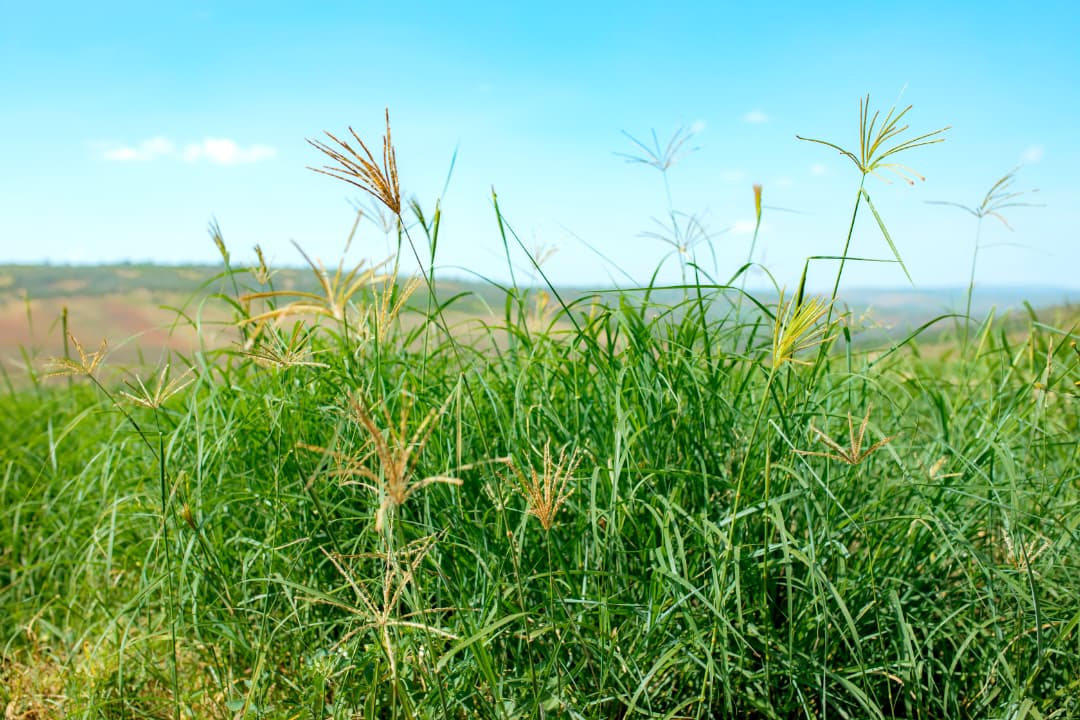
On demonstration fields established under the project, farmers are growing various fodder species, including Mucuna, Chloris gayana and other nutrient-rich legumes and grasses designed to improve livestock nutrition.
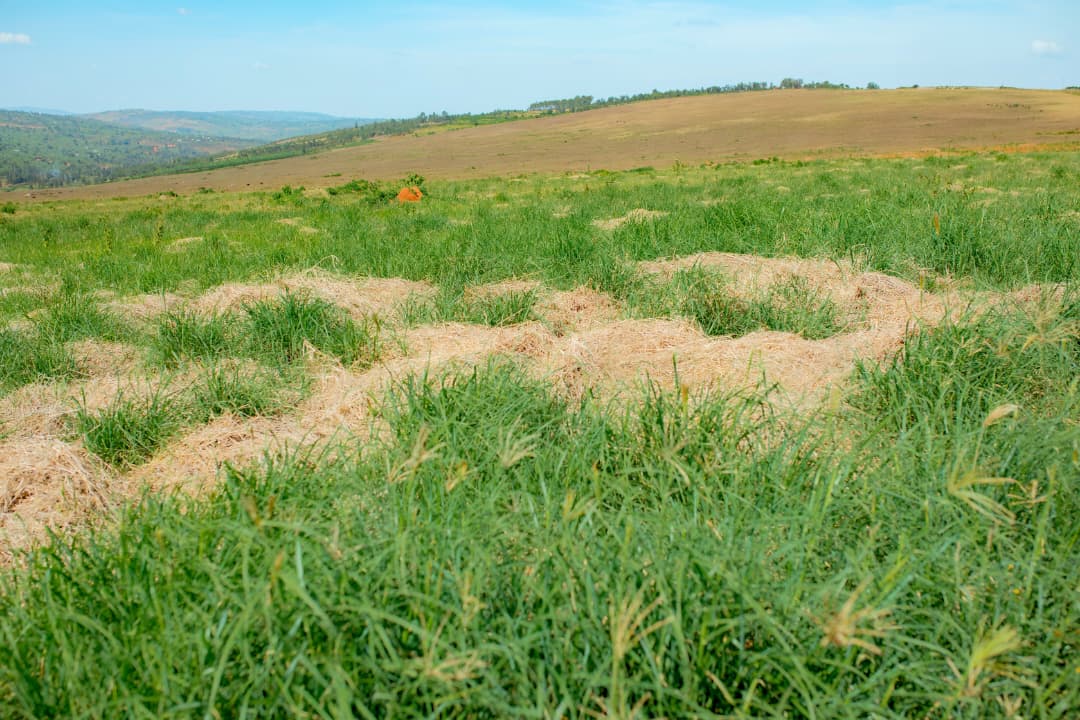
The growing demand for fodder has also created opportunities for young entrepreneurs.
In Nyawera, a youth-led company known as Powers of Youth in Agriculture Modernization (PYAM) has ventured into commercial fodder production with support from RDDP.
The group, which comprises 50 members, currently cultivates 51 hectares of fodder, including Chloris gayana, Black Yalis, Mucuna and Desmodium varieties.
According to Eric Murenzi, the company’s representative, the venture is already proving that agriculture can be both profitable and attractive to young people.
The group harvested 8,000 bales of fodder during its first season, generating approximately Rwf16 million in sales. Members also harvested about four tonnes of Chloris gayana seed, which they expect will generate additional income.
“We started these activities in April this year, and our vision is to satisfy fodder demand and increase milk production in this dairy farming zone,” says Murenzi.
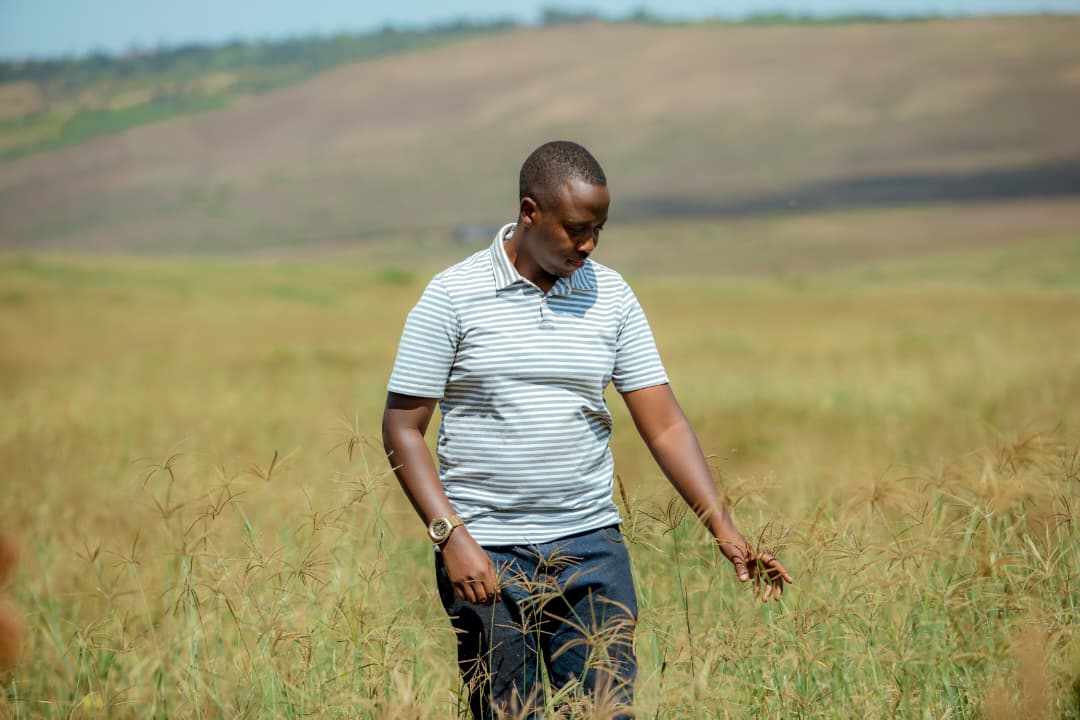 Eric Murenzi at a fodder farm operated by Powers of Youth in Agriculture Modernization (PYAM) in Nyawera.
The company currently employs more than 300 workers per day during production activities and hopes to increase that number to over 500 as operations expand.
Murenzi says the enterprise has already accumulated more than Rwf13 million and expects to earn about Rwf20 million more from seed sales.
“I encourage fellow young people to embrace fodder farming,” he says. “It is a business with potential.”
Despite the success, challenges remain. Like many parts of Eastern Province, Nyawera is vulnerable to drought, making irrigation a critical need.
The youth group is also seeking support to acquire baling machines, saying the cost of hiring equipment from elsewhere significantly reduces profits.
“We want to increase our production and expand from 51 hectares to 100 hectares,” says Murenzi. “With irrigation and proper equipment, we can meet the growing demand.”
District authorities say such initiatives are helping strengthen the foundation of the dairy sector.
Fred Hategekimana, Acting Mayor of Kayonza District, says RDDP2 interventions have been instrumental in addressing livestock feed shortages and improving resilience among dairy farmers.
“Through fodder promotion and the distribution of seeds to multipliers, we are reducing challenges, especially during drought periods when farmers used to struggle to find enough feed for their animals,” he says.
The district has also supported dairy farmers with dam liners through matching grants, enabling them to harvest and store water for livestock.
According to Hategekimana, water availability is critical to dairy production because it contributes significantly to cattle nutrition and productivity.
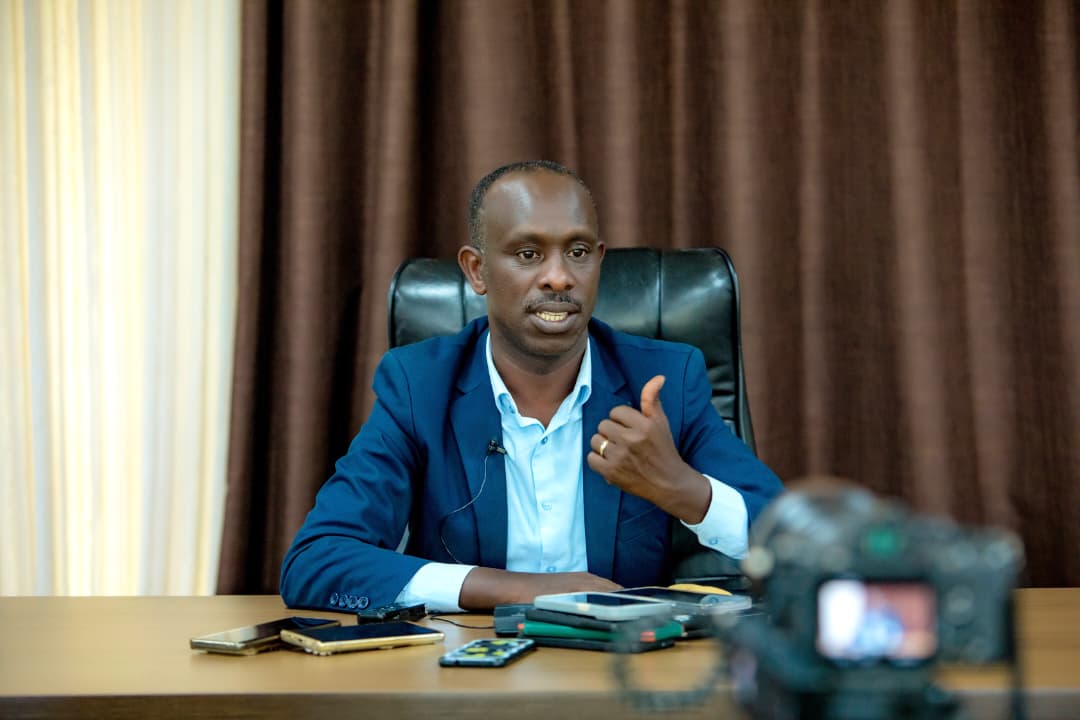 Fred Hategekimana, Acting Mayor of Kayonza District, speaking to journalists on livestock development and fodder production.
A livestock vaccine production facility under construction in Kabarondo Sector is expected to be completed by December 2026, reducing farmers’ dependence on distant sources for vaccines. Meanwhile, a veterinary clinic being built in Gahini Sector is expected to improve disease diagnosis and treatment through laboratory-based services.
The mayor believes these investments will strengthen livestock health, improve productivity and increase returns for farmers.
For Murekatete, however, the impact is already visible.
What began as training under a development project has transformed her into a businesswoman whose livelihood now depends entirely on fodder production. Her success story is encouraging others to view livestock feed not simply as an agricultural input but as a business opportunity in its own right.
As more farmers and youth groups embrace fodder farming, local leaders see the sector playing a central role in the future of dairy production in Kayonza.
Today, more than 10,000 litres of milk are delivered daily to Milk Collection Centres (MCCs) across Kayonza District. As fodder production expands and livestock support services improve, local leaders are optimistic that milk output can double in the years ahead.
theinspirerpublications@gmail.com


Leave a Reply