
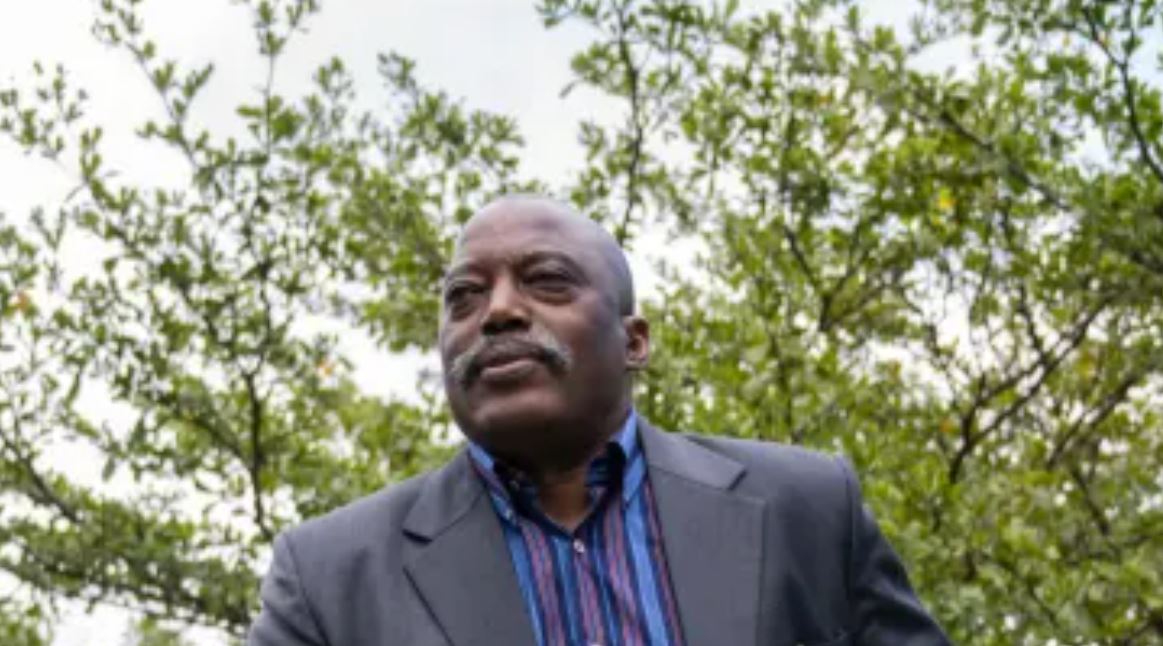
DR Congo’s Ex-President Joseph Kabila sentenced to death in absentia
- Military tribunal convicts former leader of treason, war crimes, and crimes against humanity
By The Inspirer Newsroom.
KINSHASA — Former Democratic Republic of Congo (DRC) President Joseph Kabila has been sentenced to death in absentia by a military tribunal after being found guilty of treason, war crimes, and crimes against humanity.
The court announced its verdict on Friday, ruling that Kabila was complicit in supporting the M23 rebel group, which has unleashed devastation across the country’s eastern provinces. He was convicted in absentia of crimes including murder, torture, sexual violence, and armed insurrection.
The 54-year-old, who led the DRC from 2001 to 2019, denied the allegations and did not appear in court to defend himself. In a statement released through his representatives, Kabila dismissed the case as “arbitrary” and accused the judiciary of being used “as an instrument of oppression.” His current whereabouts remain unknown.
A controversial legacy
Kabila ascended to power in 2001 following the assassination of his father, Laurent-Désiré Kabila, and ruled for 18 years. His tenure was marked by persistent armed conflict, political tension, and economic challenges.
He stepped down in 2019, handing power to Félix Tshisekedi in what was initially celebrated as the DRC’s first peaceful transfer of power. But relations between the two men later soured, leading Kabila to retreat into self-imposed exile in 2023.
Earlier this year, he re-emerged, pledging to contribute to peace efforts in the volatile east. His visit to Goma, an area under M23 control, triggered renewed allegations of collaboration with the rebels.
In response, President Tshisekedi accused Kabila of masterminding the insurgency, prompting the Senate to strip him of immunity and authorize his prosecution before the military court.
Fighting intensifies in the East
The verdict comes as violence continues to ravage eastern Congo, where M23 rebels have seized key cities including Goma, Bukavu, and strategic airports. The group’s advance has displaced hundreds of thousands, exacerbating a dire humanitarian crisis.
The United Nations and several Western governments have accused Rwanda of supporting M23 militarily, claiming Kigali has deployed troops into Congolese territory. Rwanda has rejected the allegations, arguing it is acting in self-defense to prevent the conflict from spilling across its borders.
A ceasefire agreement signed in July 2025 between the Congolese government and M23 has done little to halt the bloodshed, with sporadic clashes still being reported.
Political implications
Kabila’s conviction in absentia adds a new layer of uncertainty to Congo’s fragile political environment.
Observers warn it could further polarize the country and complicate regional peace initiatives.
While human rights advocates have welcomed the verdict as a sign of accountability, others caution that trying a former head of state in absentia could deepen divisions and undermine reconciliation efforts.
As Kinshasa seeks to restore stability and reassert state authority in the east, the ruling underscores the scale of Congo’s governance challenges and the delicate balance between justice and political stability.


Leave a Reply