
African meteorologists push for lasting AI collaboration after Kigali summer school
By Elias Hakizimana.
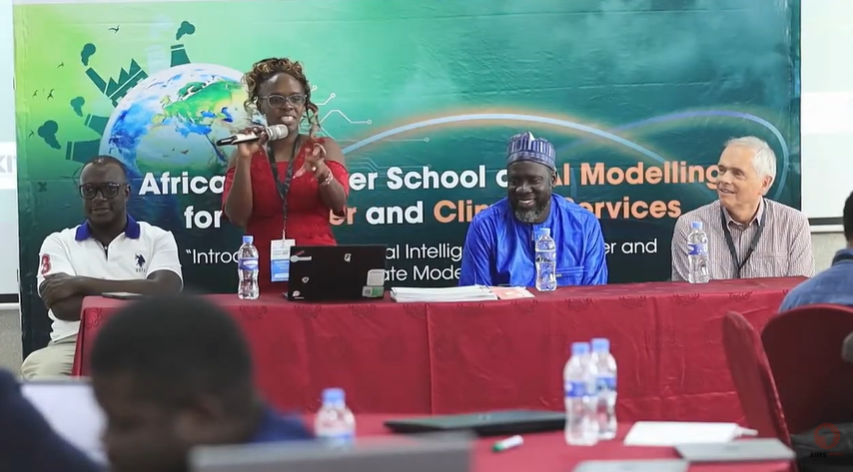
African meteorologists have agreed to establish a regional community of practice to strengthen collaboration, mentorship and the application of artificial intelligence (AI) in weather forecasting following a five-day summer school that ended in Kigali on Friday, October 23.
The African Summer School on AI for Weather and Climate Modelling brought together 44 participants from 21 African countries, selected from more than 1,000 applicants. It was organised by the African Centre of Meteorological Applications for Development (ACMAD), the African Institute for Mathematical Sciences (AIMS) and the World Meteorological Organization (WMO).
The proposed community will connect experts, facilitate knowledge exchange and support continued learning after participants return to their national meteorological services. Organisers proposed confirming membership within two weeks, holding a follow-up meeting within six weeks and developing a work plan within three months.

Turning knowledge into better forecasts
Aimable Gahigi, Director General of Meteo Rwanda, urged participants to focus on applying available weather data rather than simply sharing it.
“Data being shared, that is one thing, but there is a need now to use those data,” Gahigi said.
Improved forecasting can help farmers make informed planting decisions and enable communities to prepare for floods and other weather-related hazards.
Participants called for continued access to computing resources, including cloud-based platforms used during the training. They also recommended integrating AI into meteorological curricula, strengthening Regional Training Centres and adopting a train-the-trainers approach to share knowledge with colleagues.
However, they acknowledged that AI’s effectiveness depends on reliable weather observations, adequate infrastructure and trained personnel.

AI must complement existing systems
Discussions highlighted the need to evaluate AI forecasting tools before introducing them into routine operations. A WMO presentation indicated that AI-based forecasting products were not yet considered ready for routine operational applications.
Rather than immediately replacing physics-based forecasting models, participants discussed how AI could complement existing systems through hybrid models and specialised applications.
An AIMS representative said Africa should play a greater role in developing and applying AI for weather forecasting.
Participants stressed the importance of developing expertise and tools that use African weather data and address local needs, rather than relying exclusively on systems developed elsewhere.
Participants seek longer training
Speaking on behalf of participants, Mary thanked the organisers and trainers for helping them explore climate data, machine learning and practical modelling projects.
She praised trainers for providing support beyond scheduled sessions, including during late-night group work. However, she said the five-day programme was too short to fully explore the material and recommended extending future editions to at least two weeks.
Recalling advice from her mother before travelling to Kigali, Mary asked participants how heavy their luggage would be when returning home, using the question as a metaphor for the knowledge they had gained and would apply in their institutions.
David Hogg, one of the trainers, praised participants’ teamwork during practical sessions and said he looked forward to seeing their achievements over the following year.
Future editions could cover additional applications, including nowcasting and AI-supported long-term climate projections.
Rwandan rainfall project wins
The summer school concluded with presentations of practical projects developed during the training.
The IMVURA NYINSHI team won with a project examining observations associated with a real-time heavy rainfall event in Rwanda. Judges praised its understanding of the subject, depth of analysis, connection between objectives and findings, and clarity of presentation.
The organisers’ next challenge is to sustain the collaboration established in Kigali and ensure participants translate their training into practical improvements in weather forecasting and climate services across Africa.
theinspirerpublications@gmail.com



Leave a Reply