

ACOA 2025 panel sparks urgent call for skills overhaul and mindset shift to build Africa’s future workforce
By Elias HAKIZIMANA.
Kigali, Rwanda – May 7, 2025 — Day two of the Africa Congress of Accountants (ACOA) 2025 brought together some of the continent’s leading voices in finance, education, and economic development to discuss one of Africa’s most pressing challenges: building a future-ready workforce.
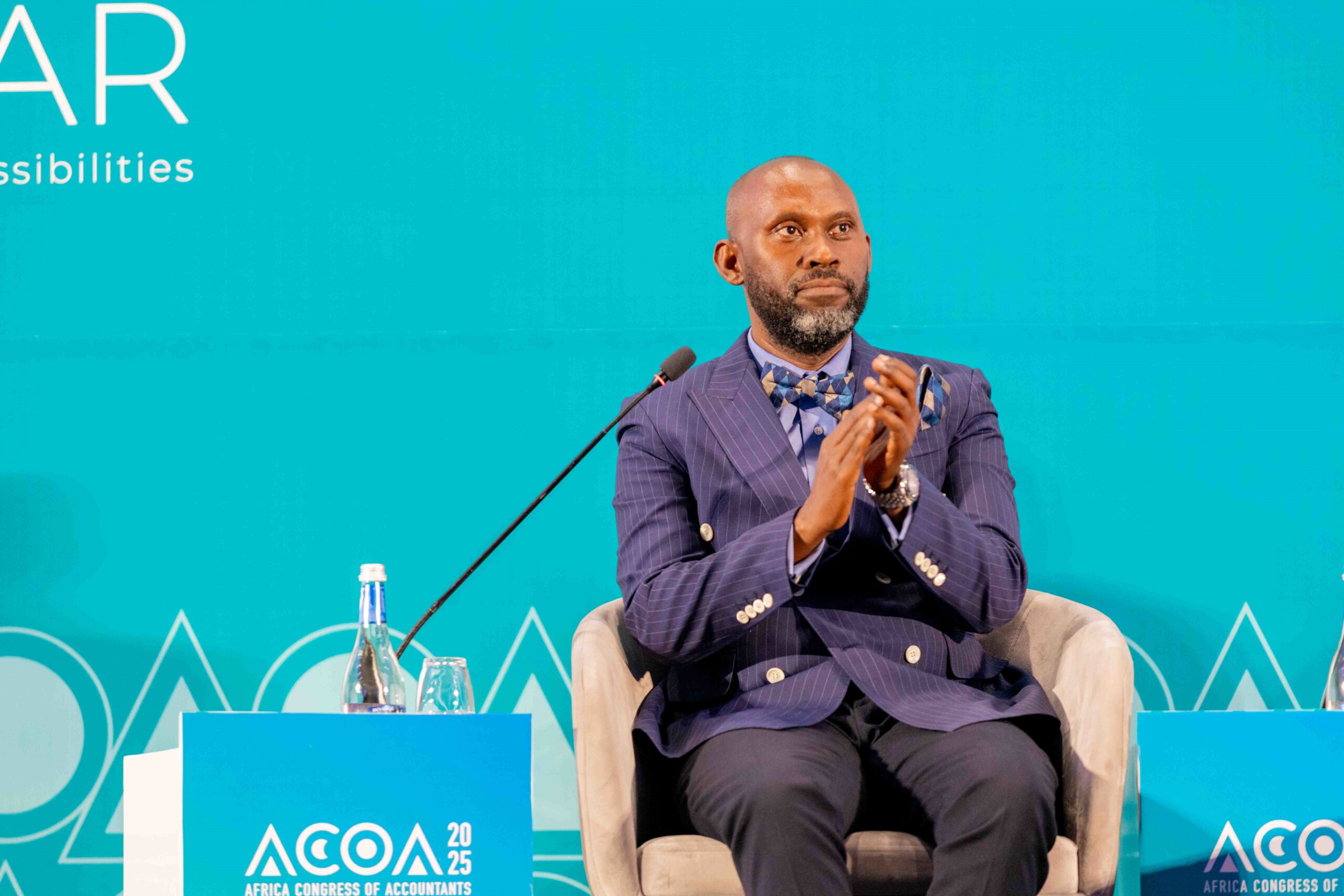
The high-level panel featured Mr. Sanjay Rughani, CEO of Standard Chartered Bank Uganda and Chair of the IFAC Professional Accountants in Business Advisory Group; Mr. Amin Miramago, CEO of the Institute of Certified Public Accountants of Rwanda (ICPAR); and was moderated by Ms. Patricia Stock, CEO of the South African Institute of Chartered Accountants (SAICA).
The discussion, anchored around workforce development, skills gaps, and the role of the accounting profession in economic transformation, marked a moment of collective reflection and urgency—coming seven years after the signing of the African Continental Free Trade Area (AfCFTA) agreement in Kigali.
“This agreement is not complete because embedded in it is action,” said moderator Patricia Stock, setting the tone for the session. “We can never say we are done until we see tangible results.”

A workforce at risk: The numbers tell the story
Mr. Sanjay Rughani laid out a sobering demographic reality. Africa’s working-age population currently stands at 460 million, expected to reach 600 million by 2030 and 1 billion by 2050. Yet the number of professional accountants across the continent is just 125,000—barely scratching the surface of demand from Africa’s estimated 44 million businesses.
“Only 3 million out of 12 million African youth graduating annually are meaningfully employed,” Rughani said. “If we don’t act now, we’re sitting on a ticking time bomb. This is not just about the future. It’s about now.”
He emphasized the need for an aggressive mindset shift, calling for workforce strategies that are not only future-oriented but immediately relevant. “Fit for purpose today and fit for growth tomorrow,” he urged.
The relevance crisis: What accountants must address
For ICPAR CEO Mr. Amin Miramago, the challenge lies in matching training with real-world relevance. “In Rwanda, we have 300,000 registered businesses and only 1,200 qualified accountants. That’s a gap we cannot afford to ignore,” he noted.
He also highlighted the disconnect between graduates’ hard skills and the soft skills required in the modern workplace. “Our review cycle for curricula is outdated. Five to ten years is too long in a fast-paced world. Employers say our graduates lack soft skills like communication, teamwork, and leadership.”
To tackle this, Miramago announced ICPAR’s move to go fully digital in the next quarter. All qualifications will be accessible online, aiming to reduce the urban-rural divide and fast-track access to quality education across Africa.
The private sector’s role: From problem to partner
Panelists agreed that the private sector must be central to any skills development strategy. “More than 90% of Africa’s employment is in the private sector,” said Rughani. “Yet too often, policies and educational programs are shaped without engaging this crucial stakeholder.”
He proposed regional specialization across Africa to avoid duplication and boost effectiveness. “One region can lead on tech, another on green finance, another on SME development. If we all try to do everything, we fail to do anything well.”
Rughani also called for a bold approach to human capital export. With global economies like Japan and Spain facing youth shortages, Africa has the opportunity to export skilled labor. “Why not create Export Processing Zones for talent—tax-free, high-tech zones that develop youth for the global market?”
Bridging the entrepreneurial gap
Responding to a room-wide poll that flagged entrepreneurial skills as a top priority, Rughani underlined the need for financial literacy and access to capital. “Entrepreneurship isn’t just about starting a business. It’s about being financially literate, resilient, and relevant,” he said.
While AI and digital skills are trending, he cautioned against neglecting vocational and technical training. “The youth we fail to employ will go into plumbing, farming, small trade. Let’s not forget these sectors are critical for inclusive growth.”

Africa’s moment is now
The panel closed with a call to action for institutions, governments, and private actors alike. “Africa cannot afford to wait another 100 years to catch up,” Miramago said. “We must leapfrog using technology, collaboration, and urgency.”
ACOA 2025 continues through the week with sessions focused on AI in accountancy, sustainability reporting, public finance reform, and cross-border tax harmonization—all anchored in building the profession’s capacity to shape Africa’s economic future.

theinspirerpublications@gmail.com




Leave a Reply