
Karongi residents turn to unsafe water sources after public taps close
By Erneste Nsanzimana.
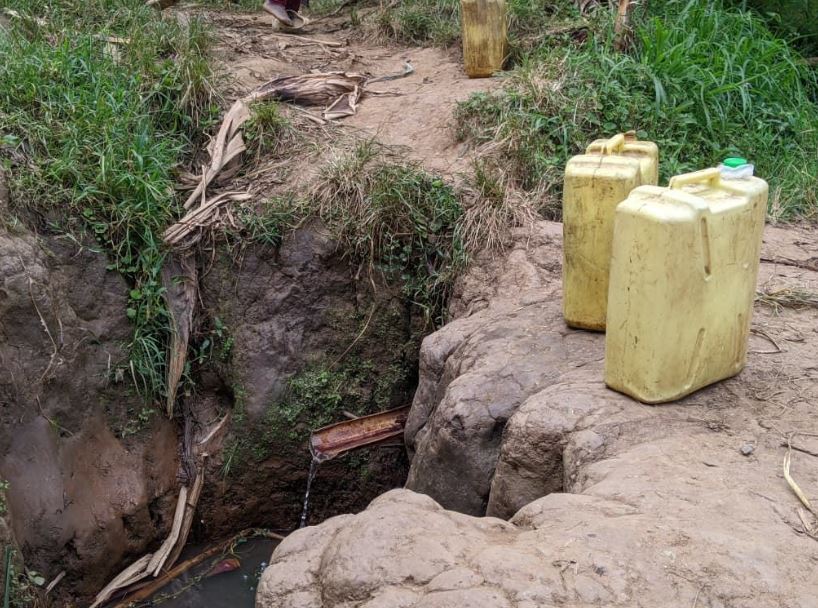
Residents in parts of Karongi District have resorted to collecting water from wetlands and streams after several public water points stopped operating, raising concerns over increased exposure to waterborne diseases.
The residents say the closure of public taps has forced them to rely on unsafe water sources, contributing to health problems including intestinal worms, diarrhoea, and poor hygiene conditions.
Karongi District authorities say 96% of residents have access to water infrastructure, but some communities that previously relied on public taps nearby are now facing water shortages.
Minani Faustin, a resident of Kamwinjagi Village in Gacaca Cell, Rubengera Sector, said three public taps in his village are no longer functioning, including one that has been out of service for three years.
“When the taps were working, we had access to clean water and hygiene conditions improved. Cases of worms and other illnesses had reduced, but they are increasing again,” he said.
Irankunda Fillette, a resident of Kamuvunyi Village, said residents were surprised when WASAC workers closed two public taps in their area without providing an explanation.
She said some residents have since turned to collecting water from a stream in Gahama valley, which they use for washing, cleaning, and, in some cases, cooking.
“Using this water affects our health. There are months when I have to take my child to the health centre for treatment of worms,” she said.
Uzabakiriho Rose, a resident of Nkomagurwa Village in Nyarugenge Cell, said two public taps in the area, including one in Bahena and another in Kabuga, were closed shortly after they started operating.
“We are now collecting water from natural springs, but the water is often contaminated. We are asking authorities to help restore the public taps because many households do not have access to water at home,” she said.
Data from Rubengera Health Centre shows that 319 patients were treated for intestinal worms and diarrhoea in February 2026, while 297 cases were recorded in March.
Rubengera Health Centre Director Dusabimana Innocent said unsafe water remains one of the factors contributing to worm infections, urging residents to use clean water sources and boil drinking water before consumption.
Karongi District Mayor Muzungu Gelard said some public taps are not functioning due to water distribution challenges and shortages of people responsible for managing the facilities.
“In the Rubengera and Bwishyura areas, some public taps are not receiving water because supply is being redirected through pipelines connected to the Kivu Belt Supply project. Once the process is completed, water will reach all affected areas,” he said.
Karongi has about 1,530 public water points. WASAC Group said it does not have data on the number of public taps currently closed in the district.




Leave a Reply